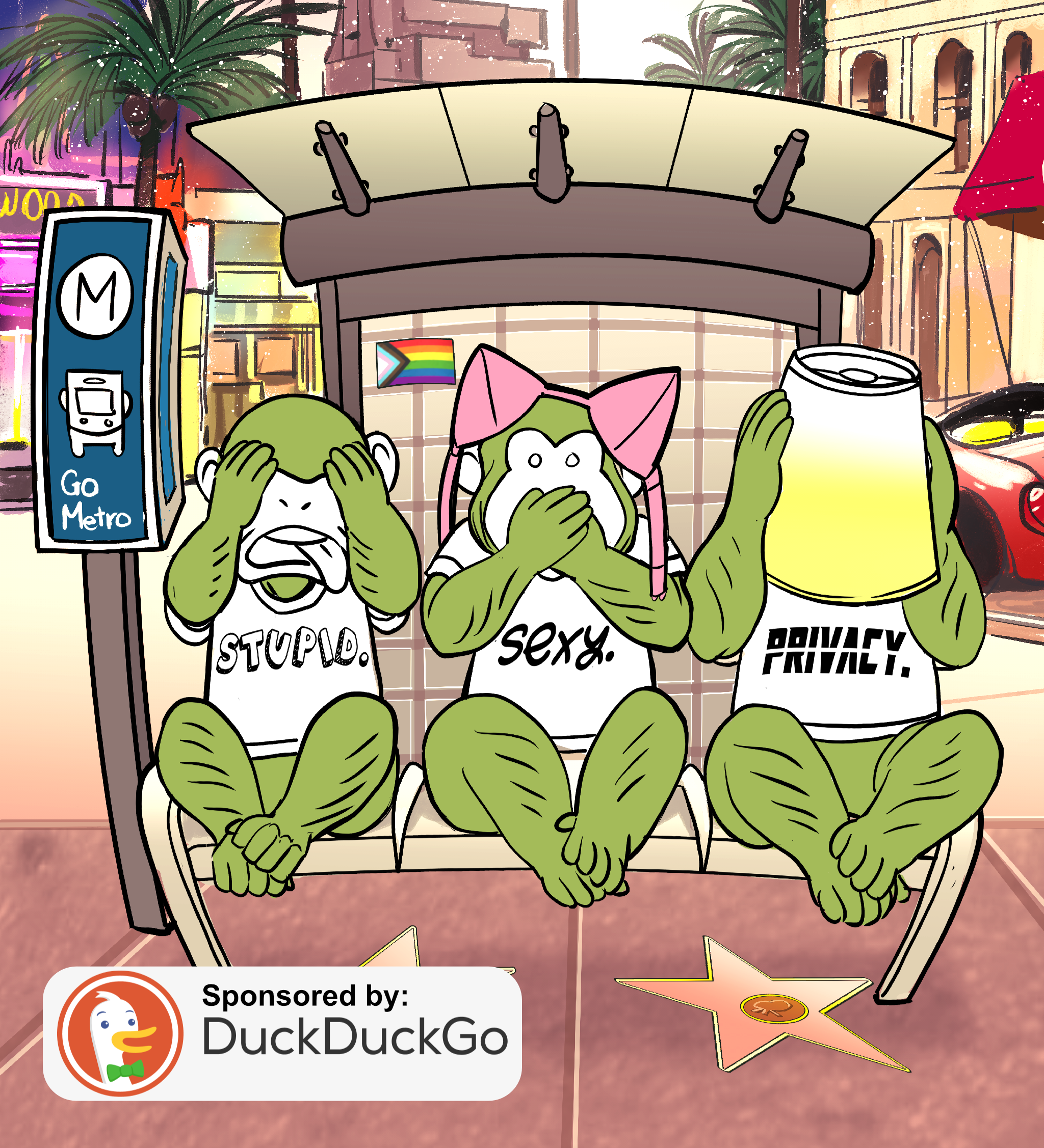
How To Protect Yourself From Fascists & Weirdos
Read a free copy of BJ Mendelson and Amanda King's book, "How to Protect Yourself From Fascists & Weirdos" here.

Copyright & Misc. Info.
© 2026 by Earth's Temporary Solution. All rights reserved. No part of this book may be used or reproduced in any manner without written permission; except in the case of brief quotations embodied in critical articles and reviews.
Without limiting the exclusive rights of any author or publisher of this publication, any unauthorized use of this publication to train generative artificial intelligence (AI) technologies is expressly prohibited. Earth's Temporary Solution also exercises its right under Article 4(3) of the Digital Single Market Directive 2019/790 and expressly exempts this publication from the text and data mining exception.
This book is made available for free and will remain free in perpetuity, except where we were required to set a price. In those instances, the minimum available price was selected.
A free .PDF and .MP3 copy of this book can be obtained by contacting the publisher, Earth's Temporary Solution, at P.O. Box 5, 996 Route 17 Stop 2, Arden, New York 10910 or by emailing B.J. Mendelson at bjmendelson@duck.com.
First edition.
Designed by Rodolpho Martinez and the Shooting Star Press.
This book was written and edited while listening to Pink Floyd's Pulse.
Nostalgia is dangerous in high doses.
It's a drug fascists and weirdos use to distort reality. Creating myths of a golden age that never was.
One only they can restore. Or so they claim.
Nostalgia is Earth's most dangerous narcotic, which is why this tactic is so effective.
But. Nostalgia in limited doses—like a double live album—is never a bad thing.
Especially when the world around you is burning, and you feel like there's nothing you can do about it.
When you feel that way, take comfort in the things you enjoy.
And in the days ahead, take as much time for yourself as you need.
Just do us a favor.
When it comes to anything that makes you feel too nostalgic...
Don't let the past blind you to the promise of the future.
—B.J. Mendelson and Amanda King
Amanda King is a writer, digital native, chronically online and a growth consultant in another life. She's an international speaker on all things internet-related and as such knows what's behind the curtain. Talk to her about travel or buy her tea and you'll probably be in her good books forever.
B.J. Mendelson is the author of Social Media Is Bullshit (St. Martin's Press), Privacy: And How We Get It Back (Curious Reads), two ghostwritten books, and co-author of this book. The ghostwritten book was a bestseller in its field. B.J. is a world-renowned expert on word of mouth marketing, a humorist, and social critic. He wants to spend the rest of his life in Los Angeles
Dedication
We dedicate this book to Jonathan Edward Bintz.
Jonathan is one of 1.1 million Americans who died during the pandemic. If you lost a family member to COVID-19, please visit MarkedByCOVID.com. When there, tap or click on "Memorial" to submit a remembrance.
"Everything can be taken from a man but one thing: the last of the human freedoms—to choose one's attitude in any given set of circumstances, to choose one's own way."
—Viktor Frankl, Holocaust survivor and author of Man's Search for Meaning.
1.
Our goal is to train five percent of Americans to be one percent better at protecting themselves from fascists and weirdos. If you follow only the checklist at the end of Chapter 2, you will help us accomplish that goal. We seek this goal because America finds itself amid a rupture. We've had two political parties going back to the 1790s. Today that's no longer the case. One party no longer exists in any meaningful form; what remains is a cult made up of fascists and weirdos. The other has been hijacked by the people who fund those fascists and weirdos. And neither party wants to solve the problem that creates fascists and weirdos in the first place: the money. Who has it—the oligarchs. And who does not—99.9 percent of us. A Gallup poll in January of 2026 reported that a record number of Americans, forty-five percent, do not affiliate themselves with either political party. That means there are around 154 million people who do not like the way things are going. If they were counted as an independent nation, those people would find themselves between the eighth and ninth most populous nations on Earth. So. We want you to understand something. Mobilized is what you see at a protest. Organized is what you see at a general strike. Now imagine what just five percent of those politically unaffiliated people could do—if they got organized—and demand the passage of the Second Bill of Rights. The rest of this book is meant for those people.
As long as our system of government remains captured by oligarchs, we're in danger from the fascists and weirdos they fund. This is because the closer we get to sealing the rupture, the more money the oligarchs will spend to protect it. That's because they helped create the rupture with their greed. There is no negotiation to be had with the oligarchs. You can't appease them. They will not willingly give back the money that they stole using tax shelters, intentionally vague tax laws, and financing almost every politician. This includes most of your choices in the primaries, for both parties, and the two left standing for the general election. Nothing changes until we take that money back. And until we do, that money will be spent sowing discord. If we are too busy fighting with each other, we can't see tax dollars being stolen from public schools to pay for luxury yachts.
Ethics & Disclosures
To reach our goal, we searched for products that are secure enough and simple enough for most to use. That doesn't mean they're the most secure. Nor does it mean they have beautiful and intuitive user interfaces. It just means that for most people, in most cases, these are the best options available at this time. Soulseek, for example, is a free file-sharing network that you can use to share music with your friends as an alternative to Spotify. It's free of spyware and advertising. But the user interface sucks. The same is true with FreeFileSync, which we recommend later. We provide links to all the resources we mention throughout this book in the endnotes. If you are listening to the audio edition of this book, all of these resources can be found in the free .PDF and on our website at StupidSexyPrivacy.com.
If we mention something that is too expensive for you to purchase, don't worry about it. If you don't have time to do an exercise, don't worry about that either. Do the best you can with what you have, and worry about the rest later. Forgive yourself for the things that you can't do. That's not just useful advice here—it's good life advice too. In the future, better options may become available. If so, the following organizations will let you know: the Electronic Frontier Foundation (EFF), Fight for the Future, Consumer Reports, the AARP, and the American Civil Liberties Union (ACLU). Each is worthy of your time, attention, and contributions. Your support makes projects like the EFF's Privacy Badger possible. If you want to help anyone who isn't tech-savvy, you can install Privacy Badger for them. This browser extension will block tracking attempts while they're using the internet.
Now. We want you to know something important: This book was funded by DuckDuckGo. However. They did not exercise any editorial control over this book. The opinions expressed in this book are our own. This arrangement made it possible for BJ, his co-producer on Stupid Sexy Privacy, Andrew VanVoorhis, and our host Rosie Tran to bring you a year's worth of new episodes. All of which can be heard on our website.
When we suggest anything in this book that's not related to DuckDuckGo, we have no relationship to it or its products. Maybe this will change in the future. If it does, we'll let you know. That's our obligation to you: full transparency. And in the interest of full transparency, you should know we would have recommended DuckDuckGo's products without their participation. That's because we don't recommend anything that we don't use ourselves. As one example, we use and we recommend you use noai.duckduckgo.com whenever you want to search for something. As Google continues to ruin the search experience with slop, noai.duckduckgo.com is a nice throwback to the golden era of search. It's a simple, clean interface that turns off all AI results and features. If you don't want to do this and continue to use search engines with AI features, all we can say is: Never rely on AI summaries. Always go right to the source.
For another example: BJ has some minor dyslexia. This causes trouble when it comes to reversing words and missing grammatical errors. So a combination of Duck.AI and Claude 4.5 Haiku was used to proofread this manuscript. This was done to ensure compliance with the Chicago Manual of Style. Claude was not permitted to change or alter any wording during this process. It was prompted to only identify errors. Sometimes it did. Sometimes it didn't. If you spot an error, please let BJ know by email at bjmendelson@duck.com or on Signal at bjmendelson.32. You may request a free .PDF and .MP3 of this book at any time by contacting him.
We used Duck.AI to prevent Claude from stealing this manuscript. We feel using Duck.AI is the safest way to access any of the popular large language models. BJ's previous book, Social Media Is Bullshit, was stolen by Anthropic, the makers of Claude. So our concern is not unfounded. At the time of this writing, BJ is waiting to receive a $3,000 settlement check from Anthropic as part of the Bartz v. Anthropic case. He was paid $24,000 to write Social Media Is Bullshit back in 2011. So this Anthropic check wasn't close to what St. Martin's Press paid him. Meanwhile, the Anthropic IPO could value the company at a trillion dollars. Or around the entire proposed 2027 budget for the Pentagon.
We don't trust many American tech companies. Most give out our information to the federal government. Often these companies do this without notifying us—something that former executive director of the Electronic Frontier Foundation, Cindy Cohn, documents in her book Privacy's Defender and with us on Stupid Sexy Privacy Season 1, Episode 35. Government requests occur in the European Union as well, but EU privacy laws are stricter. For that reason, we recommend choosing non-U.S.-based tech products when possible. For those who prefer a non-U.S. browser that's not DuckDuckGo or Firefox, you can try Vivaldi, which is based in Norway. LibreOffice is a solid substitute for Microsoft Office and Google Docs. It is based in Germany. Element is safer, better, and more secure than Slack and Microsoft Teams. It is based in the United Kingdom. Proton's VPN and ProtonMail are based in Switzerland. We recommend everyone get themselves a free Proton account. We also prefer Deezer over Apple Music and PeerTube over YouTube. Both Deezer and Framasoft—which developed PeerTube—are based in France. The less you use American tech, the more money you save. Most of the software mentioned in this book is available for free. Not to mention, the less we use these products, the less American tech companies have a grip on the world. Using these programs instead of their American counterparts—or switching to a secure Linux operating system like System76's Pop!_OS—is a radical act. And it's a million small radical acts, many people will never see or know about, that add up to defeat for fascists, weirdos, and the people who fund them.
Do This First
If you are not registered to vote, you can use vote.org to help you do so. Don't wait to do this. And bookmark that site to check your registration status every six months. Fascists and weirdos don't want you to vote. They'll use every trick to kick you off the voter rolls. By keeping an eye on your voter registration, you'll know if they try to pull a fast one.
Next, we want you to get a passport book and a passport card. Due to the Louisiana v. Callais Supreme Court decision—that passport card may be the only way you can vote in the future. When you cross the border, go to a protest, or film ICE, the only ID you should have on you is your passport card. So, if you can, get both: acquire a passport book and give it to a trusted friend or family member, while keeping the passport card on you at all times.
This is especially important because of what's called the "Kavanaugh Stop." This is where law enforcement can stop and question someone based solely on the color of their skin and their chosen language. If that makes you as furious as we hope, that's good. Anger can be useful to recruit and organize people, and good organizers know how to turn that anger into action. You do this by offering positive solutions that benefit everyone, with concrete steps each person can take. We'll discuss some of these steps throughout the book. For now, we'll remind you that Congress can expand the Supreme Court, launch impeachment proceedings into at least two of the current justices, create an ethics code with severe penalties for impropriety, and implement term limits. (The Supreme Court will, of course, then have to rule on the constitutionality of Congress's changes. That is fine. We rather force the issue than sit around and debate ourselves to death. When in doubt, pass the law and let the courts figure it out. When fighting fascists and weirdos, always try something over nothing. You may get lucky.)
If you're planning to cross the border with your passport card, first we want to say good luck. We are old enough to remember our friends traveling abroad during the early Iraq years. Back when they identified themselves as Canadian and placed Canadian flag pins on their backpacks. You can try that, but be warned, if you do, you may be quizzed on your Québécois. So, for what it's worth, we recommend wearing a Montreal Canadiens hat and knowing a thing or two about the team. When we mention wearing a hat throughout this book, we want you to picture a Montreal Canadiens hat. Another thing we recommend is that, if you're crossing any border, you upload anything you need for your phone and laptop to Proton Drive. Then wipe both your devices. You can restore everything after you've crossed the border. (Of course, this assumes you back up your hard drive using Apple's Time Machine or similar software. Something we encourage you to do once a week.)
Before crossing the border to re-enter the United States, repeat these steps. Both your phone and your laptop should be powered down when crossing the border. If you are wealthy enough to afford it, you can skip this process. Use a clean computer and clean phone instead that you only use when traveling. If you forget to do any of these steps, and you're at a border crossing, at the very least, make sure you delete your Signal app, your social media apps, your email app, and your browser app from the phone ASAP. Get into the habit of regularly deleting the Signal app on your phone and laptop. If you are detained, your legal rights vary based on your citizenship. For example, if you're an American citizen, you do not have to answer questions about your culture or religion. Regardless of your status, if they seize your device, ask for all the documentation involving that seizure. You will need this later to get your stuff back. If you feel like you are being harassed, ask to speak to a supervisor. This is a great opportunity to embrace your inner Karen.
Not a lot of Americans can afford a passport. Less than half of us have one, partly because of the expense. This is where mutual aid networks will be needed. It's up to all of us to ensure that every American who wants a passport can get one. You can start this process by providing mutual aid locally within your Signal group. We will discuss how to set those groups up later in this book.
Do This Second
There are few data points more sensitive than our search and browsing history, our chat history with large language models, and our exact location. These are things a VPN can help disguise. VPN stands for Virtual Private Network. This is a method used around the world to evade fascists and their efforts to spy on you. VPNs disguise your internet activity from your internet service provider (ISP). If you've ever seen an Atlantic City magician do their thing, that's what a VPN does. It's misdirection. Your internet service provider is not your friend. And like an Atlantic City magician, you get what you pay for. So don't use free VPNs either. They often share your data with the exact people you're trying to hide it from. Do support politicians who advocate for municipal broadband, and a federal corporate income tax rate of at least 50%. Since most American corporations are not our friends, there's no reason for us to pay more in taxes than they do. Or be forced to suffer from terrible customer service and price gouging from ISPs. Municipal broadband provides alternatives to corporate internet monopolies. We can also use that corporate income tax revenue to fund universally accessible healthcare, elder care, and childcare.
We believe everyone should use a VPN, and the best VPN for most people is DuckDuckGo's VPN. That's why we partnered with them for this book. Their browser is privacy-focused and simple to use, with the VPN built right in. That means people don't have to take any extra steps. After spending hundreds of hours teaching people how to protect themselves from fascists and weirdos, we learned that simple works. And the fewer steps they need to take? The better. But recommending DuckDuckGo's VPN also means recommending their browser. So we have a few thoughts to share. One of which is technical, so hang with us as we explain:
- If you're using DuckDuckGo's VPN, you may need to turn it off when accessing certain government websites—such as the Social Security Administration or the Internal Revenue Service—or your bank account. These websites have security features that make accessing them with a VPN difficult. When that happens, simply turn off DuckDuckGo's VPN. When you're done, you can turn it back on. (To access sensitive information like your bank account and health insurance, we recommend using Tor instead. It's very slow, but it's also the most secure way to view this information. Just an FYI about Tor though: while it's considered the most secure browser, you should never download anything while using it.)
- Avoid using Apple's Safari and Google Chrome when possible. If you need more advanced threat protection, use Firefox instead of DuckDuckGo. We'll explain how to figure that out later. Mozilla's Firefox is customizable to meet your privacy and security needs. It also includes a built-in VPN. Now, this is where we're going to get technical for a minute. If you feel lost or confused, just read the following paragraph slowly: If you're using Firefox, go to Settings, and then select Privacy and Security. There, set your browser tracking protection to "Strict." Then select "clear your browsing history when you close Firefox." Next, turn on "HTTPS Only for all windows." Finally, turn on "Max Protection" for "Enable DNS over HTTPS." With us so far? Okay, good. Next you'll see a custom field available. Here you'll want to enter a link provided by NextDNS. In order to do that, you'll need to set up a free NextDNS account at my.nextdns.io/signup. Once you've done so, you'll see a link that says "DNS over HTTPS." You're going to copy that link. Now, go back into Firefox's settings. Back over to Privacy and Security. Then down to "Enable DNS over HTTPS." And there you'll see that box again that says "custom." That box is where you'll drop your NextDNS over HTTPS link. Other configuration options are available for NextDNS, but they go beyond the scope of this book. Also keep in mind that certain websites may not work under this Firefox configuration. You may need to add exceptions, or adjust these settings, depending on your needs.
- If you use Firefox over DuckDuckGo, we recommend the following add-ons: Your password manager — we recommend Bitwarden or KeePassXC. Block Party, ClearURLs, Facebook Container, Firefox Multi-Account Containers, and either Privacy Badger or uBlock Origin. Facebook Container locks down Facebook to that specific tab. This keeps Meta from tracking anything you do outside of that tab. Multi-Account Containers can do the same thing for various websites that you use. ClearURLs removes tracking elements from URLs, and Privacy Badger or uBlock Origin will keep you from being stalked by advertising and other elements. uBlock Origin is more powerful than Privacy Badger, but more complicated to use. It also breaks websites. But. uBlock Origin may be a way to get around media paywalls. If it's the news outlets we recommend elsewhere in this book, subscribe or donate to them. If it's not ... Well, we can't tell you what to do with this information.
We wanted to give you one other reason to try out DuckDuckGo's VPN: Considering Netflix charges about $108 a year for their basic plan with commercials at the time of publication—you can get DuckDuckGo's VPN for less and stream some great shows and movies instead. All available on services you can't access in the US. Such as Canada's Crave and the CBC's Gem. Later, you'll hear us recommend the CBC as a source to get your news instead of any of America's cable news channels. You can access CBC News via Gem.
Do This Third
If you have something in your home that's connected to the internet, now is the time to ask yourself if you need it. If you don't, unload it. You don't want to create opportunities for fascists, weirdos, and the people who fund them to spy on you. One thing that can go is any home assistant like Amazon's Echo. Just make sure to deregister your Echo from your Amazon account, and factory reset the device before unloading it. And if you can, join us in boycotting Amazon. Cancel Prime. Get your books from Bookshop.org. Your audiobooks from Libro.fm. And everything else from your local stores.
If there are any additional internet-connected devices you're planning to get rid of, search for the appropriate ways to dissociate yourself from that device. If you want a non-US-based search engine to use instead of DuckDuckGo, we recommend Qwant, which is based in France. If you can't find what you're looking for with DuckDuckGo, that's when you can try SearXNG. SearXNG is a search engine of all search engines, with plenty of publicly accessible instances for you to use. Those public SearXNG instances can be found at searx.space. If you ever need to do a deep search on a potential date, or just a fascist or weirdo who is harassing you, SearXNG is the place to start.
You can use the following search terms on any search engine when it comes to people. Make sure to search first without the quotation marks, and then with. Using the quotation marks around your search terms tells the search engine you want specifically those terms as they appear on a page.
First Name + Last Name
First Name + Last Name + City + State
First Name + Last Name + Arrest
First Name + Last Name + Social Media
While detaching from internet-connected devices, we want to pay special attention to your car. Especially the automotive head unit or "infotainment system." Or the automotive head unit in a car you just rented and synced your phone to. If you're renting, don't do that. Don't do it either when you're borrowing someone else's car. If you're trading in your old car, make sure your information is wiped from the infotainment system before doing so. Automotive head units collect an intrusive amount of data. The car manufacturers then sell that information to data brokers and other parties like your insurance company, which can cause a hike in your monthly premium. Those data brokers also provide information to government agencies such as the FBI. If it were true that "all my information is already out there, so there's no point in protecting my privacy," then the FBI wouldn't need to buy this data. But they do. So this idea that everything is out there and everyone has access to it anyway, so why bother, is nonsense. Don't believe it. In assisting at least one federal agency on a case, we can say we provided them most of the documents they needed, because the agency did not have access to them. And like the IRS, the agency did not have the staffing or resources to examine all of them. As scary as any federal agency may be, such as ICE, remember that ICE is heavily funded and resourced while virtually every other agency has been destabilized and decimated by fascists and weirdos.
When buying a new vehicle, you can purchase from the dealer an additional head unit, or ask them to toss it in as part of the purchase. Install that second, unused head unit before you sell your car. (For maximum privacy, you can give cash to a trusted person to purchase the vehicle on behalf of a trust or multiple, nested, partnership corporations that you set up. This requires legal assistance to pull off, so we can't advise you on how to do this as the process differs by state. We just want to let you know it is something you can do. Another thing you can do is seek out cars built before 2016, because they are less likely to have the components that invade your privacy.)
If you're renting a car, use an auxiliary cable or an auxiliary-to-USB-C cable to connect your phone to the car's stereo. The most secure kind of phone you can own is one with a headphone jack, because you can plug a microphone blocker into it from Mic-Lock. If you don't have a headphone jack, you can still get microphone blockers from Mic-Lock with the more common USB-C input. They're not as effective, because phones like the iPhone come with multiple microphones, for example. But they can still be useful. If you ever need to have a sensitive conversation with someone, make sure all phones are turned off and placed inside Faraday bags. For those of you worried about your phone or apps listening in on your conversations, while microphone blockers are not a perfect solution, they will at least help put a stop to that specific form of eavesdropping.
If you own a car, find an old phone, factory reset it, and leave it in your car to connect to the stereo system. Or the car manufacturer's app, if it has one. This phone—if you choose to pop in a Mint Mobile SIM card, for example—can also provide a phone number to use instead of your real one. But don't ever buy a used phone. Repurpose your old devices whenever you can. There's nothing wrong with buying used. It's an inexpensive and environmentally sound thing to do. But when it comes to used smartphones and laptops, you're potentially inheriting any legal problems that may come with those devices. If you need a phone that's just for your car, get the Moto G. We'll discuss all the ways to use that budget phone later. You can also repurpose your dating phone, discussed later, to be your car phone/portable music and podcast player.
There are fewer places more sacred to your average American than the inside of their car. Unfortunately, cars are now giant computers with wheels. Ones with less security than a Waffle House. So we have to take what information they gather seriously. Only Subaru, as of this writing, allows any American to opt out of this information gathering and sharing, although their opt-out doesn't cover third-party devices like Starlink. Which is owned by Temu Lex Luthor. We'll get to him later.
2.
Most of us are burnt out, working multiple jobs, and taking care of kids or elderly parents. Or both. If you're part of our generation — the millennials — the odds are pretty good you also feel to-do-listed to death. Your entire childhood may have felt like doing prison time. At least in the sense of being told where to be, how to be, and for how long, before being moved on to the next assigned task. Managing our information can feel like one more thing on that list. The good news is, managing your privacy, anonymity, and security is not an all-or-nothing thing. (In this book we use privacy as a catch-all for all three.) You can do a little at a time, and still take back control of your life. Don't let privacy nihilism be an excuse to leave yourself vulnerable to fascists and weirdos.
Privacy is a fundamental human right. You are not a "Privacy Karen" for being concerned about your privacy. That's because the act of being observed — by anyone — robs you of who you could have been, had you not been observed in that moment. As people, we need time alone. We need time where we feel safe to be ourselves and explore who we might want to become. Fascists and weirdos try to shape our behavior through constant observation and censorship. So if you care about privacy, you care about other people. That makes you the opposite of a Karen.
As you have time, this is everything else you need to do. Some of these items we will return to throughout this book. And as a reminder, many of these and other resources can be found in our endnotes.
- Don't use biometrics to unlock any of your devices. Use a long PIN instead.
- Always use a VPN.
- Always use Signal over regular texting. SMS is now completely compromised by our government and the Chinese government.
- Always use a password manager like Bitwarden or KeePassXC. KeePassXC is free.
- Always use passphrases instead of passwords. Try "BatmanPenGoldenRetriever" instead of P00dleF@n23
- Always use 2FA (Two-Factor Authentication) with an authenticator app. Or better yet, a physical security key like a YubiKey. Do not use your phone number and email address as methods of Two-Factor Authentication when possible. The physical key is the safest method, followed by authenticator apps such as 2FAS. If you can, secure your bank account and email account using two physical security keys. Always get two. The odds are good you're going to lose one.
- Always keep your software up to date on your modem, laptop, car, and any other devices connected to the Internet.
- Turn your phone off at least once a day, so that it can get the latest security updates.
- Regardless of what operating system you use, get an anti-virus program. We recommend BitDefender.
- Delete the trash on your laptop before shutting down for the day.
- Delete all unused apps every 90 days.
- Whenever you install an app, limit the permissions of it to only what is necessary.
- Don't take pictures with your fingertips exposed. The image quality is so good on most cameras that your prints could be lifted from photos.
- If you're streaming, make sure your background is obscured and that your home can't be identified from the outside.
- Consider poisoning the photos you upload to stop AI companies from stealing them. Nightshade is a program that can help you do that.
- Use a sticky note or tape on any internet-connected camera in your home. We recommend Silent's reusable stickers for this. On your phone, you don't need to cover up all the cameras. Just the front-facing camera when not in use.
- Emails sent between Proton users are encrypted except for their subject lines. If you send an email from Proton to a non-Proton customer, you will need to take additional steps to send an encrypted email.
- If you're using a Mac, turn on the firewall they provide you and FileVault. If you're using Windows, switch to Ubuntu. Nothing you do will keep you safe.
- Also for Mac customers, we recommend KnockKnock and Task Explorer to help scan and keep your computer free of malware. We also recommend LuLu. LuLu helps monitor outgoing connections made from your device. All are free, and offered through the Objective-See Foundation, a not-for-profit focused on Mac security. Run KnockKnock and Task Explorer at least once a week. Setting up LuLu can be a little confusing, but it's worth doing. If you choose to use LuLu, take some time to read the documentation available about how to appropriately use it.
- Back up your files on an external hard drive instead of the cloud. Make sure you have a third backup option in addition to that external drive and your laptop. This third backup should include your most important documents. Give this to a trusted friend or family member on a flash drive. If no friends or family are available, put this info on a flash drive and keep it in a safe.
- Any time you're asked to accept cookies, reject them if you can. If you can't, select only the necessary ones.
- Watch out for LinkedIn connections. If you don't know who someone is on LinkedIn, don't connect with them. Remove any followers you do not know on the social media platform(s) you use. Fascists and weirdos will try to find everything they can to attack and discredit you. LinkedIn is usually where they start.
- Run Block Party, which can delete your older posts on many popular social media platforms and tighten up your security settings.
- If you work at home, don't forget to disable your cameras and microphones. Talk to your human resources department about what information the company collects, what they do with it, and if you can opt out. They will probably say no, but it's a conversation worth having. And if they say no, this is when you unionize and make them say yes.
- Speaking of opt-outs, many doctors' offices and hospitals now use software like MyChart and Phressia. Phressia allows you to opt out of any data sharing if you email them. Epic, the company behind MyChart, did not respond to our requests to clarify whether or not you can opt out of any data sharing. You can speak to your doctor's office to share your privacy concerns. HIPAA does not protect your medical information at all. So always be aware of what medical data is being collected by your apps and devices.
- If you are the victim of a scam, visit victimconnect.org or call them 1-855-4VICTIM (855-484-2846). As they describe the service, "The Victim Connect Resource Center is a 24 hours a day, 7 days a week, anonymous and confidential hotline where victims and survivors of crime can receive support, information and referral options confidentially and compassionately."
- If you are the victim of a romance scam, blackmail, or identity theft, you are not alone. Tell your friends and family and ask for help.
- Report scams whenever you can, and if these scams lead to identity theft, report it to the FTC ASAP at identitytheft.gov. Follow the FTC's suggestions on what to do next. You'll also need that FTC report to bring to the police for filing an official report. So don't lose it.
- Don't open random links. If you question whether a link is legit, run it through virustotal.com/gui/home/url
- Don't buy gift cards at the store. Buy gift cards online directly from the company. If someone gives you one as a gift, change the PIN after checking the balance on that gift card.
- Get an identity protection PIN from the IRS. This PIN will prevent someone from using your Social Security number to file taxes. Given the alleged actions of DOGE (Department of Government Efficiency) employees, we have to assume every Social Security number — as well as information tied to those numbers — is compromised.
- For that same reason, get a copy of your tax transcript from the IRS and look it over for any irregularities.
- Optoutprescreen.com is where to go to stop getting random offers for credit cards.
- Stalkerware is a major problem getting little media attention. If you think someone has installed tracking software on your phone or laptop, visit the Coalition Against Stalkerware at stopstalkerware.org. There you can find steps to remove the stalkerware without alerting the person who placed it on your device.
- Freeze your credit with Experian, TransUnion, Equifax, and Innovis. You can call these credit agencies and turn that freeze off if and when you need to open a new credit-based account.
- Make sure you check your credit report every year by getting a free one at annualcreditreport.com. Report any issues to the credit bureaus as soon as you spot them.
- We feel credit cards are traps. If you ever need one, get one you can fund yourself.
- Get rid of credit card debt by paying the bill with the highest balance first. Don't close the account when you're done. Leave it open and, every 90 days or so, buy something that's $5. Then go home and pay that $5 off immediately. This process, in the Before Times, was how you built good credit. It can also be how you support non-profit media outlets such as Mother Jones with an annual subscription.
- If it's too good to be true, it probably is. This may seem redundant, until you learn that AI deepfakes will get so convincing, you may not know if the person you're chatting with is who they say they are. If it's a celebrity that wants to video chat with you, it's probably not that celebrity. Unless of course you paid for that privilege through something like OnlyFans or Cameo.
- If sharing a link, delete everything after the ?. There are some exceptions like a YouTube video and Zoom, but you should not be using Zoom at all. You should be using Signal for your video calls. You can use linkcleaner.app to help you share links without any tracking info.
- To spot phishing emails, always look at the sender's email address for sketchy domain names. An email from your friends at stupidsexyprivacy.com won't be sent to you from stupidsAxyprivacy.com.
- If you get something weird, either by email or text, block the sender. If it's through email, report the message as spam. If it's a weird link from a company you do business with, call that company and ask if that was them reaching out. Not sure if something is "weird" or not? Send it to scamwise.com to review.
Lastly, transactions on your phone are great because they're frictionless. But the flip side is that you're more likely to overspend, because of how easy it is to buy something. Or get addicted, which is how predatory gambling apps—and those pretending not to be gambling apps by saying they are "prediction markets"—make their money. Whenever possible, try to make all of your transactions in cash. Buy Now, Pay Later apps, like credit cards and crypto, are a scam. Cash, while still traceable, is far less so than a digital transaction. Resist efforts to get rid of cash. Cash is the most surveillance-resistance choice we have when it comes to money and financial transactions.
When we tell people to use cash instead of their phones to do banking, they ask how they're supposed to keep track of their money. So, we are going to close with an old-school recommendation: The Envelope Method. It works exactly how you think it does: You figure out what your budget is, label each envelope according to each line item in your budget, and then allocate your cash, based on the budget, into each envelope. When you're out of money in the envelope, you're out of money for the month. This isn't perfect. Depending on your circumstances, people may have good reasons for not wanting cash in their house. We get that. But if you can, this is something to consider. You won't believe how much people lose each year to recurring subscriptions they forgot to cancel, and overspending because of how easy it is to tap and purchase something on their phone. (To avoid losing money to recurring subscriptions, print out the last 90 days of your bank statements and make sure there's nothing you forgot to unsubscribe from. Don't let an app do this for you. You don't want anyone getting your financial data. Then, repeat this process every 90 days to look for shady transactions. They could be a sign of identity theft.)
3.
In "What is Fascism?" George Orwell provides his definition for the word fascist. "... Even the people who recklessly fling the word 'Fascist' in every direction attach at any rate an emotional significance to it. By 'Fascism' they mean, roughly speaking, something cruel, unscrupulous, arrogant, obscurantist, anti-liberal and anti-working-class. Except for the relatively small number of Fascist sympathizers, almost any English person would accept 'bully' as a synonym for 'Fascist'. That is about as near to a definition as this much-abused word has come." We agree. We define Fascists as illiberal, anti-democratic bullies. We recognize this is a broad definition. Our response is to use this simple test: If it looks like a fascist and talks like a fascist? It's a fascist. Okay. Okay. There is actually a test. We like ours. But. If you insist on something more academic, there is this from Steven Levitsky and Daniel Ziblat, the authors of How Democracies Die: "We should worry when a politician 1) rejects, in words or action, the democratic rules of the game, 2) denies the legitimacy of opponents, 3) tolerates or encourages violence, or 4) indicates a willingness to curtail the civil liberties of opponents, including the media."
"Weirdos" is trickier to define. But we use it as our umbrella term for con artists, religious fanatics, and others who, in the words of George Carlin, "kinda like it when a lotta people die." If you refused to wear a mask during a global pandemic, we'd consider you a weirdo. But that may not be your fault. It may be the fault of people who gave you bad information. Were they influencers? Or were they journalists? We don't know. But the odds are good that at least a few of them were weirdos. So let's start there. The influencer industry could be worth $500 billion by the time you read this. Influencers are also how one in five Americans get their news. Since we have been both influencers and journalists, we thought we would explain the difference. An influencer is someone who talks about the news. A journalist breaks the news, and does so in such a way that you can retrace their steps. Good journalists will even tell you whom they reached out to—and whether or not that person replied—in their work. This means, if you want to call an influencer a journalist and a journalist an influencer, it's a Berenstain Bears versus Berenstein Bears situation. Put another way—it's fun to argue over, but what you call them doesn't matter. Neither does the form, style, and presentation they use. As long as you're following the Society of Professional Journalists' Code of Ethics—you can call yourself whatever you want. We'll have no problem calling you a journalist.
That means for the rest of us, we can't let snobbery get in the way of those who want to document the actions of fascists and weirdos. All should be encouraged to do so. That's because documentation is an effective method to prevent them from distorting reality. Just ask anyone in China who's curious to learn more about the Tiananmen Square massacre. Nothing can be found in their search results. Or in their classroom. Or in the news. This is what George Orwell meant when he wrote in 1984: "Who controls the past controls the future. Who controls the present controls the past."
How effective is documentation? "Political Lizard" Vladimir Putin has a secret lab in Russia. This lab employs a dozen or so people to do one thing: develop an untraceable poison called Novichok. Over a period of at least three years, Putin dispatched a team of people to practice how to kill Alexei Navalny, and then finally poisoned him with Novichok in August 2020. They did this by covering his clothes at a hotel laundry with the nerve agent. Those are the lengths a fascist will go to stop someone from documenting his corruption, which is what Navalny did. And that's exactly the kind of documentation we need right now to seal the rupture.
4.
Documentation allows regular people, without money, access, or favor, to tell their story. This is a universal truth that crosses language, culture, and geography. These stories build the shared reality our society depends on. There is no more relevant example today than documenting the activity of Immigration and Customs Enforcement (ICE). If you choose to document ICE, you are participating in a form of accountability that can defeat fascists and weirdos. This was evident after the public outcry over ICE’s attempted murder of Marimar Martínez, and the murder of Ruben Ray Martinez, Renée Good, and Alex Pretti. All of whom are U.S. citizens. Now contrast that with the lack of outcry over the deaths of at least thirty non-U.S. citizens held in ICE custody in 2025. That difference demonstrates the power of documentation. Fascists do not want the public to see what they do in private. That's because fascism has a fundamental conflict at its core: they tell you they want to make the world better. That's how they get power. But when they get power, they only enrich themselves, leaving the rest of us behind. This is why ICE made it nearly impossible to see what happens inside their facilities. And why those who run private prisons for ICE now hold government positions to oversee those prisons.
The following summarizes Know Your Rights training provided by the ACLU, with additions provided to us from people on the ground. These are normal people, like you, working to protect immigrant families in their neighborhoods. You should know, however, that the legal situation varies by jurisdiction. We can encourage people to document events, but we cannot advise you to break the law or put yourself in harm’s way. Everyone has a different threat vector, and a book cannot give advice that will work equally for everyone. If you want to know what your threat vector is, there are some steps we recommend. First, think of people at a protest. Are you up front, or in back? If you're up front, the probability is higher that a fascist or weirdo is going to take a shot at you—literally, verbally, or in the form of a federal indictment. Next, make a list of people in your life who love you unconditionally. Now write down the names of your friends. Finally, write down the names of others who depend on you. This includes pets. If you were to be detained, do you have someone who's going to take care of them? Don't throw away this list. If you find fascists or weirdos spreading disinformation about you, the people on this list are the ones you are going to ask to speak up for you.
If you're up front and you have a lot of people who could be harmed, you'd have a high threat vector. This is why Spider-Man wears a mask. If you're in back and maybe have a smaller list, your threat vector would be lower. But it's never zero. Aunt May once almost married Doctor Octopus. So please let us stress this point: If you engage in any sort of resistance work, or even if you say the wrong thing publicly about a fascist or weirdo, your threat vector is never zero.
How to Film ICE
If you're going to proceed, film ICE at every opportunity. The key is to stay out of their way. If there are directives to stand on a certain street or maintain a specific distance, you must follow those instructions. How do you know if you are "far enough"? If the ICE agent needs to take multiple steps to reach you, you're far enough. Generally, you should be as far from ICE as a pitcher is to a catcher on a Major League Baseball field. Or about sixty feet six inches.
Do not reveal the identity of the person being detained. Avoid filming anything that could identify them for retaliation, such as their apartment number. Inform people watching of your general vicinity and look for recognizable landmarks and buildings instead. And, if possible, ask the person being detained how you can assist them. Don't do anything that could harm them or yourself. If that person requests that you stop filming, follow their instructions. People aren't content. Unless there's a reason like we're discussing in this chapter, or they're law enforcement, don't film anyone without their consent.
You can remind the person being detained of their right to remain silent, and their right not to sign any documents presented to them by ICE. On your iPhone, you can use the Notes app to translate text into dozens of different languages. Be ready to have notes that say, "You have the right to remain silent. You don't have to answer questions without an attorney." and "You don't have to sign anything that they tell you to sign."
"Red Cards," which display Know Your Rights information, can be purchased in bulk at RedCardOrders.com. ICE allegedly detains people in possession of these cards. Assuming, often incorrectly, that people in possession of them are here "illegally." Despite this, we encourage mass distribution of these cards. Tell those who take these cards to keep them somewhere safe. If for some reason RedCardOrders.com no longer works, visit the Immigrant Legal Resource Center at ilrc.org.
ICE agents—and here 'ICE' serves as a catch-all for the Department of Homeland Security (DHS) and other agencies assisting deportation operations—can harm you. If they become physical, your priority is to remain calm. Speak in a low voice and say, “I have a First Amendment right to film you without obstruction. Do you need me to move back?” Refrain from sudden movements. Remember to say, "You are hurting me" if they get violent. Body cameras are often manipulated by law enforcement. But. Never assume all of their cameras have been turned off.
Phones can be mistaken for weapons. Consider using a bright pink phone case to reduce the risk of confusion. We also recommend a selfie stick for the same reason, and because it will also keep your camera steady while filming.
A small tripod is ideal, like the Sensyne 60″ Phone Tripod. Even better is a wireless microphone. Like the Hollyland Lark MAX 2 Wireless Lavalier Microphone. (The sound quality of iPhone recordings sucks. Avoid recording without an inexpensive wireless microphone when possible.) Since fascists and weirdos lie, you don't want there to be any question concerning what was said on the recording. So. If you have an iPhone, that's ideal. If not, that's OK. But. If you do use an iPhone, we want to note some things here in terms of filming. The quality of video matters. For example, that video may be used in a future legal proceeding. So. We'd like to suggest:
-Film in 4K resolution.
-Adjust your frame rate to 4K at 30 frames per second. This is ideal for most vertical video formats.
-Film with your main rear camera. Not the front one.
-And turn on your grid and level settings to help steady and frame the shot.
Aim to capture their license plates, and body cameras, in addition to any other details you might observe. If you're at a sufficient distance—like if they instructed you to move back a block—this is a great time to provide specific information in your video, such as your location, the number of agents present, their badge numbers, and any other relevant details. Don't record yourself making assumptions, as anything related to an arrest you're documenting is admissible in court. Be clear and succinct. Think about what information will be needed and stick to the facts.
Get a Protest Phone
One reason we recommend utilizing a "protest phone" is that ICE could demand to search your phone while you are filming. They, and any law enforcement officer, need a warrant to seize your phone—never hand over your phone to any member of law enforcement without one, but ... If ICE gets aggressive, don't resist. We've seen what they're capable of. Obtain the officer's name and badge number, and tell them you do not consent to the search. With the protest phone, they won't find much if you follow the directions provided throughout this book. That's because the protest phone has nothing more than Proton Drive, Proton VPN, and Signal.
You are under no obligation to unlock your phone without a warrant. But make sure you're not using biometrics like your thumbprint or facial scan, as this makes it easier for someone to unlock your device. Instead, use a long PIN on this phone and every single phone that you own. Is it annoying to enter a long PIN every time you want to unlock your phone? Yes. Will this minor annoyance pay off if law enforcement asks to see your phone? You bet. That's because you can say the magic words, "I just changed my PIN and forgot what it is."
Do not trust Google or Apple to save your files to the cloud. Do not trust Google or Apple with any of your information. Google gives data to DHS. Apple removes helpful apps related to tracking ICE. For that reason, and with the exception of specific products mentioned in this book, Apple and Google should be boycotted. We have a tremendous amount of economic strength that we do not wield, and one of those strengths is consumer boycotts. If there is a company aiding and abetting a fascist regime, you have a duty to boycott them. Money is the only thing the oligarchs understand, and since we outnumber them, that gives us the advantage. But only if we're organized and apply our strength strategically in the form of a mass economic boycott of these and other fascist-friendly companies such as: Paramount Skydance, Dell, UPS, FedEx, Motorola, Comcast, AT&T, LexisNexis, Home Depot, Lowe's, Amazon, and Palantir.
So, in this example, use Proton Drive instead of iCloud to save your work. You can do this by enabling automatic backup of your files to Proton Drive. Do not alter the name or any details of these files. If you plan to edit or add elements like captions, make a copy of the original first. Do not edit the original. When sharing videos, be aware that anyone can see who shared them. This may have consequences for you if the video or photos are not properly laundered through others. Before making pictures public, make sure to remove their Exchangeable Image File (EXIF) data using a service like EXIFRemover.com. Do this for every picture you post to the internet.
"Commuters" refers to good Samaritans who follow ICE around in their vehicles, and alert people to their presence. If you are pulled over or stopped by ICE, we want you to know a few things: First, in most cases, ICE does not have the ability to conduct traffic stops. Regardless, if they pull you over, ask if you have committed any sort of traffic violation. If they say no, ask again what, if any traffic violation you may have committed. You do not need to provide them with answers to other questions or provide them with your ID. Only police officers can stop you and ask for that. If ICE continues to ask questions, you can say the following: "I don't want to answer any questions. I am practicing my right under the Fifth Amendment to remain silent. I do not give my consent to any search under the Fourth Amendment. I invoke my right under the Sixth Amendment to speak with an attorney. Am I detained, or can I go?" If they continue to ask questions, remind them that you have invoked your right under the Sixth Amendment. That means you do not have to answer any questions without an attorney present. Then ask again if you are free to go. Record these encounters when you can.
Share your photos and videos with people you trust and who can assist in posting them. A common tactic is to post your photos and videos into a Signal group of people not present at the scene. If you are detained or lose your phone, these people can continue to share your stuff. At least one person in this group should be designated as your media liaison and tasked with sending the photos and videos to the press. In order to limit confusion and avoid detection, make sure the liaison is the only person communicating with the press. If you communicate with the press, do so using a pseudonym. Big files can be shared securely and privately using send.tresorit.com. Some media outlets may also be able to receive anonymous whistleblower documents and footage through SecureDrop. This is software maintained by the Freedom of the Press Foundation—another organization worthy of your support. If you need to move files internally as a group, use an external hard drive. We recommend the Western Digital My Passport Ultra 5TB Hard Drive. You can use iMazing to move software between your laptop and phone if you use Apple products. Use FreeFileSync for everyone else. If you do not have a local media outlet, start one. We encourage you to set up a newsletter using Ghost.org, which is based in Singapore, and post your photos and videos there. Privately registered and inexpensive domain names can be purchased using Hostinger.com. As far as how to report the news, well ... don't worry. That's what the next chapter explains.
5.
There is no such thing as an unbiased journalist or unbiased media outlet. Journalists who follow standards set by organizations like the Associated Press are still choosing how to structure their story, who to quote, and what information to leave out. That, even if done without intention, introduces bias. The so-called "liberal media" outlets are also not factually part of a verifiable conspiracy, unlike their media counterparts on the Right. In fact, being liberal ourselves, we can tell you that the one thing liberals are terrible at is being organized. We're far more likely to fight with each other over stupid purity tests than plotting the corporate takeover of America. There's another lesson in that, which is: We should embrace and even take risks on imperfect messengers—both those who want to serve as journalists and those who want to run for office. And if the imperfect messenger turns out to be an impostor while in office, kick them out when it's time for re-election. Imperfect messengers will always be an improvement over any fascist or weirdo. Because at least then you have a 50/50 chance of the imperfect messenger turning out to be a decent person.
If you're interested in catching blind spots in coverage from both the left and the right, we recommend Ground News's Blind Spot Report weekly newsletter. They point out what each side has missed. Although we cringe at the mention of the word "side" when dealing with fascists and weirdos. There is the truth and then there's fiction. A healthy and functional media ecosystem would call fascism fascism and a lie a lie, but that's not what we have. Instead we have fascists upset at being called fascists. And corporate media outlets telling you not to call them fascists. All while trying to pretend fascist policies — like indiscriminately rounding people up, denying them their constitutional rights, and holding them in brutal "detention facilities"— are a normal thing for a democracy to do. It's not.
The role of a good journalist is to protect your health and safety. That's how you tell good journalists from bad ones. A good journalist cannot protect you by doing the "both sides" thing with fascists and weirdos. One "side" is actively trying to kill and harm you. The other isn't.
Fascist regimes try to overwhelm you with noise using the media. That is one of their hallmarks. They keep you distracted, so that by the time you catch up to what they're doing, it's too late to stop them. The corporate media outlets will happily play along and cover the latest controversy. That's why we want you to know what's happening, understand the story behind the headline, and then move on with your life. Pay attention to what the fascists and weirdos do, versus what they say. This will help you get to the bottom of any story. And when you hear a ridiculous story in the news, ask yourself, "Is this news or is this a distraction?" The odds are good, if it's coming out of the mouth of fascists and weirdos, or their corporate media enablers, that it's a distraction.
That's how our media ecosystem works. Would you like to fix that? If so, the following is everything you need to know about how to research, write, and publish a news story. This list is based on B.J. Mendelson's two-decade career as an investigative journalist. If you'd like to solve a specific problem for millions of Americans, try your hand at covering local news within a ten-mile radius of your home. Local news coverage has a known correlation between keeping fascists and weirdos out of office, and lowering your property taxes. That's because the first thing fascists and weirdos like to do in local government is inflate their salaries, give themselves longer terms in office, and give taxpayer money to their friends.
So. Here's what you should know:
- Don't lie. In life, you are only as good as your word. As a reporter, if you have no word, you have no career.
- People will expect miracles from you. Do not promise any miracles.
- Everyone's going to hate you. Everyone. That's because everyone is your friend until you write about something or someone they like. This happens every time, no matter who you think is your friend. Everyone will eventually turn on you when you're a journalist. Don't take it personally. And don't get into fights with people either. Some of these people may become sources later.
- Record all conversations and keep them archived for when, not if, someone wants to claim they were misquoted or taken out of context. Do not—ever—use these recordings for evil. They are only to be used to defend your credibility.
- Use silence. Take a long pause after people finish speaking, in case they have more they want to say.
- Whenever you conclude your interview, ask your subject who you should speak with next.
- Join the National Writers Union. After two years with them, you can get a legit press pass. Until then, make your own. If there's law enforcement around, always make sure your press pass is visible. Otherwise, only flash it when needed.
- Until your audience gets to know you, keep anything you publish capped at 800 words, if written, 500 words if spoken, or about five minutes.
- If you're doing video, there needs to be a cut every six seconds. That can be an edit or a graphic on-screen, or an image, or another video clip. It doesn't matter. What matters is the cut every six seconds.
- Don't record anything longer than ninety seconds. Not until your audience gets to know you.
- How do you know when your audience knows you? When you have more paid subscribers than free subscribers. The paid subscribers will want the longer stuff.
- Don't put anything behind a paywall. People will pay for good journalism that solves a specific problem. Making the news inaccessible creates opportunity for fascists and weirdos to lie without being fact checked.
- If you want money from potential subscribers, ask for their money. Don't just assume they'll give it to you.
- If you're doing ninety-second videos, every sentence should be written and polished as if it were a headline. In text, every sentence should make people want to read the next. Keep your sentences to no longer than twelve words when possible.
- Learn how to read off a teleprompter. It's not as easy as you think. And people expect you to maintain eye contact with the camera, because on their end, it means you're looking at them. Always look at the camera.
- Talk to at least two sources for every story. Research your sources thoroughly before you speak to them.
- If a source doesn't tell you where or how they got their information, don't use them as a source.
- Anonymous sources are fine. But. There must be a good, specific reason for keeping people anonymous. In our example of local journalism, anonymity is important because small communities know everyone's business. That makes anonymity important to get the information you need. That said, try to use anonymous sources as little as possible. Always try to get people to speak to you on the record.
- Something is only off the record after both parties agree to being off the record. Never assume any conversation is off the record. Ask first, then confirm before saying anything further.
- Make it easy for whistleblowers to find you. Use Signal or a P.O. Box. Advise people not to send you mail with a return address to that P.O. Box. Don't assume people know how to use something like a PGP key. The P.O. Box is the best option for most sources. They can simply print documents and put them in the mail to you with no return address, leaving behind no digital trail of what they did.
- But remember: The best way to share sensitive information is always in person.
- In reporting a story, look under every rock. Look on TikTok. Look at message boards. Look at public records. Look at everything you can find.
- Fact-check every detail before publication. It doesn't matter how small. As Robert Caro said, "Turn every page."
- Give every person mentioned by name a chance to respond prior to publication. After publication, if written or via audio, say they were reached for comment when that person is mentioned. If in a video, place a note at the end of the video.
- Read your work out loud before sharing it with anyone. This is a great way to ensure a good rhythm to your story and catch typos.
- Have a good filing system. You will always need random documents you downloaded months earlier and forgot existed. Invest the time to build this now so that you don't waste time later.
- Share your Freedom of Information Act (FOIA) and other Freedom of Information requests on MuckRock.com. Use all the free resources that MuckRock, Bellingcat, the Freedom of the Press Foundation, and the Global Investigative Journalism Network provide.
- If you have questions about FOIA, talking to the FOIA officers at most government agencies is a good first step. Many are professional, knowledgeable, and will assist you in finding what you need. Others won't. In those cases, FOIAAdvisor.com and FOIAMachine.org are useful resources that can help.
- If your state has a FOIA-like law—such as New York State's Freedom of Information Law (FOIL)—use it as much as possible, and know what to do when someone tries to stop you. Large Language Models (LLMs) can be a good starting point to conduct this kind of research, but they cannot be your only resource for reasons we'll discuss later.
- Once you've settled on a publication schedule, stick with it for at least a year to build a habit. No matter the size of the audience. The attention economy is stupid. It's based on doing and saying stupid things for people's attention. Attention that they will give you. But only briefly. Then they will move on to the next dumb thing. Meaning, if you want their attention again, you need to say or do louder, dumber things. That's a trap. Don't fall into it. Instead, if you want people to really pay attention to you, and pay you, filling a need with consistency and quality over time is how you do it.
- If you don't know where to start, just ask your neighbors what their biggest problems are. You will never, ever, run out of material.
- In terms of distribution, email works best because anyone, anywhere on this planet, can get email regardless of what device they use. If you can, also try for print. Print has a higher rate of recall and is easier to pass on anonymously.
- Don't bite off more than you can chew. Recall our Threat Vector exercise, and if covering something could be dangerous for you, tread carefully.
How to Write Amazing Headlines
Before we move on, let's talk about writing headlines. These tips will help improve the odds that people open and read your story:
- Write the headline first.
- Keep subject lines to 12 words or less. 6–8 words is better.
- Use adjectives.
- The number 7 does really well, as do other odd numbers.
- Make the headline’s rationale unique. It must answer the question of “Why should I read this right now?"
- Make the headline specific (The reader should feel like you’re walking into a conversation they’re already having with themselves.)
- Always deliver on what your headline promises.
- Use the words What, When, Why, and How
- Use words people like, but do so sparingly: tips, reasons, lessons, tricks, ideas, ways, principles, facts, secrets, and strategies.
Now, we're going to teach you a simple exercise. If you practice, you'll be able to write headlines that will make people open, read, and share your work. Here's how it goes: The Onion is really good at writing headlines. Study their headlines for at least a month before trying this exercise.
When you're ready, set a timer for fifteen minutes once a day, preferably in the morning if you can, when your cognitive load hasn't been exhausted. (As it turns out, we're only able to work a good three or four hours before exhausting our brain for the day.) During the first fifteen-minute window, read as many news stories as you can until you find one that stands out. Then study that article. What made it stand out? Write these things down. When the timer expires, reset it. For the next fifteen minutes, write as many Onion-style headlines as you can about that story. This will be hard for the first ninety days. But, the more you do it, the better you will get. This exercise will train you to create amazing headlines. The kind you'll need when the federal government wants to put a concentration camp next to your mom and dad's house.
6.
During World War II, Nazis wiped out BJ's grandmother's family. For that reason, the Mendelson Family believes that, for "Never Again" to mean anything, "never again" should mean never again for everyone. According to the United States Holocaust Memorial Museum, a concentration camp can be defined as "a facility where people are detained or confined, usually under harsh conditions and without regard to legal norms of arrest and imprisonment." As mentioned, at least thirty non-U.S. citizens died in ICE custody in 2025. At the time of this writing, judges have ruled over 4,400 times that ICE is detaining people unlawfully. Conditions inside facilities have been described as "barbaric" and "negligent." Outside of Auschwitz, where BJ's relatives were most likely killed, a sign said, "Arbeit macht frei." This translates to "Work sets you free." According to Public Citizen, documents show work programs for ICE detainees where they are paid as little as a dollar a day. A reminder that the 13th Amendment abolished slavery in all its forms except one: the exploitation of incarcerated people. When you pay someone less than minimum wage, something far lower than it should be had wages kept up with productivity since the late 1960s, that's a form of slavery. For these reasons, we believe ICE facilities meet the definition for concentration camp set by the Holocaust Museum. Most people are OK with this analogy; however, there are some who conflate death camps with concentration camps. While neither should exist, there is a difference. If you choose to call ICE facilities concentration camps, you'll have to sometimes remind people of this. Death camps are exactly what they say they are. Concentration camps are what we once interned over 120,000 Japanese Americans in during World War II. In December of 2025, ICE detained just over 70,000 people and counting. Just over 73% of whom, according to the CATO institute, have no criminal convictions to their name
Upon hearing the news of a proposed concentration camp next door to his Mom and Dad's house, BJ helped volunteers set up protest phones. Once established, those volunteers used Signal to coordinate their activity. After widespread bipartisan pressure, ICE backed off from opening the facility. So. The tactics we discuss throughout this book work. Protest phones work. And there are dozens of ways to acquire one. We're going to walk you through what BJ did to set one up, with the caveat that he did these steps in early 2026. These steps may no longer work depending on when you read or listen to this book. We also want to point out that being anonymous is impossible. There are cameras everywhere. And your phone is giving away your exact location at this very moment. And that information is accessible for the right price. For example, ICE acquired software called Webloc. Webloc uses accessible commercial information to determine your exact location at any given time. So if you live near an ICE facility, ICE can see the exact location of every phone in the neighborhood near that facility. Right down to the specific location of the phone within your home. This is why, if you live in a state without any privacy laws, you must demand privacy legislation be passed. We'll circle back to that point at the end of this book.
Meet Charlie Puddles
To set up his protest phone, BJ created an alias named Charlie Puddles, named after two poodles he grew up with. We used the real Charlie's date of birth, and for an address, we obtained a P.O. Box. We recommend everyone get one. However, P.O. Boxes aren't perfect. For maximum security, you should use a personal mailbox offered by America's Mailbox. They are recommended by the author of Extreme Privacy, Michael Bazzell. Bazzell suggests the Titanium Plus plan offered by America's Mailbox, which starts at $248.99 a year at the time of publication. This is an expensive option. So, stick with the P.O. Box unless you have a high threat vector. There's nothing stopping you from having mail sent to that address using a pseudonym, such as Charlie Puddles. That's what BJ did here. He set up a P.O. Box at a small post office two towns away from his location. Always get your P.O. Box two towns over from your actual location.
Next, we created a free ProtonMail account for Charlie and a free @Duck email alias to disguise the new email address. We should probably say something here about Proton's flaws, since we recommend their email and their VPN service. Even if a tech company is not based in the United States, it's foolish to assume the company is immune from the reach of our government. So, with any tech product, never trust them to keep you safe, and act accordingly. Proton is alleged to have coughed up someone's identity to the FBI, according to 404 Media. The payment information the customer used to set up their account is what helped to identify them. So, here's our recommendation if you want to upgrade your ProtonMail account—for example, if you start a media outlet and want to connect the domain name to your new email address—Create a Proton account using cash. There are directions on how to send cash on Proton's payment options page.
Another option, if you're skittish about sending cash through the mail, is to use crypto or Privacy.com to make that purchase. We recommend people avoid crypto. Crypto was a great idea that got ruined by the wealthy. What we like about the cards Privacy.com provides is that you can enter any name and address when requested. The card will (usually) work. We often use 123 Fake Street for an address when prompted. If that does not work, and we must put in a real address, we try to trick the auto-suggest field by entering a random number for an address on Northern Lights Boulevard in Anchorage, Alaska, with the zip code of 99502. If you run into issues requiring a physical mailing address instead of a P.O. Box, the easiest solution is to find a cheap motel. Rent a room for an hour and use that room number along with the motel's address as your address. Which it is for that day. That was BJ's backup plan if he encountered problems setting up his protest phone using the P.O. Box. If you have issues with your Privacy.com card, the second-best option is to ask your bank or credit union to add an authorized user to your account. If they allow that option, you can give them any name you want, like Charlie Puddles, and receive a card with that name on it. Use that card for all purchases where cash can't be used.
BJ gave his friend $300 in cash and asked them to go to a local Best Buy. Their goal was to see if they could find a Moto G. These are great budget phones that you can get unlocked (meaning no carrier commitment) for about $200. BJ also asked them to purchase three months of prepaid service with Mint Mobile on a physical SIM card.
The Moto G gets a lot of love, but never forget it's a budget phone. If you find yourself blessed with extra cash, get an iPhone for the reasons discussed in Chapter 2. Our one exception to boycotting Apple products and services is that an iPhone and a MacBook Pro are the most secure devices. We recommend having a friend buy both for you, in cash. This is especially important when leaving a relationship where you shared your devices, or if you require a new device. If you take care of both devices, you won't have to give Apple any money for at least half a decade. (LuLu, the program we mentioned earlier, can help keep Apple from snooping on your laptop.) If you want to completely avoid Apple on the phone front, you can try the Google Pixel. Depending on how new the Pixel is, you can even upgrade from Android to GrapheneOS for additional security. Of course, there's a downside to doing that. For one, it's a Google product. And we're boycotting them. For another, if you're the only schmuck at the protest using GrapheneOS, and we're willing to bet that's going to be true in most cases, you're better off with the Moto G and Android to blend in. Locking down your phone has the unfortunate side effect of making you more visible. And while it's true that the more visible you are at a protest, the safer you are, that's not so true if you've got a locked-down phone. The odds are good that the locked-down phone will raise suspicion.
And Don't Forget a Faraday Bag
BJ's friend arrived at a local coffee shop with the Moto G and the physical SIM cards. BJ set up the new phone using the store's Wi-Fi and entering the alias information we've mentioned. Charlie's email was the most important. When it came to entering credit card information, BJ used the Privacy.com card successfully.
When you set up an Apple or Android device, they will ask you a ton of questions. You're either going to press skip or say no to all of them. You don't want them to have any information unless it's necessary. There's a much longer list of settings we can give you to turn everything off. But for the sake of simplicity, just say no to everything you can. If you must enter some kind of information, make something up. The thing is, write down the information you made up so you don't lose it. You may need it later. Never answer security questions honestly. Make stuff up. But then, write down the stuff you made up. We recommend keeping this information in a Privacy Notebook. We'll discuss that in the next chapter.
Once your protest phone is set up, always keep it in a Faraday bag. We recommend getting a Faraday bag from Silent. A Faraday bag is basically like throwing your phone into Ramona Flowers's subspace suitcase. Once it's in there, nothing and nobody is reaching it except you. Regardless of what device you do bring to a protest, keeping it inside a Faraday bag makes it almost impossible for someone to intercept data from it. We say almost because some Faraday bags are better than others. The best way to test them, also according to Michael Bazzell, is to have your phone stream music to a wireless speaker. Then drop your phone into the Faraday bag as it's streaming. If the speaker stops playing music, then you know your Faraday bag works. Always have one of these bags on you. There are fewer and fewer scenarios where a Faraday bag won't come in handy.
Before you get within five miles of your house, you want to ensure your protest phone is in a Faraday bag. Only activate it again when you are at least five miles away from your house. This way the phone cannot be connected to you. It cannot accidentally connect to your home's Wi-Fi or a local cell tower. Or worse, it cannot connect to a fake cell tower set up by ICE. This phone should only leave its Faraday bag for the purposes of a protest or a related event. When it comes out of the bag, leave Bluetooth and Wi-Fi off until you need it. (If using an iPhone, make sure AirDrop is off as well.) Keep these three things off and your phone in Airplane mode until you need them. For your personal phone, also keep Wi-Fi, Bluetooth, and AirDrop off until you need them. Airplane mode will depend on your specific context and situation, so we're not able to advise you on that here. BJ can say he leaves his personal phones in Airplane mode until it's time to take a break from work. Then he'll turn off Airplane mode to see if he missed anything important before turning it back on. He also makes sure Lockdown Mode is enabled whenever law enforcement is around. Make sure to do the same.
Finally, the number you got from Mint Mobile can be used to set up Signal. This new protest phone number shouldn't be given to anyone. As soon as you have Signal set up, switch over to using your Signal account with a username instead of a phone number, which can be found in the app settings. Go to Settings, tap on Privacy. Tap on Phone Number and adjust the settings to limit who can find you by your number. You can then create a unique username to share with others instead of that phone number. Please pick something for yourself that's way more clever and unique than bjmendelson.32.
7.
People have a hard time predicting the future. Just ask anyone who bet against the Knicks in the 2026 NBA Finals. The vast majority of people lose money on the casinos we're still calling "prediction markets." Nearly 70%. And, as anyone who gambles will tell you, the house always wins. But that doesn't stop us from gambling. We also tend to accept long-term pain in exchange for short-term results. Just ask people injecting themselves with peptides from China. So when you say, "Hey. Every time you give up data, you're putting yourself in danger," people get it. But they don't conceptualize it. They don't see the harm that's coming. By getting people to write down important passphrases, taking stock of what's connected to the Internet in their home, and managing what information they give out, we can alleviate some of that problem. This is because we've made the process of minding this information tangible using privacy notebooks.
A privacy notebook is exactly what it sounds like. A notebook that you put your passphrases in. You get a password manager, write your master password on the inside cover of your privacy notebook, and then store all your other passphrases inside the password manager. With one exception. If you have a device in your house that connects to the Internet, you want that specific username and passphrases kept offline and in the notebook. Ditto if you have any sensitive accounts you'd rather keep offline. (If you have to think about it, keep it offline.) The nice thing about the password managers is that you don't need to reuse any usernames or passphrases, which is something you don't want to do.
All The Other Things You Can Do With Your Privacy Notebook
If you're wondering what kind of notebook you need, we recommend the classic notebook offered by Leuchtturm1917. Specifically, their A5 Hardcover with the dotted lines. These notebooks cost more than the spiral notebooks you can get at any grocery store. But you have to consider for a moment that our minds have been trained to connect price with quality. Meaning, you're way more likely to lose or spill coffee on the spiral notebook. Given how important the privacy notebooks are, we hope you'll take this into consideration when purchasing one.
The first additional use we want to highlight involves a reminder: Never give your real information out to anyone, for any reason, unless required by law. This is also good advice to avoid feeding fascist-flavored algorithms. They're everywhere now. All looking to distract you with personalized content. For that reason, if you're going to use YouTube, the second most visited website in America, make sure to turn all personalization off, and prohibit it from tracking your watch history. We also recommend, if you're watching on your laptop, to watch all videos in Theater Mode. This way, you don't get distracted by their suggestions. For that same reason, don't go to YouTube's front page at YouTube.com. Instead, bookmark your subscription page and go directly to that.
Living with a secret identity can be exhausting. That's why The Punisher doesn't have one. Everyone knows he's Frank Castle, and he's a psychopath. But we like Frank because he has a moral code and hates Nazis. We mention this to note the passing of Punisher co-creator Gerry Conway, who fought valiantly to take back the Punisher skull logo from the fascists and weirdos who co-opted it. Make no mistake, The Punisher hates the kind of people who put the Punisher logo on their trucks. If you'd like to see The Punisher shoot a Nazi in the face, you can read the best Punisher comic ever made. It's called Welcome Back, Frank by Garth Ennis and Steve Dillon. Now. Clearly, we're not The Punisher. We don't advocate for violence, and we need secret identities. That means sometimes you may need to go back and reference the made-up information you gave out. So privacy notebooks are a good way to keep track of any aliases that you use.
BJ, for example, tells everyone his name is Petroleum V. Nasby, and that he's from Anchorage, Alaska. Any information they ask for, he gives them information from the Nasby alias. Petroleum V. Nasby, better known as David Ross Locke, was Abraham Lincoln's favorite journalist and critic of Confederates. Nasby was sort of like a Civil War Stephen Colbert from The Colbert Report, who satirized pro-slavery Confederates in the newspapers of the day. In some states, such as New York, you are not obligated to give your real name and address for a municipal meeting. You just have to give a random name and an address. This is how the Petroleum V. Nasby thing got started. If you're going to speak at a municipal meeting, check the laws in your state and jurisdiction to see if a real name and address are required. If any name and address will do, use the information from your alias to conceal your identity. People will absolutely look at the signup form to gather more information about you. And if you feel bereft of originality, we have a fix for that too. You can always say you're Petroleum V. Nasby from Anchorage, Alaska, and your address is 541 W. 4th Avenue. (This is the address of Great Northern Cannabis, BJ's favorite Alaskan dispensary.)
Do Look Up
Protecting yourself from fascists and weirdos requires regular maintenance. As we said earlier, the good news is you don't have to do everything all at once. But there are some things you're going to have to keep doing. One of them is an exercise involving your phone and your privacy notebook. What you want to do is, every ninety days, delete all the unused apps on your phone. If you find you want to keep a specific app, make a note of that app's name in your privacy notebook. Over the next thirty days, track in your privacy notebook how often you use that app. At the end of the thirty days, if you're still not using those apps? Delete them. Each unused app is a potential way for fascists, weirdos, and the oligarchs to gather information on you. If you keep any apps on your phone, we recommend going into your phone's settings and activating a timer for when you use them. You'll hear us use fifteen minutes as the suggested interval throughout this book. That's because, if you subscribe to The Pomodoro Technique—which BJ does to help manage some ADHD-like symptoms— twenty-five minutes is the suggested interval of time to perform any task. When it's done, you give yourself a five-minute break to do whatever you want. Telling someone they need thirty minutes to complete an exercise is a lot harder than telling them it'll only take fifteen though. So we encourage people to start at fifteen, for any of the exercises we mention, and slowly push it to twenty-five.
Why do this exercise? The less you use any Internet-connected device, the safer you are. It's as simple as that. That doesn't mean you shouldn't use the Internet, or that you can't enjoy using your phone. It just means that, when possible, you should use your devices less. Whenever you do, you shrink your digital footprint. We can't yet completely delete our digital footprints. That's all true. It's what makes Privacy Nihilism so attractive. But we can shrink them. And that starts by deleting apps that are creeping on you.
We've been grayscaling our phones, keeping all apps off our main phone screen, and logging out of social media apps. For years. All to reduce our time spent on phones. And all that helps. But having the phone near or on you is what creates the pressure to use it. We need to reduce that pressure because we need you to be present. With your guard up. Because your phone is the primary way fascists and weirdos keep us distracted. That's why they've designed the world to push you to look down on their screens and not up at each other. Not having a device on you—or using a flip phone instead—is a radical act.
Now, if you're thinking, “My phone is constantly in my hand—how can I use it less?” there’s a trick we can teach you. Whenever your phone is in your hand, ask yourself, “Why is this in my hand right now?” If you can’t answer that question, put your phone away. You won’t believe how helpful this is. And here’s the best part: it takes about ninety days for any habit to stick. So, keep asking yourself that question. Before you know it, you’ll do it automatically. There are very few things in life that can be guaranteed. This is one of them. All human brains are prediction machines. They have to be in order to filter out everything they’re bombarded with. That means, if you repeat any behavior enough times, sooner or later, your brain will anticipate it, and do it for you, and in this case, when it does, you'll be using your phone a lot less.
8.
Earlier, we said that anger can be useful to recruit and organize people, and good organizers know how to turn that anger into action. So, now we're going to talk about how to get organized at the neighborhood level. After you finish this book, we recommend reading People, Power, Change by Marshall Ganz and No Shortcuts: Organizing for Power in the New Gilded Age by Jane F. McAlevey. Both books offer more expansive lessons on how to recruit and grow a successful organization. The following advice is meant to provide you with the basics, and was shaped by BJ's time organizing resistance to the concentration camp next door. As well as an incident where he may or may not have helped to disrupt the president's speech.
Using Signal will be critical to your success as a community organizer. So, we want to reiterate that Signal is safe to use. Yes, there are other encrypted messaging apps; in fact, many are better than Signal. For those who want something stronger, they can try Session at getSession.org, which is based out of Switzerland. However, many people struggle to use their default messaging apps. So when you ask them to download a new app, it can be daunting to get them to make the switch, and then commit to using the new app.
It's easy for the tech-savvy to roll their eyes at this, but we have found it to be true among both the young and the old. Don't assume people know how to use their devices to the fullest—most don't. Be patient, and keep repeating the benefits of using Signal over SMS and WhatsApp: Signal is safer than SMS; you can use it for secure video calls instead of Zoom; and you can't trust Meta—the company formerly known as Facebook— who owns WhatsApp. While a lot of resistance groups use WhatsApp, the longer they do, the less safe they are. Meta and all Meta products should be boycotted when possible. Court ruling after court ruling has demonstrated the company cannot be trusted, no matter how secure they advertise WhatsApp to be. Assume everything posted to Facebook or Instagram, whether it's a direct message or not, will also be seen by fascists, weirdos, and the people who fund them.
The attractiveness of Signal lies in its user-friendliness compared to other encrypted messaging apps. If you think in terms of probability like we do, the likelihood that someone will use Signal is higher than the likelihood that someone will use Session or Wire. This is also why we recommend ProtonMail over Tuta, even though Tuta is arguably better. Proton is easier to use. If you're going to use Signal for group messaging, there are things you need to be aware of. First, make sure you know who everyone in the Signal group is. As your group expands, the chance increases that not everyone entering has the best intentions. Always post and behave as if there are potential bad actors watching you. This is true for those of you who are into streaming. Beware of anyone advocating anything that isn't peaceful and non-violent. To quote Batman in Frank Miller's The Dark Knight Returns, referring to a shotgun he just snapped in half, "This is the weapon of the enemy. We do not need it. We will not use it." Violence is the weapon of the enemy. And like Batman, we advocate for the exclusive use of peaceful, non-violent activism and protest. And we demand the total exclusion of anyone who advocates for the opposite. Every time someone gets violent, it sets the whole movement back. Because then you give the fascists and weirdos footage to use for their Alternative Reality Grievance Machines. So if you encounter someone looking to agitate for violence, report them to the Group Admin. And always make sure Signal messages delete after a few hours in any chat you're a part of. If you see something important, write it down in Standard Notes. Standard Notes, now owned by Proton, is a free, end-to-end encrypted note-taking tool, which allows you to set up a passcode to keep people out of it. Standard Notes can also be used across multiple devices, including your phone, meaning you can access your notes from anywhere. BJ uses Standard Notes to write and edit all his work.
If you use Signal in tandem with Google Voice, you can access all of your Google Voice text messages and Signal messages using the Signal desktop app and your browser. Using both Signal and Google Voice means you can handle all of your communications through your laptop, without needing your phone. We feel this is the best setup for protecting yourself. The trick is to remember to regularly delete, and then re-install, the Signal desktop app, and to make sure no one can access your laptop, at any time, without having to enter your passphrase. Just make sure you've turned your display notifications off, on all your devices, to keep people from seeing them on your lock screens.
You are better off limiting your Signal groups to fewer than ten people. This is especially important if they are working groups, meaning if you’re discussing actual tactics that are specific and time-bound. (If you are using a Signal chat for a specific, time-bound task, such as disrupting the president's speech, when you are done, make sure to leave that chat, delete it, and then delete Signal from your phone. Just to be safe, factory reset your phone when done.) If, for some reason, you find yourself in a Signal group with more than ten people, our recommendation would be to switch to Element, which we mentioned earlier.
There are goals, strategies, and tactics. Goals are the things you want to accomplish. Strategies are how you plan to achieve those goals over time, because nothing worth doing is easily accomplished. The tactics are the specific things that you and others will do as part of the strategy to achieve your goal. Our goal is to pass the Second Bill of Rights. Our strategy is to write a book that would persuade a large enough segment of the population to support this goal. Making the book available for free is the tactic we are using as part of that strategy. Use your Signal groups to develop goals, strategies, and tactics to guide your resistance efforts. And as a pro-tip, start with the smallest goal possible. Then slowly work up to larger goals. If you start out of the gate with the biggest goal, and you fail, it'll hurt both morale and your recruiting efforts. If you start small and get small wins, you can document and brag about them to build interest in what you're doing and your group.
Here's What to Do With Your Signal Groups
We want you to go out and invite ten of your neighbors to join your neighborhood Signal group. Keep knocking on doors until you have ten that have joined. What do you say to them when they answer the door? You introduce yourself. You tell them what you're doing—"What's happening isn't normal. I think we're stronger and safer in an emergency if we work together. This Signal group is to make sure everyone in our neighborhood has what they need. Would you like to help protect your neighbors?"— and if they ask why or want more information, you share with them your 500-word persuasive story. We'll discuss how to construct those shortly.
Once you've established these Signal groups, here are suggestions for what you can do next. Don't let anyone say they don't know what to do during this time of crisis. There's plenty to do. Pick one, or preferably more, of the following:
- Make sure everyone is registered to vote and has transportation to the polling location for every election. Even if it's just for school board. No election is too small. Fascists and weirdos must be blocked from getting any sort of power in your community. It doesn't matter if it's a homeowners association, a board of education, a library board, or a town board. Deny. Deny. Deny. Deny. If no candidates can be found, a member of your group should run for office. Maybe that person is you. There's no secret to being a good politician besides being honest, keeping your word, and making sure you act in a manner that is professional and transparent. This will minimize rumors about what actions you take in office and why you did so.
- Sign up to be poll watchers and be ready to peacefully defend your polling stations. Bring out your friends and neighbors to keep the fascists and weirdos away. We will only be able to protect the integrity of our elections from them if we turn out in massive numbers. Victory must be undeniable, and the fascists and weirdos should know we're going to document everything they say and do. This way everyone can vote without harassment. Some states have restrictions on what can happen around polling stations, so know your local rules and regulations. In Georgia, it is illegal to hand someone a bottle of water who is standing in line to vote. This is because they couldn't make voting while brown a crime.
- Make sure everyone has what they need. If they are afraid to come out because of ICE, can you help get their groceries, or if they need someone to walk their children to the school bus stop, can you do that? Can one of your neighbors help? Remember that ICE snatches people off the street because they often don't have warrants. So the street is where our friends and neighbors need the most protection.
- Make sure everyone knows when the next local government meeting is, that they have a plan to attend, and what to talk about. This is a good opportunity to identify which local politicians are supportive of fighting local fascists and weirdos. These public meetings are also a great opportunity to fine-tune and test your persuasive stories on important issues.
- Assemble and/or acquire and distribute whistles and Know Your Rights materials in your community. 3D printers can produce functional whistles to alert your friends and neighbors to the presence of ICE. Blow the whistle continuously if you see ICE. Deliver a long, single blow if ICE is detaining someone. If you can locate or acquire a 3D printer, have a whistle printing and assembly party. If you can't, buy whistles in bulk at Walmart. Then give the whistles away along with Know Your Rights materials and Red Cards.
- Find one local organization to support and/or a national organization or institution to support. We suggest the United States Postal Service. If properly staffed and funded, the USPS can provide good jobs and upward mobility in many communities that do not have it. This is why UPS, FedEx, and Amazon are hell-bent on killing the postal service. Fascists and weirdos too, who believe the USPS, like Amtrak, should be profitable instead of operating like any other branch of the government does: as a service in exchange for your tax dollars. Regardless of what organization you pick, it's impossible for an individual to support every worthy cause. But if everyone picks one, we can, as a whole, support every worthy cause and group.
- We learn about history because that's how we know what mistakes to avoid making in the future. Volunteer at your local historical society. Read books about American history. You can also run a book club of your own within the Signal group. We recommend beginning with Professor Harvey Kaye's Thomas Paine and the Promise of America, and a reading of Thomas Paine's Common Sense. You can listen to a LibriVox recording of Common Sense in Stupid Sexy Privacy episodes 37B and 38 from Season 1.
- Communicate with the larger community, through flyers and postcards, about important issues related to your rights and freedoms. This Signal group is where you can talk about the upcoming protest you're planning, for example, and what to bring.
- Sign making, while fun, can be a time-consuming process. The more people you have volunteering to help make signs, the more fun and creative they will be. Our recommendation, if you do regular events, is to pick a theme for the month and have all flyers and posters be on topic for that theme. This is easier said than done. Herding volunteers can be like herding cats. Don't discourage people from bringing what they want, but do recommend staying on theme when possible. This makes it easier to communicate with the general public and press about the issues you want to address. It also helps to keep your group from becoming wallpaper that nobody pays attention to.
- Coordinate group meetings in person if and as needed. These are meetings to discuss local issues and share verifiable information. We recommend utilizing a local library as a meeting space or a supportive small business. Make a list of supportive small businesses and promote them. Boycott pro-fascist businesses of all sizes, but if they are a small business, do so quietly. You want to attract people to your cause, not repel them. Use a whisper network to spread news of the boycott instead.
- If you want your neighbors to feel included at an in-person meeting, greet everyone at the door when they arrive at the meeting. Give everyone a small, simple task, and then thank them for completing it. Everyone in the group should feel like their contributions matter. If you plan to meet again, ask one of your neighbors in attendance to be the group leader and facilitate the next meeting. Each group member should lead at least one meeting. This is a good way to spot potential leaders for your local movement.
- Give blood if you can. According to the New York State Department of Health, a healthy person can donate blood safely up to four times a year. There is a severe, nationwide blood shortage at the time we wrote this book, and you can help address it.
- Debunk any disinformation or misinformation that may be circulating locally or online. Many communities are dependent now on Facebook Groups to get their news, and it's very easy to spread misinformation and disinformation within these groups. Your group members can provide a sane, calm voice in those Facebook Groups by sticking to the facts.
- Provide mutual aid if possible. As mentioned, many Americans cannot afford a passport book or card, and some states may require those to vote. Help people locate the records they need to get a passport, and provide them with funding if needed.
- Have fun. Pull pranks as long as nobody gets hurt and no property is damaged. Use humor as a method to draw attention to the issues most important to you. Billboards and banner towing (when a plane is flying with your banner) are very effective methods of getting people's attention. One group activity we recommend, once you've got some interest, is to fundraise and purchase a billboard ad that's about your location's biggest issue.
- Join the Repair Café movement. We throw way too much stuff out, and these repair cafes are places people can go to get expert help in fixing up older items. Advocate for the Right to Repair so you can fix your own stuff without corporate obstruction.
- Help each other in any other way that you can. Invite your Signal group neighbors over for dinner. Become friends. In the coming days and years ahead, we're going to need to depend on each other. Fascism requires fear, paranoia, and distrust to thrive. The stronger our offline social networks are, the stronger we will be to stop fear, paranoia, and distrust from spreading.
If you want to add more people to your Signal group, only your neighbors and their families should be allowed into it. This way they have been vouched for by others. You can create more groups with different rules. But the neighborhood group is the only one we're concerned with in this book.
Don't post links on how to join this specific neighborhood Signal group anywhere online. And do not approve anyone who tries to get into the group until you have vetted them and verified that they live in your neighborhood.
If you are the organizer of the Signal group for your neighborhood, you are now the Neighborhood Captain. Congratulations. As your community starts to sign up neighborhood Signal groups, it will be up to the Neighborhood Captains to coordinate with each other if/as needed to meet the needs of the larger community. These Signal groups are meant to be decentralized networks. There is no leader. No one person is in charge. But that doesn't mean you can't team up or collaborate with others. It just means your Signal group is your Signal group, and we want as many of these groups operating around the world as possible, independently from one another, but all pushing in the right direction. That utilizes our tactical advantage of numbers. There are millions of us. It also strikes at a core weakness of fascists and weirdos: They can't get to all of us. If one person or group goes down, that sucks, but there are thousands more where they came from.
Everyone who wants to participate simply has to agree to the rules. If they don't follow the rules, they're not participating. The rules never change. They are:
- All are welcome until they call for violence.
- Violence is the weapon of the enemy. Do not use it.
- Our first goal is to pass the Second Bill of Rights.
- Our second goal is to hold all fascists and weirdos accountable for any crimes they may have committed. Both here and around the world.
- We will pursue these goals no matter how long it takes.
This is how change begins. One person at a time. One neighborhood Signal group at a time.
How to Build A Bigger Coalition
Nobody is evil. Not all wealthy people are evil. Not all tech company employees are evil. And not all people who believe what the fascists and weirdos tell them are evil. Fascists and weirdos believe everyone who isn't them is evil. They say so in their rhetoric. Which is why it's important for you to listen to what they say. Not just hear it. If you want to know what a fascist or weirdo is up to, look at what they do versus what they say. Accusations are often admissions. If you want to spot a fascist or weirdo, you'll know them by the number of enemies they have. If you don't know who to trust, listen to who's bringing people in versus calling people out. The good guys are never going to call out anyone who — factually — doesn't deserve it. We believe anyone avoiding the use of violence is not our enemy. There are people out there who stand in the way of progress, sure. But not all of them are your enemy. You just don't build a coalition with them. If they're aggressive, you work to make sure they don't hold office, or fund people to run for office. Or exercise any authority over you. This is the game we all agree to play in a democratic society. Sometimes you win. Sometimes you don't. When you don't, you accept the results, organize, and try again. Those who don't are the kind of people this book was meant to protect you from.
When you encounter a local fascist or weirdo, don't fight them on anything other than the facts. Go door to door. The person who knocks on the most doors (usually) wins. When someone comes to the door, present them a clear, easy-to-understand alternative to the fascist or weirdo. Framed in such a way that explains how the person listening, directly, benefits from what you're proposing.
If you have trouble getting people to the door, send postcards to their address first. Then make phone calls. Ask through either method if it would be okay for you to stop by. When you get permission, make sure you follow up and visit. When the polls open, make sure you call or visit again and encourage them to vote. Politics is easy. Are you on the side of the people or are you on the side of the money? If you're on the side of the people, all you need to know is this: Everyone asks themselves, "What's in it for me?" Your job is to answer that question in a way that benefits the most people.
Americans are not disengaged from the political process. The fact is, most Americans are broke, living paycheck to paycheck, and don't have at least a thousand dollars in their savings account. A third of us are currently skipping meals in order to pay for medicine. Credit card debt is at an all-time high. And any chance of our generation and the younger ones owning a home are about as good as the Rangers winning another Stanley Cup. That's why they don't go to town meetings, or have time to volunteer to organize parades for our veterans. Or educate themselves about the people running for office. It's not because they don't care, or because they're dumb. Neither is true. It's because they can't breathe. So what that means is you have to remember three things about building a coalition beyond your Signal group. We told you the first one here.
The second is that good coalitions aren't built with lists of things everyone must agree on. They just need to agree on two to three key points. No War. No Kings. No Gods, for example. The last thing is that most people don't know how, don't have time, or don't want to lead. They are looking for someone to lead them. That person must be you. Take a look around. This is what happens when you sit on the bench. How's that working out for you? Of course, nothing is as easy as we make it sound. Going door to door is physically and mentally draining. Learning how to negotiate among your new Signal group members can be a challenge. (The trick, as negotiation expert Herb Cohen once put it, is to care, but not too much. He advocated for really only caring about two or three things, and remaining flexible on the rest. This, as Cohen also pointed out, is great advice when it comes to finding a romantic partner.) You are building a big, unruly, decentralized coalition involving millions of people. You will all find things to fight over. All we can do is urge you to let 99% of that stuff go. As long as everyone is pushing in the right direction, we will achieve our goals.
9.
The safest phone to bring to a protest is no phone at all. But this advice makes people crazy. So, if you must bring a phone, bring only your protest phone. The only other items you must have are your passport card and your attorney's business card. If you don't have an attorney, check with the National Lawyers Guild and your local ACLU chapter for potential resources. We also recommend writing the attorney's phone number — or the number for a group that can provide legal services — on your arm. Use a body marker that is safe and non-toxic. We recommend the Bic BodyMark Temporary Tattoo Marker. If you're going in a group to a protest — which you should do if possible, since there's safety in numbers — make sure everyone has the attorney or legal group's number written on their arm.
If you are attending an event where a disruption is planned, those doing the disruption should only have their passport card in their pocket. Attorney's number written on their arm. And no phone at all. For communication, use the buddy system. This way each person without a phone is paired with a person with a phone. Even if you're just documenting a disruption, you may get arrested. Anyone planning a disruptive action should consult with an attorney. One hypothetical thing you could discuss is a plan to raise money for things like bail. Or so we hear.
When you arrive at a protest, be aware of all exits and entrances. Have an emergency location where you can gather if things get weird. Even at a protest with ten people, things can get weird. For example, in Pawling, New York, a woman named Annette Strehle was accused of assaulting protesters at a small, routine gathering. If you watch the video aired on News 12 — the round-the-clock local news channel in New York's Hudson Valley — there are not many people standing at the corner. And all of them are elderly. So. We're not talking about a bunch of angry masked dudes, armed with megaphones, and shouting, "Jeffrey Epstein worked for Mossad." Until all the Epstein Files are declassified and released, it's unclear that he did.
The people at the corner of East Main Street and Route 22 were not violent or disruptive. Strehle claims otherwise. She claims they hurled insults at her, which led to her parking her car and crossing the street to go on a rampage—shoving and punching people, all of which was caught on film. At the time of publication, Strehle is facing two counts of criminal mischief. Despite video evidence of the incident, Strehle downplayed her actions and told News 12: "There was a guy coaching them like they were paid agitators." Strehle added: "It's a quiet, peaceful community. We all get along here. It's a conservative, MAGA community [...] This side needs to be heard. Nobody stands up and tells the truth anymore." Nobody indeed.
And if you're wondering what "the truth is," or what fascists and weirdos mean when they say, "enough is enough," the answer is—to black people. It is always—to black people. Just like how when they say "woke," they really mean the n-word. They just can't say the n-word anymore, so they say "woke" instead. This is because the roots of American fascism run deep. You and the rest of us are still fighting a war we lost, but we teach people that we won. The truth of the matter is that the North won the military phase of the Civil War at Appomattox Court House. The South then won the 160-year Cold War and Information War that followed. If you think we're kidding, remember that prior to January 6, 2021, the furthest the Confederate Flag ever made it north was Gettysburg in 1863. Unfortunately, our history books often skip over the thousands of people the Confederacy killed after the military campaign ended—a reign of terror that started with Lincoln's assassination, five days after the South "surrendered" at Appomattox. That terror continued in the form of lynchings and massacres like the one in Wilmington, North Carolina in 1898, through the burning of the Greenwood District in Tulsa in 1921, and continues into the present as recently as May 14, 2022. On that day, a white supremacist opened fire in BJ's former home of Buffalo, New York, killing ten people at a Tops grocery store on Jefferson Avenue. Their names were: Celestine Chaney; Roberta Drury; Andre Mackneil; Katherine Massey; Margus Morrison; Heyward Patterson; Geraldine Talley; Ruth Whitfield; Pearl Young; and Aaron Salter Jr.
We mention the Strehle incident because it happened to a bunch of seniors. In a small group. In a random Dutchess County town. So. No matter how small the gathering, you should have an escape plan. And if anything can be learned from this incident, you should have someone ready to film when things get weird. Because without that footage, the fascists and weirdos would just say the incident was made up. That's what happened immediately following the murder of Renée Good by ICE. Thankfully, the Strehle video showed that the incident as described happened. Once again underscoring the importance of documentation. The documentation of the murder of Renée Good consisted of footage from only a few angles. Creating opportunity for fascists and weirdos to cast doubt on that shooting. This includes an incident, recalled by former 60 Minutes Correspondent Scott Pelley, where he was allegedly asked to inform viewers of America's most-watched news show, falsely, that Renée Good was driving toward the ICE agent that murdered her. Conversely, the multiple, continuous camera shots of the murder of Alex Pretti left no doubt of what happened when ICE murdered him. The lack of available footage allowed ICE to bury the attempted murder of Marimar Martínez until well after the fact, and almost completely bury the murder of Ruben Ray Martinez. While we advocate for people to use their phone less, there are exceptions. Going to a protest to document is one of them. Using your protest phone to film the action of law enforcement is another. Just do us a favor: Don't post pictures in which people's faces can be seen at a protest. It's our duty to protect each other. Blur their faces.
What To Bring To A Protest
When going to a protest, carpool or take mass transit. This is good for the environment, and it makes it harder for law enforcement to track you. Yes. There are cameras all over any good mass transit system. But, as discussed, you would not believe the amount of data that's collected on you by your car. So, given the choice between taking your car to a protest and taking mass transit, you're better off with mass transit. You're also better off if you're dressed the way we recommend in this book, which is to blend in and cover up any tattoos and logos on your clothing. It's the tattoos and logos that are most likely to get you caught by law enforcement. We also advise against ponytails and large earrings, as they provide a fascist or weirdo with something to grab. And if you plan to use a protest phone to film an event, then you might also want a Belkin Portable Charger Power Bank. This way, if you're doing a lot of video recording and uploading, you won't run out of juice.
When in doubt about what to wear, go with something silly. You should absolutely wear frog costumes, dinosaur costumes, or anything like them. As we've seen since 2025, they are very effective. This is because of what's called "Tactical Frivolity," which we call "Serious Silliness," and is discussed later. There are, of course, other things you can bring to a protest. We also strongly recommend that you write this sentence down on the first page of your privacy notebook: "If I'm going to a protest, I must bring my passport card and an emergency number written on my arm. I can and should also bring sunglasses, a hat, and an N95." If you're going to follow our advice and wear a Montreal Canadiens hat, look for other people wearing that hat. We have friends everywhere. The N95 should be worn to combat facial recognition, the spread of infectious diseases like COVID-19, and tear gas and pepper spray. If you find yourself being pepper-sprayed or tear-gassed, you want to find your friends and clear the area as fast as you can. Just keep in mind that you're not invincible with an N95 mask, and will only have a few minutes to react in that specific situation. If you want to know what kind of person you are when getting pepper-sprayed, go to a haunted house and wait a while.
If you're not into yoga, now is a good time to get into yoga and meditation to center yourself. If you're not in therapy, and you are fortunate enough to have health insurance that covers therapy, you should get yourself into therapy. Why? First because hurt people hurt people. But more relevant here is because the single most dangerous thing you can do in any situation is panic. You must remain calm and flexible. Your life and the life of the people around you will depend on this. So if able, these are the three things we wish everyone could incorporate into their lives: yoga and meditation, therapy, and a practical knowledge of self-defense. Violence is the weapon of the enemy. But you do need to know how to protect yourself for when that violence comes. Speaking of which, if you're looking into a gas mask or respirator, we recommend the 3M Full Face Respirators with P100 Filters.
One thing you definitely want to leave at home is your contact lenses. Always wear your glasses instead for additional eye protection. Speaking of your eyes, if you think you're going to a protest where things are going to get wild, that's where the respirator becomes necessary. If you bring that respirator, also make sure you have saline solution on you and use the saline solution on your hands first. Then use it on your eyes, pouring from the inside out in order to help clear them. Then proceed down the rest of your body. When you're home, even though only psychopaths enjoy cold showers, you're going to have to take as many as you can, using Dawn or another detergent, to get the pepper spray off. (On the flip side, in non-protest settings, it doesn't hurt to have pepper spray on you. You never know when you might need it for protection, like on a date gone wrong.)
Most of you won't face scenarios where you need to worry about respirators, self-defense, and weird green gas that makes you sick for days after inhaling it. However, we have to warn you that it's not uncommon for fascists and weirdos to dress up all in black, throw a brick, and then upload footage of them throwing that brick while claiming the person throwing the brick was antifa—an organization that does not exist despite an executive order saying otherwise—and not Brick Frog, which would be way funnier. For the 99% of people who didn't get that reference, this is our way of reminding you that anyone throwing a brick at a protest is a schvantz. Report them immediately. For this reason, we also recommend not wearing black to a protest to avoid finding yourself on the news and being part of a fictitious domestic terrorist organization.
It's Your Legal Right to Protest
Let's say the protest you're going to is an all-day thing. What else should you bring? In these scenarios, there are other things you can bring like a backpack with a first aid kit. Just remember that law enforcement will want to examine the contents of your backpack. They will need a warrant in order to do so. Don't be rude or disrespectful to anyone you encounter, including law enforcement, and make sure they can see your hands at all times. (If any member of law enforcement offers you coffee, gum, or water, this is a way to get your fingerprints and DNA. Politely say no thank you if offered.) You have a responsibility to de-escalate whenever possible. Recognizing our shared humanity is the first step to de-escalating any situation. On that note, in that backpack you can put in any medication that you might need, but just keep in mind: if you're arrested, this medication and everything else may be confiscated. You can also bring with you asthma inhalers, in the event anyone needs them if they're tear-gassed or pepper-sprayed, and Sudecon Wipes. (The Sudecon Wipes are for decontamination purposes if you're tear-gassed or pepper-sprayed.) You might also want to pack extra pads, tampons, snacks, and water for the people around you.
Make sure someone at home knows where you are. If you're at one of these bigger events, remember that there are safety teams and event organizers who are available to help you. Don't be afraid to say hi to them. They're there to be notified if any counter-protesters show up to cause problems. Ignore the counter-protesters as much as possible. Remain calm if you encounter them, and let the Safety Team know if any seem dangerous or start throwing bricks.
This is a reminder, but if you end up at a protest with your personal phone, there are some immediate steps we want you to take: put it in airplane mode, go into the settings and turn off location services. Then turn off Wi-Fi, Bluetooth, and biometrics. If you need to communicate with someone, you can turn off airplane mode and then turn it back on when you're done. That said... Leaving location settings on has allowed people to track their loved ones who were arrested protesting outside ICE facilities. All while ICE lied about their loved ones' location. So there is a flip side to having location services activated on your phone. Whether or not you want to do this is going to depend on your threat vector. If you have no plans to use your phone, just power it down. You should be fine if you wind up at a protest with your personal phone powered off and, ideally, inside a Faraday bag.
Protests are not big, scary events. They are almost always peaceful, non-violent, and joyous community events. We encourage you to go to as many as you can and meet your community members fighting the same fight you are. And if you'd like to start a protest of your own, we'll remind you that you have the right to protest on public property, as long as you're not obstructing any exits, entrances, or sidewalks, and don't attach your signs to any municipal property. In helping to organize local protests, we found it wise to make sure we spoke with municipal leaders to let them know our intentions, followed by discussing logistics of the event with the local police department. This way, they are available if trouble arises. If you encounter a local official who tries to obstruct your right to protest, notify your chapter of the ACLU and the local media immediately. (If you're the local media, write or record a video about it.) And never, ever forget to have a rain date. Because the odds are good it's going to rain on at least one of your events. If not a bunch of them. In fact, if we can add one more thing here: Always plan for things to go wrong. They always will. What matters is how you adapt to the situation, not that things went wrong. And if you're prepared, while you may not cover every eventuality, you can cover a hell of a lot of them.
10.
Fascists and weirdos appear in unexpected places. Dating, for example. That's because we're still using dating apps, despite knowing they're filled with fascists with leather fetishes. Weirdos who want to hide your body under their mother's kitchen floor. And guys who don't understand how to communicate properly. You can spot the latter based on whether or not they sent you an unsolicited picture of their dick. According to Dr. Treena Orchard, who we spoke to on Stupid Sexy Privacy Episodes 22 and 23: Dating apps offer a fantasy world. They represent one of numerous ways apps fracture our shared sense of reality. In the fantasy world of dating apps, people are reduced to objects, leading to bad behavior, misunderstandings, and misery. Men, for example, far outnumber women on dating apps. This creates a feverish cycle of swiping with no real thought or intention. The lack of response to that swiping wreaks havoc on their self-esteem. This causes some to become susceptible to getting red-pilled. Usually by a hot dude with a million dollar body and a ten cent brain. Telling thousands of young men that women are inferior and that the Jews run everything. Neither is true. Dating apps, like these manosphere jackasses, are bad for everyone. While this advice is geared toward dating to keep it entertaining, much of this advice can also be used to protect yourself offline from fascists and weirdos. So pay attention.
Dating apps, like most popular apps, operate like slot machines. Keeping us addicted and not focused on developing communication skills—like the kind needed for successful relationships. If you can, and not all of us can because of geography and a lack of mass transit, limit your use of dating apps. Find things you're interested in instead. Go out and be active in those things. For example, you can go to an All Elite Wrestling show. They don't give their women's division as much creative attention as it deserves, but it's an otherwise good show at an affordable price. The secret to enjoying a professional wrestling show is to not think about it. At all. So don't do that. Instead, go to a show and make friends. And maybe you'll meet someone to date through your new friends. Just like our ancestors did in prehistoric times.
If you're going to still use dating apps, don't connect them to any of your social media accounts or apps like Spotify. Make sure to only post new pictures there with the EXIF data removed. The use of new photos will limit someone using reverse image search to stalk you. For the same reason, use a pseudonym on these apps, and always talk in the future tense: "I would like to go to the Chena Hot Springs Resort in Alaska," not "I have been to Chena Hot Springs a bunch of times. It rules. It rules so hard, man." And probably most important of all, have a couple of video calls with your potential date to make sure they're an actual person before meeting them in person. If they tell you they're having equipment trouble twice in a row, look out.
If you've met someone you want to date, before deleting the dating app, make sure to unmatch everyone you connected with. If you don't hit it off, or you want to date other people, don't ghost them. Nobody in this world has the right to walk all over you. And in order for that to remain true, you do not have the right to walk all over other people. So be kind and be brief. Yes, it's awkward and painful, but that's what life often is. A person with no regrets is a coward. (But. This doesn't mean you should ever put your safety at risk. If you need to break up with someone who may not take it well, do it in a Walmart. They have cameras everywhere.)
Let's say you're successful with one of these dating apps. Congratulations. You're about to meet a new friend. Are they a fascist? A weirdo? You can often suss out those people based on answers to some pretty direct questions, including: Do you put the mask over your nose? Did you get vaccinated for COVID-19? Was the 2020 election legitimately determined? (The answers should be, yes, yes, and yes. Fuck that guy.) But despite our best efforts, every so often, people slip through our defenses. This is why we advocate searching public records. For example, if you know the real name of your potential date, head over to the Public Access to Court Electronic Records (PACER) and create an account. If your date has been convicted of a federal crime, you will likely find them in this database. Don't let the potential financial charges deter you from searching PACER. At the time of this writing, everyone gets a free number of searches every quarter, and unless you exceed the amount, you won't be charged. It's unlikely you will exceed that dollar amount if you're just looking people up. BJ has used PACER for two years now, and has never received a bill. This is despite downloading hundreds of court documents from it. In addition to PACER, you can also try Justia.com to find possible court cases and lawsuits.
Depending on where you live, there will also be state and local equivalents to PACER. Look up your county or city clerk and ask them if there's a publicly accessible database of state, county, and local criminal proceedings. Don't use people search sites. Places like BeenVerified can be useful, but there are limited ways to confirm the reliability of their information. In our experience, BJ was able to spot a case of money laundering using BeenVerified. But. BJ also had to find and triple-check all of the financial documents BeenVerified claimed to pull its data from. Save yourself money and time. Try the local court system instead of people search databases.
Before you leave for any date, we want to point out this is another one of those instances where you want to use a second phone. (That's right, another Moto G in addition to the protest phone.) This dating phone should only have Signal, Proton VPN, the Burner app (Burner offers you the ability to give potential dates different phone numbers to reach you), and at least two ride share apps. While we prefer you always use mass transit, in a situation where you need to remove yourself from a dangerous person, take a car instead. Alternatively, and way less expensive, is to have a friend ready to pick you up if needed. Always let friends and family know where you're going, and ask them to check in on you during the date. Let them know before you leave to get home as well. (If you don't have any available friends or family, and things get weird, ask the bartender for an "Angel Shot." Even if they don't have that, most know what it means, and they can help get you out of a bad situation.) If you're not meeting up at a bar, try to find places where there are a lot of other people.
If you can still find an M12 102 X 77 Infrared Camera Kit made by Milwaukee, those were the standard for spotting hidden cameras. Especially at an Airbnb or hotel you plan to stay in. Whether with your date or on your own. But this Milwaukee M12 infrared camera is stupidly expensive, hard to find, and it's not small. So you're virtually guaranteed to create an awkward conversation with your date by using one. What we suggest instead is doing what Michael Bazzell suggests, where he instructs readers on how to look for hidden cameras in a hotel room. We feel you can mostly apply this advice to people's places as well. We also recommend, in lieu of the Milwaukee M12, getting an RF Detector with a lens finder. There are tons of these available on the internet, and most will get the job done and are a lot smaller than the Milwaukee M12. Once you have your RF Detector and lens finder ready, here's what you should do next according to Bazzell:
- "Visually inspect all areas of each room.
- Look for any inappropriate small holes within objects facing the shower or bed.
- Search common areas such as tissue boxes and clock radios.
- Search behind all towels in the bathroom.
- Look for holes drilled into plastic smoke detectors or walls.
- If your room has one brand of fire alarm devices throughout, but a different brand plugged into an electrical outlet, that's a red flag. [This is when that Metal Gear Solid exclamation point should appear over your head.]
- Turn off all room lights and identify any LED lights emitting from devices. [Opening your camera app, after turning the lights off, can help you spot cameras by their blinking or white light, which only your phone's camera can see. If you can't control the light in a room, use the flashlight app on your phone to look for camera lenses around you.]
- Always travel with a roll of electrical tape. Cover any suspicious holes or lights.
- Unplug the alarm clock and place it in the closet. [Be on alert for anything that has a QR code on it as well; if you scan the QR code and it takes you to instructions on how to connect the device to Wi-Fi, it's sketchy.]
- Inspect all vents for suspicious devices."
Finally, there's always a chance that someone slips a Bluetooth tracker on you, like an Apple AirTag. If that happens, there are a couple of apps you need to know about: AirGuard and Light Blue. Light Blue will help you find anything around you connected to Bluetooth. So it's also good to have on your dating phone to spot sketchy devices. (Whenever you're some place new, take a look at the Wi-fi networks and Bluetooth devices around. If it looks odd or has a sketchy name, be on alert for a hidden device. Apple's Airport Utility App can help you scan for Wi-fi networks around you as well. If you unplug a sketchy device and the Wi-fi network vanishes, you know it's something being used to spy on you.) The second app is AirGuard, and that will look around for devices like the Apple AirTags and Samsung's SmartTags. If you find either, see if you can spot the serial number, and then report it to the police. You can search DuckDuckGo for how to find the serial number.
And if you ever feel unsafe, in any situation, we also recommend the Noonlight app. This is basically a big red panic button. Press it, and emergency services will come to your location. Hopefully, you will never, ever need to use Noonlight, but it'll be there if you do. (And, if you need a Plan B, because everything that can go wrong often does, we suggest a keychain alarm such as the She's Birdie personal safety alarm. In fact, we'll go so far as to suggest everyone with a high threat vector should get themselves an obnoxiously loud keychain alarm. It may save your life some day.)
Please don't let this chapter make you not want to date people. Or be afraid to go out and meet new people. Again, our job is to get you to think about these things, because the more aware you are the safer you are. If we stay home, and don't take a chance on speaking up, and don't take a chance on meeting and trusting new people, the fascists and weirdos will win. So go out. Live your life. But be smart and use your head.
11.
Dating apps and fascist propaganda are two examples of things that shatter our shared sense of reality. And a shared reality is necessary for a functional society. You can only build that shared reality when there is trust. Trust depends on truth, and truth can only come from fact. Facts come from documentation. Misinformation comes from something a person says that they're mistaken about. For example, if your friend Travis tells you AI data centers don't waste our planet's dwindling supply of fresh water—he's wrong. They absolutely do, Travis. Disinformation comes from something a person says that they know is false. Consider Google arguing, repeatedly, that artificial intelligence will solve climate change. As we finished this book in the early summer of 2026, there is no credible evidence to support that claim or others like it.
As we write this, AI is at the center of massive disinformation and misinformation campaigns in terms of what it can and can't offer us, much like Social Media was when BJ wrote his first book over a decade ago. "Artificial Intelligence" is used a lot like the word "innovation." As many tech critics have pointed out, if you replace either with the word "magic" it'd mean the same thing. People who work in the field will tell you that the term Artificial Intelligence is just used to refer to things that haven't been invented yet. So. If you think the AI thing is a bubble, you're right. It is. But. A lot of innocent people are still going to get hurt when that bubble pops. So let's be clear about what we're discussing when we discuss Artificial Intelligence.
Artificial General Intelligence or AGI—sometimes referred to as agentic AI— may never be achieved. God is not coming in the form of code. AGI refers to an Artificial Intelligence program that can solve general problems. What time does the movie start at the nearest theater to me? Are there aliens in this movie? Do aliens actually exist? AGI would be able to answer all of these questions while flirting with you. AGI is the AI myth that you hear about most often and have seen in movies like the Avengers: Age of Ultron. It is not an inevitability. Nothing is inevitable. Just ask fellow Avengers villain, Thanos.
Artificial Narrow Intelligence, ANI, is what we currently interact with. It solves a specific problem. Artificial Narrow Intelligence can replace some jobs — not all, and not most. The solution to people being displaced by Artificial Narrow Intelligence is a Universal Basic Income. We can do this simply by providing Social Security payments to everyone residing in the United States over the age of 18. Paid for by fully staffing the IRS and empowering it to pursue and prosecute wealthy tax cheats. Something the IRS really hasn't done since Operation Tradewinds. A program that was too successful for the liking of the oligarchs.
ANI depends on our data to be useful. Without us, there is no data, which is why these tech companies and their friends must pay a tax on any products powered by ANI. We are owed compensation for our information and our work. This tax can help fund the expansion of the IRS enforcement, UBI, and universal access to medical care, elder care, and childcare. In the past, that IRS enforcement has paid for itself. Meaning the answer to the "how are we going to pay for all this?" question is, "We're going to use the IRS to take back the money the oligarchs stole from us."
People are prone to believe what ANI says, and ANI systems are prone to lie. That's a deadly combination. A "human in the loop" isn't likely to question the decisions made by ANI. Especially if doing so puts their job in jeopardy. If this doesn't sound like a big deal, picture this: Your mom needs a medical procedure. So the doctor contacts her insurance company. The insurance company uses an ANI program that rejects mom's claims. Since most people don't fight insurance claim rejections — which you absolutely should do, every single time you get one — mom doesn't get the procedure. Then she dies. You want to sue. But you can't. Because under your state's privacy law, having a "human in the loop" was enough to excuse the insurance company from liability. If you need help fighting claim rejections by your insurance company, ProPublica has a Claim File Helper available for free. And if something like that does happen to your mom? You can and absolutely should sue.
Hopefully, that scenario doesn't happen to you. But what's more likely is that you'll continue to be inundated with misinformation and disinformation about ANI until the bubble bursts. So regardless of whether you encounter misinformation or disinformation over the course of any given day, remember that arguments don't change minds. Neither do facts. In order for facts to change minds, they have to be packaged with the right story. We're going to explore that point soon. But before we do, let's talk about how to manage misinformation and disinformation when you hear it, and how to disarm people spreading it. Which basically boils down to this: Don't argue with anyone who ties their sense of self to a person, religion, country, or political party. You will not win. You will never win. These people can be identified based on how fast conversations end when one of those things is questioned. More often than not, these people are sources of misinformation. AI is a great example of this. There are people out there who think AI is God. Those people are wrong. There is no God.
The Fly In The Bottle
To borrow from the philosopher Ludwig Wittgenstein, the fly will either find its way out of the bottle, or it won't. You can only open the bottle. You do that by not arguing, but by listening. When you find a person like this, and they have questions, that's when you know they're ready. Your job, if you choose to accept it—and for understandable reasons, not all of us will—is to not shout, "I told you so!" or to call out all the awful actions of their political cult. In fact, it's better to direct their attention to previous political cults, like the Nazis, and identify things the Nazis did that their current political cult may be doing. Then ask them if they think that sort of behavior is acceptable. Your job is to provide them with a gentle off-ramp. And encouragement to join you in calling for change. You can see if they're ready to do this by asking, "If you knew then what you know now, would you still have supported them?" If they say no, they're ready.
If they're a normal person, and they just say or post something that's wrong, gently correct them. The best way to correct bad information is to never do it aggressively. Instead, mention the correct information, and not call attention to the person who said the wrong thing. "I heard AI is going to kill us all and take my job."
"I heard that too, and I understand why a lot of people say that. The good news is that artificial general intelligence — at least in the way we think of it — will never happen. And I don't know if you've seen what these slop machines produce, but they're actually creating more work for us, not less. Bot sitters, they're calling us now. AI will always need someone to check its work. Only the oligarchs will say otherwise. So we'll be okay. You know who won't be? Middle management. That's because middle management solves no real purpose anymore, and maybe never did according to the anthropologist David Graeber. You and I are way more productive without them."
We're not saying you need to have that exact conversation. Maybe you should? But we are saying you can see what we did there, and use the same principle. Address the misinformation. Address the concern underneath it if you can. And never call out the person who said it. Nobody ever wants to look stupid.
If you want the best chance to persuade anyone, be kind. Be calm. And be patient. Take a legitimate interest in the person you're speaking with, and present the facts when there's an opportunity to do so. There's a way to tell who is likely to win people to their side: those who use the fewest words often win. So always say less. None of these recommendations should be shocking. They come from Dale Carnegie's 1936 book, How to Win Friends and Influence People. But don't go thinking Dale was a fountain of originality. By his own admission, he was cribbing from Abraham Lincoln and the Bible. Our book's title is a parody of Dale Carnegie's book. It came about during the pandemic, when the president said during a White House coronavirus briefing — about the drug hydroxychloroquine — "What do you have to lose, take it." According to French researchers, almost 17,000 people died following this and similar advice. Another 319,000 Americans died because of misinformation and disinformation, much of it concerning the safety and efficacy of COVID-19 vaccinations. That's a third of all COVID-19 deaths during the pandemic. And it's also more deaths than all of our soldiers who died in Korea, Vietnam, Iraq, Afghanistan, and Iran combined. So it goes.
The COVID-19 pandemic is the reason why we wrote this book. It is the largest mass casualty event in American history. Few escaped unscathed. We know people who lost brothers, fathers, and cousins. Despite this, we think about the pandemic, when we think about it at all, as that weird time when everyone went inside for a while. That's the story we choose to tell, which is why it's so important that we know how to tell better ones. Those are 319,000 people who could have been saved had they known to question advice peddled by influencers. We know this because those people died after vaccines were widely available. That's why a good influencer will disclose their financial ties. This way, you know who's paying their bills. A bad influencer won't do that. In a world filled with misinformation and disinformation, ethics matter. If you have a favorite influencer—and they don't have an ethics and disclosure statement—think twice about anything they suggest. If the influencer is providing medical advice, please consult with a doctor if you can, and make sure that influencer is clear about their own credentials, if any. If they don't have any, and they're giving medical advice, ignore them. If the influencer does provide an ethics and disclosure statement, research the people funding them. You may find that groups like "Elect Chicago Women" are not who they say they are. The best resources to find these financial connections are OpenSecrets, CorpWatch, Subsidy Tracker, and Little Sis. We also highly recommend More Perfect Union's YouTube channel, as their reporting often covers the devastating impact oligarchs have on our lives. Use these resources, as well as your state's electronic financial contribution monitoring system—if there is one—for all candidates, and the Federal Election Commission's database at fec.gov/data. Always follow the money. More often than not, it'll lead you to the truth.
12.
We thought it would be unacceptable to say, "Facts alone don't change minds. Facts packaged with the right story do," and then never say another word about it. That's because, in order to protect yourself from fascists and weirdos, you have to defeat them. In order to defeat them, you have to document their actions in order to hold them accountable—and stay safe while doing so—see through their misinformation and disinformation, and learn how to tell persuasive stories.
So. Let's start with the easiest idea: Serious Silliness. Or basically, the use of humor as a form of protest against fascists and weirdos. Serious Silliness has a long history of use in non-violent resistance movements. It is wildly successful at attracting interest to causes and political movements. That doesn't mean every tactic will work. BJ once interviewed a man running to be governor of New York on the Green Party ticket. That man wanted to campaign only through interpretive dance. Maybe don't do that one. Maybe let him cook, and you can find something more in line with what we're about to share.
You may have noticed this book isn't dead serious. The subject matter is, but we're not. That's because humor is an effective teaching tool. If this book were completely serious, it'd be way less effective in getting you to remember and do what we're teaching you. The reason humor works is because humor de-escalates tension. The more tension, the more danger. The more tension, the more likely people will stay home and not want to participate. That's not a formula for success. De-escalation through humor is. That brings us back to the Frog Costumes. The fact is, you are more likely to go to a protest if you know people wearing frog costumes will be there. Because implicitly, the presence of the frog costumes, as silly as they may be, tells you this is a safe and welcoming environment. If it weren't, there wouldn't be any frog costumes.
When it comes to protest specifically, Serious Silliness can also demonstrate a contrast between the claims of fascists and the reality on the ground. It cuts through the misinformation and disinformation. A fascist may tell you an American city is "war-torn." Serious Silliness demonstrates the reality in a way that is fun and memorable. It's hard to describe an American city as descending into "anarchy" when people are out on the street. Wearing silly costumes. And having a great time. This is not a made-up example. This is what the American people saw in Portland during the summer of 2025. The president said one thing. So did the fascists and weirdos. But the facts on the ground demonstrated the reality that everything was fine. So. Remember that Serious Silliness can successfully undermine the authority fascists must project in order to remain in power.
We'll give you one more reason why Serious Silliness works. And it comes in the form of three things we know to be true:
- 99% of the people on this planet are good. It's only 1% that are assholes. The thing is, that means there's still a whole lot of assholes.
- The good news is that the pandemic showed us who was who. If they didn't get vaccinated, wear a mask, or even wear that mask properly, they're an asshole.
- As we mentioned earlier: Nobody, anywhere on this planet, wants to look stupid. And if you make the fascists and weirdos look stupid, nobody’s going to want to follow their orders. This is why Mel Brooks was right to make fun of Hitler and the Nazis as often as he did. By doing so, Brooks said he took their power away from them. It's up to us to speak up and do the same as often as we can with the fascists and weirdos: Turn them into a punchline.
Everyone's Got It
When it comes to creativity, the odds are good that at least half of you believe, "You either got it or you don't." And it's not true. We know Mel Brooks said that. And we'll throw someone down a flight of stairs if they badmouth Mel Brooks. But he's wrong. Anyone can be creative. It's a muscle. You either build it up or you don't. Sure. Some people were born with stronger muscles, but that's not to say you can't be as good as them. So, let's say you do have a few minutes here and there. And let's say you're interested in fighting fascists and weirdos. Well, then it's important to know how to build your creative muscle. The stronger it is, the better the stories are that you'll develop.
Here’s how to do it:
Step 1: If you want to be creative, let alone successful at defeating fascists and weirdos, you have to take care of yourself. Your mind is the one thing they can't take from you. That means eating right. Sleeping well. Exercising. And staying hydrated. And if you’re fortunate enough to do so, make time in your schedule to do nothing. Remember: As humans, we’re designed to eat, play, and get busy in the bushes. This whole concept of “being productive” is crap pushed by oligarchs. And the busier we are, the less time we have to fight the fascists and weirdos they fund. Doing nothing is important, because your brain needs time to process everything you pull in. If you’re constantly glued to your laptop or phone, it doesn’t have time to do that. And if you find yourself getting bored, that’s great. Boredom means your brain is doing the work that it needs to.
Step 2: You have to be honest with yourself. Not everyone can access therapy. We know that. We need universal medical care access that includes mental health. We don’t have that right now. And so it can be hard to see a therapist. And then, you have to make sure you have a connection with that therapist, and that the therapist has the correct skill set for your problem. Not all of them do, which is why you should try different therapists until you find the right one. You find the right one by asking each to explain their experience in treating your specific problem, and whether they are willing to share any success stories. Dr. Tracey Marks is an author and psychiatrist with over two decades of experience. We can't recommend her YouTube channel and book, Why Am I So Anxious? enough. Especially if you're looking to start your mental health journey and don't know where to begin.
In order to be as creative as you can be, it helps to know who you are as a person, and that’s why being honest with yourself is so important. Because there’s only one you. There’s nothing new under the sun. Remember that Batman is just a combination of The Shadow, Zorro, and Sherlock Holmes. Much like the universe we inhabit, everything that ever was, is, and will be again. That's what Einstein meant when he referred to quantum entanglement as "spooky action at a distance." Meaning, we are probably stuck inside some kind of infinite loop. We've done this all before. We'll do it all again. So that means you have to get in touch with who you are as a person. Because that's literally the only thing you have that makes you unique across all of space and time. How do you do that? You have to know what you want, what you don’t want. What you find funny. What you don’t. What you’re good at. What you’re not. If you haven't already, those are all things you should figure out. Therapy can help you do that. And knowing these things helps develop your unique voice.
Step 3: The next thing you want to do is become a sponge. But since there’s so much content out there, you have to be specific about the information you’re absorbing. The first kind of information you want is what some copywriters and comedians refer to as specific knowledge. For example, in preparing to bring back Stupid Sexy Privacy, we plowed through over a dozen current books on privacy. That’s an example of specific knowledge, gathered for a specific purpose, which was to revive the original 2022 miniseries. The specific knowledge you need is going to depend on what you’re trying to say in your persuasive story.
Next, you want to find what copywriters and comedians call general knowledge. This one is all about being a good listener. If you’re out getting groceries, what are people talking about? What are the top-rated shows on television? What’s the most popular trending item on the news? Or on social media platforms not controlled by oligarchs, like Mastodon and BlueSky? Creativity isn't some magical thing. It's just connecting two disparate ideas into a new one. So the more you know about the thing you want to say, and the more you know about what’s happening in the world, the more potential combinations you can create.
Step 4: The next thing is to catalog and document your combinations. Do this in Standard Notes. No matter how you choose to catalog your combinations, if you do it consistently, you’ll notice certain patterns. Or certain ideas that keep popping up. Or ideas that could connect to other ideas. That's how George Carlin described his writing process, and that’s how you develop creative work: by putting these things together into different combinations, inside of a file, and then tweaking and refining them. You do that by testing your stuff out with an audience. (Ideally, one not made up of your friends and family.) Since we're focused on telling persuasive stories to your neighbors, you'll be able to practice your material during public comment at municipal meetings, as well as when you go door to door to speak to your neighbors.
The trick in knowing what material to keep, and what to throw out, is to not be precious. As we can tell you, there are jokes that we come up with that we absolutely love, and they just fall flat. Then there are times we make a throwaway joke that we don't like, and that's the one that catches on. For example, for a solid three years after BJ's first privacy book came out, people kept sending him photos of Richard Nixon. This followed a throwaway joke about dick pics BJ added at the last minute during copy edits. That’s why, no matter what creative endeavor you embark on, it’s important for you to tweak, test, and let go of any ideas that you can't get to work. You never know what's going to stick.
Step 5: What happens if you run into writer's block? If you suffer from writer’s block, it’s easy to get unstuck. The first method is to just walk away for a day or two. Don’t think about the thing you’re working on. Just occupy yourself. BJ watches All Elite Wrestling, which we discussed earlier. Why? Because pro wrestling is the furthest thing from what BJ is working on. Find something like that to watch, read, or interact with. It should have nothing to do with what you're working on. Writer’s block is a sign that your brain is still processing the material. Don’t get frustrated when it happens.
The other way to break writer’s block is to just write anyway. Even if it’s nonsense. Just set a timer for fifteen minutes and write until the timer goes off. And just one more thing, before publishing anything, if you're going to write a letter to the editor, a blog post, a newsletter, or anything like that, always give it twenty-four hours to cool off. Then read it one more time before pressing send or publish.
Tell a Better Story
Somehow, we're still having a lot of the same conversations about data, security, privacy, and anonymity that we did back in 2015. We believe this is because telling people to demand privacy legislation be passed— which is what almost all of these books do— isn't enough. Especially now, with much of the Earth's population under some form of authoritarian rule. Remember, fascism is fueled by nostalgia. Often for a past that never was. That false past is just a story. They tell stories to make you think their dominance is inevitable, so you just accept it. They tell you conspiracy theories so that you distrust anything that isn't what they say. They push you in the direction of their version of events using social media platforms they control. Fascism succeeds by limiting your imagination and your ideas of what a better world can look like. Fortunately, as we just discussed, all of us have the capacity to be creative. And as long as we build that capacity, we can imagine many worlds and many futures. All of which don't have fascism at the center of it. Or money for that matter. Look no further than Captain Jean-Luc Picard saying to a 21st century inhabitant in First Contact, "The acquisition of wealth is no longer the driving force in our lives. We work to better ourselves and the rest of humanity." And that's from a movie that came out in 1996. Imagine how different our world would have been had we taken that lesson to heart thirty years ago.
So. As it turns out, the answer to the question of "Why do we have to learn about this stuff?" concerning history, art, music, and other creative pursuits is: "Because it prevents the spread of fascism." (Keep that in mind the next time your local school district has to cut art and music classes for budgetary reasons.)
We're not advocating that you tell stories to diehard members of any fascist death cults. They're either going to find their way out of the bottle or they won't. Your mission, as it relates to the diehards, is to limit their ability to be harmful. You can do this by documenting and publicizing any of their criminal behavior, and organizing to deny them elected office. You do this by telling a story to the vast majority of Americans. The ones who haven't made up their minds. Or don't know yet that better options exist. Benjamin Franklin is claimed to have said, "All mankind is divided into three classes: those that are immovable, those that are movable, and those that move.” Earlier, we told you that facts alone don't change minds. Facts packaged with the right story do. This is because while you can't change people's minds, you can expose them to new information through storytelling. And through storytelling, you help them see those facts in a new light. That's how you make people move. Movements don't grow by force. They grow by meeting people where they are, listening to them carefully, and then persuading them with an honest, authentic story.
The bad news is, you won't succeed overnight. Change is gradual, but you can only change hearts and minds slowly, and with effort. That way the change has a chance to stick. This is good news for optimists, and bad news for people who expect all the problems to go away when "it" happens. Make no mistake, the last decade of "American Carnage" will take the rest of our lives to clean up. That's why we didn't name any one politician or party in this book, because the threat goes well beyond one person or party. For example, there's a Vice President and future presidential contender who has, at least twice, suggested ignoring Habeas Corpus, and who was eager to use the Insurrection Act to put down peaceful, non-violent protests in Minnesota. The ones that followed the murder of Renée Good and Alex Pretti. So, while individual fascists and weirdos can be, and are, dangerous, it's all of them that we're trying to stop. Not just one or two. If we named them individually, then this book would age like milk and be useless in less than a year following publication.
We have a long way to go. So, here's how to begin that process, using a strategy offered by Matthew Dicks, author of Storyworthy and a multi-time Moth Grand Slam storytelling champion. Marshall Ganz also expands on storytelling in his book that we mentioned earlier, People, Power, Change. We recommend reading both books to expand on the following points below.
Step 1: If you want a story that wins people over, it has to be about change. To be more specific, the moment or moments that brought you to that change.
Step 2: Don't perform your story. The more natural you are in delivering it, the better. Stephen King said that he writes for one specific person in mind. That's how you want to tell your story. As if you were just talking to that one person. Stories build trust and help people imagine a better path forward. How you make people feel is what matters here. If your story makes them feel in the way that Thomas Paine put it—"We have it in our power to begin the world over again,"—you've just created another member of the Rebel Alliance. Mazel tov.
Step 3: The building blocks of a good story are all around you. Observe. Listen. And as you can, write down one thing briefly at the end of each day that happened. It doesn't have to be a lot. It can be just enough to help you remember it. Ideally, you do this every night before bed. All you gotta do is set a timer for fifteen minutes and write it down using pen and paper. The next day, you type up what you wrote in Standard Notes. Over time, you'll start to notice those patterns and recurring themes we mentioned. Don't share your actual handwritten notes with anyone. Instead, revisit them throughout the month and see if you can find any good or useful idea for a story, or spot patterns, and then document those useful ones in Standard Notes. Destroy your paper notes at the end of the month.
Step 4: When looking for stories to tell, it's easy to think the most ridiculous thing that ever happened to you is the story to tell. Don't do that. The smaller and more personal the story, the better. That's because smaller, more personal stories increase the odds that the people listening have had a similar experience. BJ can vouch for this, because he's given presentations in front of large audiences who spoke multiple languages, and they all laughed right when they were supposed to. Why? BJ kept his stories small and relatable. There's nothing more satisfying than a huge room of people, speaking Portuguese, Russian, and Japanese all laughing at the same joke at the same time. We hope you get to experience that some day.
Step 5: Keep your smartphone out of your bedroom. Put a notebook there instead. This way, you can write about your day for fifteen minutes in that notebook before bed, and do this next exercise the following morning. (If you need a timer, get an egg timer. If you need an alarm clock, get an alarm clock. Don't use your phone as a replacement for these things. For $20 or less—you can find a basic digital clock like the DreamSky small digital alarm clock. As an added bonus, when you look at that digital alarm clock, instead of your phone at night, it won't produce any blue light that'll keep you awake. Try to stop looking at your screen at least an hour before you plan to go to bed.)
Here's how this next exercise works: we want you to take fifteen minutes after you wake up, or as close to that as you can, and write. Completely stream of consciousness with no stopping. Just keep going without censorship or punctuation. And if you get jammed up, there are lots of great writing prompts provided by Margot Leitman in her book Long Story Short that you can use for this exercise.
The stories we want you to create should remind people of their inherent value—value they are forced to forget with the way our world operates. Fascist governments thrive by keeping us busy, distracted, and divided. But we are not divided. That's a myth. Most Americans, for example, want universal Medicare coverage. It's the oligarchs who don't. So, America isn't divided. What we are is disconnected from one another. Thanks in no small part to the tech companies. What they give us is the illusion of connection. Story creates real connection. It can bridge the gaps that exist by building empathy. And empathy is what gets us to accept, love, and fight for one another. Put another way, stories bind us together. Stories can empower us to spread the cause we want to spread. So a good story, told well, can spread from you to your families and friends, then to their connections, and according to a lot of studies, exponentially outward through successive social networks. If you put in the work, you can reach a lot of people. The key is to make your story repeatable.
In order to make it repeatable, there are rules you need to follow. Like that you can't swear. Boo, right? But for your story, you're going for the widest audience possible. That means swearing and stories that have questionable content aren't appropriate. So, if you have to think twice about it? Don't use it. And that may sound limiting, but really, you have no more than five minutes to tell a repeatable, persuasive story anyway. That's five hundred words, total, if you're a slow speaker. You need to make every word count. What you also want to do is focus on structure. Here's a good formula we adapted from political strategist Anat Shenker-Osorio. The first part of your story should involve a value you have that most people probably have as well. For example, most people want to do good in this world. It's just 1% that don't. Which, unfortunately, means there's a whole lot of those people who are going to oppose you. But. It also means there are billions of us who outnumber them. And those are the people we want to focus on. Too often, we find opposition, and think it's larger than it really is, either because of media amplification or because of infiltration of social networks by bots and other bad actors. But you should never forget this simple fact, which is why we will repeat it: We outnumber the oligarchs. We outnumber the fascists. And we outnumber the weirdos. It is our one true tactical advantage in this fight: There are billions of us and only thousands of oligarchs.
The second part of your story is about the people standing in the way of your value. Like the oligarchs funding the fascists and weirdos, who are meant to divide and distract us. The final part of the story should be about the world we can live in if we band together and overcome these people. Once you have that structure, you can use the details of your brainstorming sessions to fill out your story. Those details make your story relatable. This may sound simple. But it's not. It takes a lot of work to get a story down to five hundred words while also following this formula. And the truth is, you're not going to get it right for a while. It's going to take a lot of attempts, and a lot of refinement, until you get it. So, while we know it's a cliché to tell people to embrace failure, in this specific scenario, you have to get comfortable with tweaking and polishing your story. Like with most things in life, repetition is the key to success.
Maintain Forward Momentum
The key to any good story is forward momentum. Especially when you only have five hundred words to work with. As we mentioned earlier, each sentence should make the person listening want to hear the next sentence. That's old advice from the late nineteenth century, but it's never gone out of style. You're taking people on a journey with you in five minutes. Using details from your life to explain: This is what you value. This is who's in the way (fascists and weirdos, the oligarchs who fund them). This is what we can accomplish by defeating them.
The most likely scenario where you're going to use this advice is public comment at a local municipal meeting. That could be your school board, your local library, or your local government. Sometimes you run into places where public comment is limited to three minutes, or about three hundred and ninety words. That's OK. The goal with that five hundred word story is to memorize it and keep it in your back pocket. That's the story you use whenever and wherever you find movable people. The ones with questions. For public comment, we suggest keeping all stories to no more than three hundred and ninety words. You can, of course, see if those five hundred words can be cut down, but don't ruin the story in the process. What you can do instead is write three hundred and ninety new words following one thing the fascists and weirdos are doing, and explain what can be accomplished by stopping them from doing that one thing. For example, restricting the right to vote nationally. Or limiting public comment to three minutes locally. It's sadly common to find restrictions on public comments at local government meetings. The good news is, if you run out of time, you can always come back and speak about another thing next time. That's because we encourage you to make yourself a regular at these meetings. In terms of the Signal group, everyone should have a meeting that they plan to attend and speak up at each month, and you can rotate so that the same people don't go to the same meeting week after week. Don't do this, because eventually, your people will just fade into the background and no one will pay attention to what they say. Keeping the rotation is what will keep people paying attention to what's said.
If you don't know when your next local government meeting is, search for the name of the place you live and add + Municipal Clerk. Where it says Municipal you would replace that word with the name of your Village, Town, City, or School District. Call that Clerk, and ask for the time and location of the next meeting. Then tell them you want to sign up for public comment. The Clerk will provide you with the directions on how to do so. Three hundred and ninety words for public comment and five hundred words for stories don't sound like a lot. But. Abraham Lincoln temporarily saved democracy in one hundred and eighteen fewer words than three hundred and ninety. So it's not the word count that matters—it's what you say within it. The Gettysburg Address is two hundred seventy-two words. You can read it in full in under three minutes. See for yourself:
Four score and seven years ago our fathers brought forth, on this continent, a new nation, conceived in Liberty, and dedicated to the proposition that all men are created equal. Now we are engaged in a great civil war, testing whether that nation, or any nation so conceived and so dedicated, can long endure. We are met on a great battle-field of that war. We have come to dedicate a portion of that field, as a final resting place for those who here gave their lives that that nation might live. It is altogether fitting and proper that we should do this. But, in a larger sense, we can not dedicate—we can not consecrate—we can not hallow—this ground. The brave men, living and dead, who struggled here, have consecrated it, far above our poor power to add or detract. The world will little note, nor long remember what we say here, but it can never forget what they did here. It is for us the living, rather, to be dedicated here to the unfinished work which they who fought here have thus far so nobly advanced. It is rather for us to be here dedicated to the great task remaining before us—that from these honored dead we take increased devotion to that cause for which they gave the last full measure of devotion—that we here highly resolve that these dead shall not have died in vain—that this nation, under God, shall have a new birth of freedom—and that government of the people, by the people, for the people, shall not perish from the earth.
Entire books have been written about the power of the Gettysburg Address, so we're not going to spend much time unpacking it. What we will say is that Abraham Lincoln was born into poverty, educated himself, and became president of the United States. Abraham Lincoln remade his entire world, and ours, through stories. You can too. In fact, outside of documentation, words and stories are often the only thing that consistently achieve this goal. That's why we spent so much time explaining how to tell persuasive ones.
13.
Everybody wants something. The trick is to find out what that something really is. As opposed to what they might say it is. Few will come out and tell you what they want. Your job—by all ethical, moral, and lawful means—is to figure out what that is. But you can't do that by starting off with bad assumptions. For example: Just because something is advertised as "natural," doesn't mean it's good for you. Poison ivy is natural. Anthrax is natural too. Are they good for you?
So, be on the lookout for fascists and weirdos disguised as wellness influencers. Like the ones promoting raw milk and ivermectin. That's a medicine used by veterinarians to get rid of fleas and worms. Fascists and weirdos promoted it as a cure-all for COVID-19 during the pandemic.
What makes wellness influencers attractive is that they tend to get the problem right — our environment is heavily polluted, thanks to bad corporate actors — but their solutions are wrong. They share little factual information verified by scientists and researchers. What they offer instead is nostalgia—the belief that "natural is better" and a portrayal of a rural, pastoral world that never quite existed. For one thing, it often leaves out all the slaves that made it possible. For another, the world's largest megalopolis is home to fifty-three million people. If you live between Boston and Washington, D.C., you live inside of it. This is the heart of America. It's been that way going back 419 years to Jamestown. So the "real" America? It's New York. It's Philly. It's Boston. It's D.C. And it's everything in between them. Every other portrayal of America is a white supremacist fantasy. This includes much of Texas's history. Proven by the fact that we never teach kids this: As heroic as Davy Crockett was, while at the Alamo, he was fighting on the side of slavery.
The lack of access to medical care can cause people to search the Internet for solutions, and that search can lead them to some pretty bad places. Caitlin Dow, of the Center for Science in the Public Interest, told us in Season 1, Episode 25 of Stupid Sexy Privacy that she calls this "The Wellness Spiral." It's important not to categorize anyone who falls into The Wellness Spiral as a sucker. Anyone — at any time — can become the victim of a con artist. Especially when you don't have health insurance or access to the right doctors. In 2024, a study by the Kaiser Family Fund found that 27.2 million Americans do not have health insurance. That's a lot of people looking for supplements as replacements for medication. And these supplements are promoted and sold with all sorts of promises. Those promises can pull you further into The Wellness Spiral. So much so that you end up consuming something they convinced you to put in your body. This is usually the moment where people can get indoctrinated into viewing a person, a religion, a state, or a political party as inseparable from their identity. So, in this chapter, we're going to call out the best sources of information, and some things to look out for, in order to keep you from falling down the spiral.
Keep an eye out for Pink Slime
This fun name refers to disinformation operations designed to look like media outlets. If you use a news aggregator app, it's probably filled with Pink Slime at this point. We recommend uninstalling it. Thanks to Large Language Models, these news aggregators are not going to be able to keep up with the flood of slop. So, you need to sharpen your skills when it comes to spotting it. Here are four things to look for when it comes to AI generated slop:
-Always listen carefully to the audio. A dead giveaway is the lack of emotional depth in the voice of people speaking.
-Another giveaway is the length. The shorter a video, the higher the odds it's AI generated.
-Always look at who is sharing what. If it's multimedia from a sketchy source, or if you find your spider-senses tingling, ignore it.
-If you have questions about whether or not something written was generated by AI, we recommend copying and pasting that text into pangram.com, originality.ai, or gptzero.me.
When reading or watching anything trying to persuade you, ask yourself: Who benefits? If something looks odd or suspicious, see if the app or website has a masthead where the staff is listed. Does it have contact information for that staff? If not, or if it's just one or two people running it, look those people up. Journalists tend to write for lots of different places to make ends meet, so if they're real, you should be able to find past stories by them. You can also reverse image search their photos using TinEye to see if the photos are actually of that person. If those photos appear in multiple places with different names, for example, it's a fake, and so is this media outlet.
Another way to spot slop or a fake image is to right-click and get info (on a Mac) or Details (on Windows). If there's no information about the image, it was generated by AI. You can also check the age and location of the social media account spreading misinformation or disinformation, and the age of the domain name itself. If the account is new and spreading misinformation or disinformation, ignore it. With some exceptions, the newer a media outlet is, the more skeptical you want to be. Look and see who in your network is reading it. You can look up any domain by going to who.is. Also look on social media for the alleged locations of these media outlets or social media accounts. If it's a Facebook Page based in Nigeria but calling itself "Alabama Patriots," you can ignore that one too. (There are hundreds of people in other countries, using VPNs, and running Facebook pages like this, not out of malice, but because it's a financially viable business model that Facebook shouldn't allow, but does.)
Because it's so easy to be tricked, we recommend organizations like the Center for Science in the Public Interest, Consumer Reports, and the AARP, as well as bookmarking fact-check websites such as Snopes, PolitiFact, and FactCheck.org. Also consult with resources in your community such as the library. We are big supporters of libraries. In the days ahead, local libraries are going to need your support, funding, and volunteerism. That's because libraries are often the last refuge for those who need it most, and the first line of defense for our democracy. Our libraries and our librarians are our community fact-checkers. As local media outlets vanish, it's up to libraries to work together with their local government — in concert with other civic and cultural institutions — to ensure that myths are debunked, and that residents of their community are informed of the facts. This includes what's safe, and what's not so safe, to put into your mind and body. If you're looking for a place to start, join your local library board. And help it secure funding to serve as a community fact-checking resource.
If your local library is in good shape on this front, look to your school district next. Here we'll refer you to Heidi Boghosian's book, Cyber Citizens: Saving Democracy with Digital Literacy, where she highlighted the challenges facing many schools and school districts on this front. These are things you can work to address as a member of your school board. Not a single dollar of public money should be used to fund private schools or transportation to and from those private schools. If you want to send your kid to a private school, that's fine, but we don't need to pay for that. If you want to find reasons that our children lag behind other nations, it's because we are constantly allowing weirdos, usually in the form of religious fanatics, to drain our public school systems of resources. All to fund their businesses disguised as schools. This constant drain of money and resources out of the public school system causes civics education—alongside art, music, and sports—to be pushed to the side. Meaning many kids are steered toward conformity, instead of thinking about their role as a citizen of our democracy. If you found yourself asking, "Why isn't anyone doing anything?" since January 20, 2025, the answer is this: Because most Americans lack the civic education needed to do something about it. A big part of that reason is because fascists and weirdos have hijacked some of our school districts to ban books, force their religion onto people, and leave immigrant children without protection from ICE. If you live in such a place, you must run for your local school board and ensure no money is being drained by any private school for any reason, that all children in the school district are safe, that books are not banned, and that each student is ready by graduation to be a good citizen. Not just a good future employee.
The Bad News
So, as we said, the bad news is that people trust other people over any other source for information. The good news is that people trust other people, and can be pointed to better sources of information. That's why we're now going to talk about your media diet. After librarians, people like you are the best solution to fight misinformation and disinformation in your community. It may not seem this way, but just by listening to someone, and saying to them that things right now in America aren't normal, is a radical act. The same is true in other nations where you're forced to speak in euphemisms concerning your government, if you can speak at all.
30-38% of Americans have consistently demonstrated a preference for fascism over the last decade. You can see this for yourself in most polls taken since 2015. But they are not, nor have they ever been throughout American history, the majority of us. Not when they were Tories. Not when they were Federalists. Not when they were Know Nothings. Not when they were Confederates. Not when they were the Ku Klux Klan. Not when they were Nazi sympathizers who said, "America First!" Not when they were Segregationists. Not when they were fans of George Wallace. Not when they terrorized the Pacific Northwest. Not when they bombed a federal building in Oklahoma City. Not when they became the Tea Party. Not when they marched in Charlottesville saying "Jews will not replace us." Not when they attacked the Capitol on January 6. Not when they plotted to kidnap the governor of Michigan, Gretchen Whitmer. Not when they planned to kidnap Nancy Pelosi and settled for attacking her husband instead. Not when they assassinated Melissa Hortman and her husband in Minnesota, and not when they became what they are now: Fascists and weirdos. The problem is, unlike the 30-38% who have said yes to fascism, the 62% don't have a definitive position on things. Our top priority often is, "How am I going to survive this week?" Not, "How can I remake America so that it only works for white able-bodied Christian men?" That gives the 30-38% the advantage. Over the last fifty years, they've become organized. We went to sleep. Had we been awake, Medicare would have been expanded to everyone living in the United States to put a stop to COVID-19. That's what a government that puts its people first would look like. The fact that COVID-19 is still with us, instead of being eradicated, should hopefully demonstrate the points we've been trying to make in this book. We are no longer in control of our country. The oligarchs are. And they keep us in line by funding fascists and weirdos.
One way to neutralize their advantage is for you to become the ambassador of sanity for your community. This means you have to be mindful about what information you consume, from where, and how often. Everyone is counting on you. And as we've said, yes, we mean you reading this. You can't assume that other people are going to step up and save you. They might. They might not. You have to take the lead. You have to be the one who helps save your community. It's your duty. You do this by uniting the people who want to step up and leaving room for the people who oppose you to potentially join you later. If you're going to have any sort of success building a movement, it's going to be because you have no enemies and bear no grudges.
So. You want to spend less time consuming media. Not more. You also want to consume that media slowly. Think about drinking a cup of coffee, setting a timer for fifteen minutes, and ensuring that you finish reading and watching everything you've opened. As opposed to sitting on the can and trying to read as much as you can before the doctor-recommended five minutes expire. (Seriously. Don't spend more than five minutes on the toilet. Doctors say it's bad for your ass.) There's no such thing as multitasking. This is because, for each item you stop and move on from, you leave a little bit of attention behind, and attention is a finite resource. The less attention you have in reserve, the less effective you're going to be at the things you're trying to do, like mentally filtering and sorting information you're exposed to. When you're overwhelmed, you leave yourself open to the messages of fascists and weirdos. That means no skipping between tabs or skimming. You want to make sure you're only sharing the best information and not all the information that you come across.
Put your mental health first. If you feel overwhelmed, take a break. The world is chaotic and crazy. The truth is, the world is always chaotic and crazy. What's different is that, thanks to the Internet, everyone on this planet is seeing the same slow-motion car wreck you are. That is, our climate reaching 1.7 degrees Celsius sooner than expected, which could be catastrophic. We're all simultaneously reacting to the fact that the people in charge don't want to do something about it. Because the oligarchs don't want to do something about it. Climate change is a solvable problem. So are poverty, disease, and homelessness. The people with the means to solve it just don't want to. So often the answer to the question of "Why doesn't X work in America?" is "because someone's making money off that dysfunction."
Unfortunately, for all of us, our time is up. We can no longer pretend the climate crisis is something that's coming. It's here. For this reason, if we suggested anything in this book that sounds impossible, we'll remind you there are consequences for our inaction. Meaning we should be less focused on what narrow minds tell us is feasible, and instead look to take bold new swings. We have no choice. The planet is on fire, and the fire will consume us.
But. Something else you should never forget is that the world may literally be on fire, but you still need to live your life. In both Islam and Judaism, there's a belief that—even if the Messiah arrives and you're holding seeds in your hand—you should still go ahead and plant those seeds. So, yes. The world is on fire. Go on a date anyway. Go have some fun with your friends. Enjoy the gift you've been given, with this thing called life. And, of course, make time to fight fascists and weirdos as often as you can. We mention this here because, when watching the news these days, we recognize things can look bleak. We assure you they're not though. As long as you're breathing and doing what you can to help the people around you, you can help put the fire out.
Get Comfortable With These Media Outlets
In terms of recommendations, we suggest The BBC, the CBC, PBS, NPR, C-SPAN, Democracy Now, Mother Jones (and Reveal, the podcast put out by their parent organization, the Center for Investigative Reporting), Drop Site News, The Nation, Jacobin, The American Prospect, The Lever, The New Republic, The Real News, Straight Arrow News, and ProPublica. For podcasts we recommend: Americast and Global Newscast (from The BBC), Frontburner and About That (from the CBC), NPR News Now, Washington Today (from C-SPAN), The Daily Blast with Greg Sargent, and The Majority Report with Sam Seder. BJ would also like to give a shout out to his favorite radio station, KCRW in Los Angeles. That station operates the way he always thought radio should, and could, if not for the conglomerates hoarding nearly every station. If you want one radio station to support, make it KCRW.
Whenever America finds itself engaged in a war, your first stop should be the BBC. While imperfect on other matters, when it comes to an American war, they will give you the news without any nonsense. For example, the BBC is not going to dedicate entire segments on attacking a Twitch streamer, Hasan Piker—whom most Americans haven't heard of— in the middle of a war. All because Piker upset the oligarchs funding our politicians. Our corporate media did exactly that. (How do you know if something is part of the "corporate media"? Look at the ownership. If it's owned by a conglomerate, it's part of the corporate media. If it's owned by a billionaire, it's part of the corporate media. The TV conglomerates include Paramount Skydance, Warner Bros. Discovery, Comcast NBC Universal, and The Walt Disney Company. (At the time of publication, the DOJ approved the merger between Paramount Skydance and Warner Bros. Discovery.) There are also: Gray Television, Nexstar, and Sinclair Broadcasting. Among radio stations, the conglomerates are iHeartMedia and Audacy, Cumulus Media, and Entercom.
This is not a complete list of media outlets, podcasts, and newsletters that we recommend. There are many we didn't mention that we enjoy, such as former Labor Secretary Robert Reich's daily newsletter. We want to limit the number of recommendations in this book so as not to be overwhelming. We should also mention that, while compromised by their billionaire owners, The New York Times, The Washington Post, and others like The New Yorker and The Los Angeles Times still produce reporting worth reading. Just so long as you remember who owns them—and in the case of The New York Times, The Washington Post, and The Los Angeles Times, avoid the rest of their output. On a related point, CBS News and Fox News should be avoided entirely. If you're reading this after Paramount Skydance successfully purchases Warner Bros, we recommend avoiding CNN as well.
Pick and choose the media outlets that work for you. Just make sure you know where their biases are. Almost all of the ones we mentioned are left-leaning. That's not to say there aren't good conservative outlets. Or that there aren't good companies like Straight Arrow News, which plays it down the middle. However, and as alluded to earlier, the "liberal" media ecosystem, including magazines such as The Nation—which has been in existence since 1865— is not part of a larger, coordinated, propaganda operation. Unlike their counterparts. The Conservative media machine was built over the last fifty years to persuade you to believe laughably bad and often racist concepts. Our favorite non-racist example is "Trickle Down Economics," a myth that tax cuts and other welfare provided by the government to the oligarchs would somehow benefit the rest of us. There is zero evidence over the last forty years to suggest "Trickle Down Economics" aka "Tax Cuts For The Rich" actually works. Instead, we've seen the opposite happen with income inequality growing to levels not seen since the first Gilded Age. We now live in the Second Gilded Age. And because we do, watch out for more recent variations of trickle down economics like the supposed "abundance" that will come from "cutting red tape." Cutting that red tape, via DOGE, we'll remind you, allowed for a screw worm epidemic to ravage an already low American beef supply in 2026. Also left out of those "abundance" discussions are countless lawsuits filed by opponents of big projects meant to delay them. Those opponents, or more likely their spokespeople, then go on Alternative Reality Grievance Machine programming and say government is too slow and too inefficient, with the lawsuits never being mentioned. This is how a conspiracy works, where the myth is loudly and often repeated as fact. If you scratch a critic of high speed rail, you're likely to find a fascist and weirdo underneath the facade of "community concerns about the project."
Our "favorite" racist example is the welfare queen. Especially because, as it turns out, the biggest welfare queens of them all are oligarchs. For example, according to The Washington Post, Elon Musk received over $38 billion in government support since 2003. This figure does not include an additional $11.8 billion that Musk will receive through future arrangements with NASA and the Pentagon. Meanwhile—according to the Center for Infectious Disease Research & Policy at the University of Minnesota—because of Musk's DOGE cuts to USAID—over 762,000 people, 500,000 of whom are believed to be children, are projected to have died because of Musk's failed quest to find "waste and fraud" in the federal government. By 2030, the death toll from Musk's cuts is projected to rise to 9.4 million deaths. That's over six million more dead than the largest global natural disaster on record: The flooding of the Yangtze River in 1931. That flooding killed nearly four million people, making Elon Musk, if the projections are true, on par with Hitler and Stalin in terms of being a threat to humanity. By comparison, the alleged source of the original welfare queen scandal, Linda Taylor, was said to have stolen $52,227 from welfare, with that number adjusted for inflation. For this reason, we feel it's a moral imperative to boycott everything Elon Musk touches, demand divestment from all of his companies, and end every single one of his federal contracts. Every investigation into his operations, which he shut down via DOGE, must also be reopened.
14.
One way fascists and weirdos like to distract people is by attacking those who call them out. So. Somewhere within that umbrella term for "Weirdos" are trolls, goblins, and ogres. We'd like to explain what each of those is, since that's who will do the attacking. Ninety percent of the time, you'll deal with a troll. When you do, ignore them. This is especially true offline. If you encounter an offline troll—like, say, at an upcoming protest—just walk away. They're there to play "Gotcha." Trolls want you to react, usually so that they can feed content into their Alternative Reality Grievance Machines on X, Rumble, and Telegram. Our goal is to deprive them of that content. If you encounter a troll at a municipal meeting, don't boo or shout at them for this reason. Greet them with silence.
Nine percent of the time, you will encounter a goblin. The difference between a troll and a goblin is that a goblin maintains a persistent presence. If you post something, they post something. If you go somewhere, they follow. If that's happening, you should contact the police. This is not a perfect solution because going to the police has its own peril. Because of a goblin's persistence, and the sometimes-lacking response by law enforcement, the situation may require additional intervention. If the goblin is posting disinformation about you, the response shouldn't come from you. It should come from the people on your list that we mentioned earlier. Let them respond to what the goblin is saying. Not you. By acknowledging what the goblin is saying, you're giving it credibility.
Another tactic that can be helpful is to identify the specific part of the platform's Terms of Service that's being violated. Then quote that specific section in your report to the platform. The fact that they were notified and refused to assist you may become relevant in a lawsuit if you choose to file one. Also keep in mind, specifically when dealing with Facebook Groups, that a group admin may be legally liable for allowing goblins to post libelous statements. So in that scenario, reach out to the group admin and remind them of their legal responsibility.
You Don't Need an Attorney to Sue
Large language models can serve as a starting point for legal proceedings. Especially when it comes to finding the correct laws in your state concerning harassment, and what legal actions can be taken pro se. (That means without an attorney.) For example, sometimes, you may need to explain your state's laws concerning harassment, doxxing, and other attacks to a police officer. BJ had to do this with the New York State Police because they weren't sure how to deal with a doxxing threat he reported. This is because doxxing, at the time of this writing, is not a crime in New York State. So BJ looked up harassment laws to find where a report of doxxing would fit. He then verified that the law was correct, and shared it with the State Troopers. BJ did this using a combination of DuckDuckGo's search engine, Duck.ai (to maintain his privacy), and a few phone calls.
You may find states that waive court fees for people who can't afford them, making it easier than you think to file a lawsuit. This is helpful because tech companies won't often provide information concerning a customer without a court order. (Unless you're the government, that is.) Many online harassment campaigns use sock puppets and anonymous accounts. Usually, it's one person using a variety of accounts they own to attack someone. This is what Dr. Nicole Prause told us she experienced, pointing out that a lot of sock puppet activity she encountered stopped after the man behind the campaign died. So, you may find yourself in a scenario where an LLM can provide you with information on how to file a claim in small claims court. Going to small claims court is a tactic that could unmask those anonymous accounts. However, the effectiveness of this tactic may vary depending on your state or jurisdiction.
Like Wikipedia a decade ago, anything generated by LLMs should not be used on their own. All information should be double-checked. A pro bono attorney may be willing to assist you in doing that before you file suit. If not, there may be a legal aid society in your region that can help. Make sure to specifically review any case citations that are provided. The LLMs love to make up court cases. That said, we are not lawyers. Nothing in this book should be considered legal advice. What we can say, however, is that BJ is using Duck.ai to formulate at least one federal pro se lawsuit. (Spoiler alert: That's what his next book is about.) We can also say: don't let the fascists and weirdos stop you from enjoying social media platforms. As a reminder, you can use software like Block Party to tighten up your settings and clean up old posts. This is the tool we recommend for anyone who wants to continue maintaining an active presence on social media. A hallmark of fascist campaigns is to discredit anyone who speaks out against them. This commonly takes the form of mining old social media posts in an effort to find material that can be used to embarrass or discredit you. If the post is older than a month, delete it. If you haven't used any account online for at least six months, delete it. And last, but certainly not least, don't send compromising photos of yourself to anyone. Unless they explicitly asked for it. And even then, make sure you're both using Signal, and that your messages are set to vanish after an hour. And for what it's worth, while this may seem obvious, the best way to avoid being a victim of a blackmail scam is simply not to cheat on your partner. If you are in need of relationship advice, we recommend reading Esther Perel's book, Mating in Captivity. Making sure each partner has their own space and maintains their own identity, without those things being lost as part of being a couple, is the key to a successful relationship, according to Perel.
How to Handle an Ogre
And that, friends, brings us to ogres. Weirdos you'll encounter one percent of the time. They are threats to your health and safety. Ogres are the ones that require the use of federal law enforcement. For example, when you're dealing with an ogre, you should visit the FBI's Internet Crime Complaint Center and file a complaint at complaint.ic3.gov. Don't hesitate to do this. If you feel your health and safety are threatened, file these reports and relocate to a safe location immediately. If your local police have a database for people likely to be the subject of a SWAT attempt, contact them and request you be placed on it. One of the benefits of setting up a neighborhood Signal group is that your neighbors can keep an eye out for any odd visitors to your home. They may even be able to provide you with a safe place to go if needed. For this reason, we recommend having a go-bag. In the endnotes, we've linked to a couple of resources as to how to properly equip these bags. If you are engaged in resistance work, we also recommend blurring your home on Google Maps, Apple Maps, and Bing. Blurring your homes from these apps and websites could be a fun group activity for your new Signal group to participate in as well. Directions on how to perform the blurring are also linked in our endnotes.
When documenting harassment, if you have the money to do so, you should use Page Vault. Page Vault's web capture software, at the time of this writing, is admissible in court. But since a lot of us don't have money, you can alternatively try Hunch.ly. Use either one over taking screenshots. Screenshots are not great for court. Both Page Vault and Hunch.ly offer free trials. So if you need either, a free trial might be perfect for you.
For people tight on cash, although screenshots are not ideal for court, if they're all you can do, they're all you can do. In that specific instance, we recommend a spreadsheet and the following filing system to keep everything organized:
- Create a folder with the name of the person harassing you.
- Then create a folder for each date an incident occurred.
- Make sure each file is properly labeled like we'll show you below.
Your Spreadsheet Should Include the Following:
- Name the file after the person that's harassing you. So, for this example, the spreadsheet would be named "Jim Mitts" since that's the name of the hypothetical account name or person harassing us. Since your spreadsheet could become a legal document, don't guess with the name. Use the one they use.
- Next, you're going to create your spreadsheet with five columns. From left to right they should be labeled as:
- Date & Time
- Platform. This could be email, voice mail, texts, social media, however the ogre reached you.
- Content. Word for word of what was said. You can use Riverside's free Audio & Video transcription tool on a voice mail to make a transcript. Just make sure to listen, or have a friend listen if it's too hard for you, to ensure the accuracy of that transcript before adding it to your spreadsheet.
- Feeling. This is important when speaking to the police. We'll get back to this one in a moment.
- Name of the file you created. Be specific, include the date, time, platform, and person's name. For example: "121Jim MittsFirstPostFacebook733pm" is the date, the name, the order of posts, the platform, and the time it was posted.
Be objective while completing this spreadsheet. Especially for column D where you want to focus on how their comments make you feel. Did they make you uncomfortable? If so, why? Did they make you unsafe? If so, why? As much information as you can provide to a police officer, and later a prosecutor, about how the harassment impacts you, the better. So for example, "This is a screenshot of a Facebook comment 'Jim Mitts' posted on January 21st at 7:33 p.m. in a Facebook thread. The content felt invasive and distinct from the usual trolling, so I decided to document it here."
Here's a template to use:
"This is a screenshot of a comment on (Platform) by (Name) posted on (Date). In this screenshot/voicemail/video, you will see/hear (Name) do (put the action they did.)
Only after you do this, can you then explain your mindset:
"(Name) continues to threaten me in an aggressive manner that makes me feel unsafe and threatened because (insert your first reason) (your second reason) and (your third reason.)"
Be as specific as you can. If you feel like you're in danger, say you feel you are in danger. If you did something to provoke the response, let the police and attorneys know as well. Don't hide anything. Because if you go to court, you need to make sure the prosecutors have everything. This way, the ogre can't surprise them and undermine your case.
In the instance of a goblin or ogre, our suggestion is to leave nothing to chance. Make the upgrades we suggest throughout this book. Likewise, the more active you are in resistance work, the more secure you want to be. Little mistakes can cost you. Like letting Signal notifications show up on your iPhone lock screen. Or forgetting to keep your iPhone in Lockdown Mode. In either situation, remember to turn those push notifications off. Keep Lockdown Mode on, and set your disappearing Signal messages to last no longer than a few days. (If you have Signal, we want you to stop here. Take a moment to go into your Signal settings. Tap on Notifications, and look for where it says "Notification Content." "No name or content" should be selected. If it's not, fix that right now.)
Pi-Hole, Pi-Hole, It's ... Oh Never Mind.
If you have a high threat vector, or a goblin or ogre is harassing you, we recommend ProtonVPN instead of DuckDuckGo's VPN and the Protecli Vault instead of Pi-Hole. Proton VPN is compatible with the Protecli Vault. Like Pi-Hole, Protecli has a knowledge base with everything you need to know about setting up both the Vault and Proton VPN on their website. It'll take an hour or two to set up either Pi-Hole or the Protecli Vault. These are essentially mini-computers you connect to your modem to keep online intruders out of your home. Setting up either is honestly the most complicated thing we ask you to do throughout this entire book. That said, we need to point out that it can be difficult to locate a Raspberry Pi, which you'll need in most cases to run Pi-Hole. We recommend bookmarking rpilocator.com and turning email notifications on. This way you can purchase the mini-computer as soon as one is available. You can learn more about Pi-Hole, and how to set it up, at Pi-Hole.net. A workaround to using the Raspberry Pi with Pi-Hole is to use a virtual machine. If you get the MacBook Pro we recommend, this will not be a problem. You can set up a virtual machine by downloading UTM at mac.getutm.app. After you do so, that site has plenty of tutorials to help you install the operating systems you might want to use in the future, like Ubuntu. (We don't get deep into open source intelligence techniques in this book. But we have provided you with some of those tools through out it, and a virtual machine running Ubuntu is the main one. This is where you're going to want to do any sleuthing on someone that's not a date. Each person you're researching should have their own virtual machine setup to avoid cross contamination.)
Pi-Hole knocks out most, if not all, ads served up by your smart TV as well. So we want to flag here that it's too difficult these days to find a "dumb TV," or one that isn't connected to the internet. That is why the best TV you can own is a computer monitor. Since that's not always practical though, your next best option is to not use the smart TV's menu to access Netflix or HBO Max. Instead, use Apple TV or Roku. Roku, itself, is problematic. So we again mention Pi-Hole here, since it solves a lot of the trouble those smart TVs and other devices can cause you. Just make sure to search for how to turn off Automatic Content Recognition (ACR) and other stalker settings on your specific smart TV and devices like Roku. Like every other device in your house that's connected to the internet, your smart TV is gathering and sharing information on you. Search for the brand name and model of your television + "turn off Automatic Content Recognition." You'll then want to repeat this process by searching for the brand name and model of your television + microphone and the brand name and model of your television + camera. If your smart TV has a camera, make sure to cover that up too when it's not in use.
No matter what form of communication you choose, there will always be risks. Whether it be from trolls, goblins, or ogres. Or the federal government itself. The perfect privacy setup does not exist. Using Signal and a VPN is recommended, but they don't make you invisible or invincible. Keep all sensitive communications offline. Keep anything you don't want falling into the wrong hands offline. If you have to think twice about something, don't post it. Be cautious about posting any photos of your family online. And when it comes to photos and videos, always post them after you've left that location. If you're someone who likes to do a lot of streaming, set up your streaming account with an email that was only created for that account, and make sure your streaming account can't be connected to you in any other way.
We know this isn't possible for everyone, but when it is, we also encourage you to meet people offline and in person. Make it fun. Wear trench coats. Tell everyone your friend Karl sent you. This sounds like we're being flip, and we are, but these are dark times we're living in. Make sure you have as much fun as possible. Ignore people who insist everything be taken seriously. Hope and Humor. Those are your weapons. Not guns and violence.
15.
Before we end this book, we want to briefly touch on two future threats. The first is limitations or outright ban on VPNs. The second are digital drivers licenses. If you hear someone mumble about banning VPNs, they're probably one of the bad guys. Ditto with anyone pushing digital IDs or digital drivers licenses. We feel unfettered access to the internet is a human right. These digital drivers licenses are attempts at censorship by fascists and weirdos. Often with the goal of limiting our ability to explore our minds, our bodies, and the world around us.
If you don't think these are issues, consider those living in "Red States." We don't believe there is such a thing as "Red States." We believe there are states where you can, mostly, vote without issue. And states where you can't. The states where you can't are what political pundits refer to as "Red States." They're not. They are "Occupied States." If you doubt this, we'll remind you that—at the time of this writing—all eleven of the former Confederate States of America are considered "Red States." And in many of those former Confederate States, the right to vote is constrained. Either by law or by a judge's actions. People die because they can't access appropriate medical services in these states, and people go to jail seeking those medical services. This is not something any democracy can tolerate. These voter restrictions, placed on millions of people, most of whom aren't white, represent the triumph of the Confederacy. The American Civil War ended on January 20th, 2025. The Union lost.
People in Occupied States encounter obstruction in terms of information access. This is because, for example, the state government may have deemed abortion—and thus all content related to abortion—illegal. Now consider this secondary effect of such restrictions. If information about abortion on the internet is deemed illegal, then abortion educational providers, not-for-profits like Planned Parenthood, and others become vulnerable to a second form of censorship. And that is where big banks de-bank these people and organizations. Big banks (and others like insurance companies) don't want the risk of being associated with something an Occupied State deems illegal. That means your credit and debit cards can be frozen. As well as access to the funds in your bank account. They can also block all of your transactions. Even if you did nothing wrong. This happens more than you think, and is detailed further in Rainey Reitman's book, Transaction Denied. Anyone doing resistance work, or in targeted communities, should have a plan to move their money if needed, especially if cash is the only real backup option. If you're curious about how the wealthy steal from us—by not paying a possible $1T a year to the IRS— you may be interested in reading The Panama Papers by Bastian Obermayer and Frederik Obermaier or The Blind Spot by Jeffrey Winters. If you ever wanted to know why China has bullet trains and we have Acela trains that can, briefly, "go really fast", this is why. The oligarchs have stolen billions of dollars from us in unpaid taxation on their wealth, as well as exploiting every possible loophole they can find, depriving the government of the kind of funding it needs to connect our cities through high speed rail. Something that would reduce the need for cars. Reducing our need for cars, in turn, would create space to build more housing and help reduce the threat of climate change. See how all these things are connected yet?
We use abortion here as one example. Facts about the safety and efficacy of vaccines could have been another. The point being, if a state, or the federal government, deems something to be illegal, we hope you see the snowball effect that happens. You may be doing something today that is legal, but find it's illegal tomorrow, based on who's in power. The pettiness and cruelty, as the cliché goes, are the point. This is why we cringe when people say "they have nothing to hide." Maybe that's true. Right now. But tomorrow that may not be the case. So don't assume you're safe from fascists and weirdos when they're in power. Anyone who isn't a fascist or a weirdo, sooner or later, will become a target. That's because fascists remain in power by providing a steady stream of things to be outraged about. Sooner or later, they run out of targets and start to eat their own. The news is littered with examples of exiled fascists and weirdos being turned on by other fascists and weirdos.
The Fix
We recommend leaving any commercial bank you do business with, and joining your local credit union. Or better still, joining us in advocacy on behalf of the United States Postal Service. Our goal is to get the Postal Service to offer checking and savings accounts to all who want them, and PO boxes to anyone that's homeless in the community. Doing so may not put an end to government censorship. But it does take the power away from the big banks to cut you off from your money.
There are also plenty of ways for Big Tech to keep kids from accessing harmful content. So don't let that Helen Lovejoy, "Would someone please think of the children" line persuade you. Fascists and weirdos have been using children as human shields forever. We can demonstrate that based on the lack of child labor laws, the lack of funding for public education, and no urgency to make a small adjustment to the Second Amendment following Sandy Hook. One that would change the text of the Second Amendment from, "A well regulated Militia, being necessary to the security of a free State, the right of the people to keep and bear Arms, shall not be infringed." to "A well regulated Militia, being necessary to the security of a free State, the right of the people to keep and bear Arms while serving in that militia, shall not be infringed." This was proposed by Supreme Court Justice Stephen Breyer. But we couldn't even do that after Sandy Hook, which happened in 2012. Since then, there have been 519 school shootings, leaving 329 dead. Fascists and weirdos do not care about children. They say they do. But as we've said, you have to look at what fascists and weirdos do, not what they say. The tech companies don't care about children either. If those companies were concerned about children, they wouldn't have flooded the market with unregulated AI chat models, most in search of a business model that doesn't exist. Simply investing the money Facebook makes each year through billions of scam ads shown to users each day— 10% of their annual revenue or about $16 billion — could be invested in improving safety on all of their platforms. Right now, they don't do this.
Many of the ways these tech companies can protect their customers don't involve creating a database of everyone's identity. If you think there's no harm in having such a database, we encourage you to go to China. There you can experience life under Xi Jinping's surveillance empire, one designed to repress our Chinese brothers and sisters. This is documented in harrowing detail in Kai Strittmatter's We Have Been Harmonized and The Wall Dancers by Yi Ling-Liu. And much like a lot of China's manufacturing capability — it was funded by American tech companies. Many of whom are now pushing for those digital driver licenses we mentioned. If the tech companies are pushing something, never forget that it's only going to be good for them, and very bad for you. Pointless, energy-wasting, and environmentally destructive data centers are only the most recent example. But if we don't stop these digital drivers licenses—and other attempts at mass surveillance— China's present will be our future. Meaning, if you disobey the government, you may not get access to mass transit, credit, or anything else they want to take from you. Including your citizenship. For fascism to thrive, it requires paranoia, fear, and distrust. A world where everyone is surveilled allows for exactly that. Thankfully, we have—for now— VPNs at our disposal, which play a major part in allowing people in China and other places like Iran to evade internet censorship from their authoritarian regimes.
Last Steps
After you finish reading this book, one of the first things you're going to want to do is clean up the data that’s out there about you. Set up Google Alerts for your real name, and any other names you may go by. Then dox yourself. Enter your address into Google, DuckDuckGo, and SearXNG. Enter your other sensitive information. And see what comes up. Use the limited tools Google does provide the public to remove your information as you spot it. Your information can be used to make you pay more for rent, car insurance, groceries, and air travel. It can also be used to harass, stalk, or manipulate you. Without the appropriate privacy laws on the state level, that's what our future is going to entail. So you want to know what's out there. DuckDuckGo's Privacy Plus plan comes with a basic data-removal service and identity-theft protection. Like with Proton VPN, if you find you need more advanced threat protection, you will want to use DeleteMe instead of DuckDuckGo's data-removal service. Either way, depending on what state you live in, you may have no choice. If you do any sort of resistance work, this is one of the few things we talk about in this book that's a must do.
At the time of this writing, DeleteMe covers more data brokers than DuckDuckGo. But the downside is, unlike DuckDuckGo's data-removal service, you have to hand over your driver's license to DeleteMe. As a reminder, your photo ID, like your real email address, your biometric information, and real phone number, should never be given to anyone unless absolutely necessary. If you need to give someone your email address, use the free @Duck email alias DuckDuckGo provides. If you need to give someone your phone number, give them a Google Voice number instead. Or a number generated from apps like Burner. If you want to avoid Google, you could get an inexpensive, prepaid SIM card. Pop that SIM card into the budget smartphone we recommend — the Moto G — and give out that number instead. If you live in California, you also have access to the Safe at Home program. If you meet certain conditions, such as being a victim of stalking, sexual harassment, or elder and dependent abuse, you can get a substitute mailing address to use. For more information, you can contact SafeAtHome@sos.ca.gov or call toll-free: (877) 322-5227. Similar programs may be available in your state. If it's not, even if we prefer that you boycott Amazon, Amazon Lockers are a good way to get your packages without having anything sent to your actual location.
You could always remove your information from the data brokers yourself. But doing so is a lot like playing whack-a-mole, and requires more time than most of us have. We would prefer every state have the equivalent of the California Consumer Privacy Act, also known as the CCPA. The CCPA allows, at no cost to you, for your data to be erased upon request. But at the time of this writing, that's not standard across the United States. It will never be the standard until we pass the 29th Amendment—a constitutional amendment that would enshrine FDR's proposed Second Bill of Rights into law. While the 29th Amendment will not end the threat of fascism, it will seal the rupture and defeat this generation of them. That's because, the Second Bill of Rights creates the economic breathing room we need to become better citizens, while also guaranteeing our right to vote. It reads as follows:
All citizens over age eighteen are guaranteed:
- the right to a universal basic income.
- the right to universal medical care, elder care, and child-care.
- the right to an attorney in all non-criminal matters.
- the right to an education.
- the right to fair employment.
- the right to adequate housing.
- the right to a clean and healthy environment
- the right to freedom from unfair competition and corporate tyranny
- and the right to vote.
Passing a constitutional amendment is not easy. But. We'll remind you that on March 28, 2026, the United States saw the largest single day of protest in the nation's history. As part of the third No Kings protest, over 3,300 events were organized, with an estimated total audience between eight and nine million people. If only those people got organized, it's our position that we can pass the 29th Amendment in no time.
The first and easiest thing is to formally recognize the 28th Amendment, which is the Equal Rights Amendment. The ERA reached the threshold of states needing to support it; however, as of this writing, the amendment has not been ratified. This delay is entirely because of procedural reasons. If the 27th Amendment can be ratified in 1992, despite taking two hundred years to complete the process, then there's no reason the 28th can't be ratified as well. For those of you unfamiliar with the 28th Amendment, it states: "Equality of rights under the law shall not be denied or abridged by the United States or by any State on account of sex." Fascists and weirdos hate women. As we've said throughout this book, fascism depends on a patriarchal system where only men are in charge. They do not want to see the ERA amendment passed, which is why we must pass it. Doing so destroys a foundational pillar of fascism in America, and will make it harder for them to return in the future. Activating the amendment will also help demonstrate to the public that the Constitution can be amended.
Until we pass the 29th Amendment, you might be wondering what else can be done to protect yourself. You shouldn't have to pay for your data to be removed from the internet. You shouldn't have to buy a new iPhone and MacBook Pro every time you leave a relationship, or need a more secure device. It sucks. There should be a federal program via the Cybersecurity and Infrastructure Security Agency (CISA) that can pay for and provide this equipment for people when they need it. But at the time of this writing, it's also the best advice we can offer you. That said, we do have some good news. The phone call to your state representatives, demanding they pass the equivalent of the CCPA, is free. Ditto with the phone call demanding your federal representatives pass the 29th Amendment. We've even included the steps to follow and a script for you to use below. Each call won't take you more than five minutes each week. Twenty minutes total if you're also calling your senators and congressperson. We believe if at least a thousand people in your legislative district follow these steps, there will be results. And if you're thinking, "How do I get a thousand people to do anything?" You don't. But 100 neighborhood Signal groups, each with at least ten members, sure can. Why do you think we told you how to set them up earlier?
These are the steps to follow for your calls.
Step 1: Identify yourself as a constituent. Zip codes are often used to confirm whether or not someone represents you. So make sure to mention yours when you introduce yourself.
Step 2: Identify your position on a specific issue: "I support passing Bill 1234." Or "I support passing our state's equivalent to the CCPA." If one already exists, identify your state's privacy law. Read the note below for what to say if your state has a privacy law, but you want to strengthen it. Many, including the CCPA, have flaws that need to be addressed. For example, many fail to hold companies accountable for data breaches. This allows those companies to not invest in protecting your information. Instead, they take the less expensive option and offer you complimentary credit monitoring services. This is not acceptable. Companies must be made to invest in proper cybersecurity to protect you.
Finding your state representatives may require some searching on DuckDuckGo. But all you need to do to find your federal representatives is call the U.S. Congressional switchboard at (202) 224-3121. When someone answers, tell them where you're calling from, and ask to be connected to your senators and congressional representative. (You'll need to make this call a few times to reach all three.)
Step 3: When you speak to the staff of either the state or federal representative, request that the staff call you back. Give them at least two times you might be available the following week.
Step 4: This is the most important step, and the one people fail to do: Call every week. When you do, ask for a status update on the legislation you are calling about.
Now, we have two things for you to keep in mind:
- Each state is different. Some have good privacy laws. Some don't. Some have none at all. The International Association of Privacy Professionals (IAPP), at the time of this writing, offers a free Privacy Legislation Tracker. If you have a state with no privacy law, fight to get one passed. If you live in a state with a mediocre privacy law, demand it be improved. The IAPP chart shows you what each active law is currently missing, so you know what to ask for in terms of improvement.
- We get asked a lot about why you should call instead of sending an email. As you might have suspected, nobody reads the emails. Calls, however, do get logged into a system that is tracked by the staff of your elected representative. When you want to get in touch with your representatives, call them instead of emailing them. Also: Don't bother with these phone call town halls many representatives hold. They're shams. The staffers screen out all the hard questions. If you have a representative who does not hold in-person town halls, you should call and demand that they hold a real one.
State: Sample Call Script #1
Hi. My name is _________________ and I am a resident of ______________. My zip code is ___________, which makes me a constituent of ____________________.
How are you?
Great. I'm calling to let ________________________ know I support (your state's proposed privacy law here.)
I am requesting that someone from your office call me back at _______________ to explain their position on this issue.
I will continue to call every (pick a day of the week here) until I have heard from you. Thank you for your time.
State: Sample Call Script #2
Hi. My name is _________________ and I am a resident of ______________. My zip code is ___________, which makes me a constituent of ____________________.
How are you?
Great. I'm calling to let ________________________ know I support improving our state's current privacy law. At this time it does not cover ____________________ and/or _________________________ and/or ____________________.
I am requesting that someone from your office call me back at _______________ to explain their position on this issue.
I will continue to call every (pick a day of the week here) until I have heard from you. Thank you for your time.
State: Follow-up Call Script #1
Hi. My name is _________________ and I am a resident of ______________. My zip code is ___________, which makes me a constituent of ____________________.
How are you?
Great. I previously called on ___________________ to ask about ___________________'s position on this issue. Can you let me know where _________________________ currently stands?
(If you don't get a response.)
I will continue to call every (pick a day of the week here) until I have heard from you. Thank you for your time.
State: Follow-up Call Script #2
Hi. My name is _________________ and I am a resident of ______________. My zip code is ___________, which makes me a constituent of ____________________. How are you?
Great. I previously called on ___________________ to ask about ___________________'s position on this issue. Can you let me know where _________________________ currently stands?
(If you do get a response, and it's positive ...)
Thank you. I will make a $5 campaign contribution to show my appreciation for your time, and _________________ can count on my vote the next time they are on the ballot.
State: Follow-up Call Script #3
Hi. My name is _________________ and I am a resident of ______________. My zip code is ___________, which makes me a constituent of ____________________. How are you?
Great. I previously called on ___________________ to ask about ___________________'s position on this issue. Can you let me know where _________________________ currently stands?
(If you do get a response, and it's negative ...)
Thank you for letting me know. I appreciate your time. Please let _____________________ know I strongly disagree with their position, and I hope they will reconsider it in the future. Thank you.
Federal: Sample Call Script #1
Hi. My name is _________________ and I am a resident of ______________. My zip code is ___________, which makes me a constituent of ____________________.
How are you?
I am calling to ask for __________________'s assistance in formally recognizing the ERA as the 28th Amendment. An act of Congress can remove the time limit stipulation placed on the 28th Amendment. I am asking for you to support removal of the time limit stipulation, so that the 28th Amendment can be ratified.
I am also asking _______________________ to support the 29th Amendment. This amendment would serve as our nation's Second Bill of Rights, and provide us with the economic freedoms FDR first suggested our nation adopt in January of 1944. Among them are the right to medical care, a universal basic income, and the guaranteed right to vote.
Can I count on _________________________________ to support this new Bill of Rights?
I am requesting that someone from your office call me back at _______________ to explain their position on these important issues.
I will continue to call every (pick a day of the week here) until I have heard from you on these amendments. Thank you for your time."
Federal Follow-up Call Script #1
Hi. My name is _________________ and I am a resident of ______________. My zip code is ___________, which makes me a constituent of ____________________.
How are you?
Great. I previously called on ___________________ to ask about ___________________'s position on the 28th and 29th Amendments.
Can you let me know where _________________________ currently stands?
(If you don't get a response.)
I will continue to call every (pick a day of the week here) until I have heard from you. Thank you for your time.
Federal: Follow-up Call Script #2
Hi. My name is _________________ and I am a resident of ______________. My zip code is ___________, which makes me a constituent of ____________________.
How are you?
Great. I previously called on ___________________ to ask about ___________________'s position on the 28th and 29th Amendments.
Can you let me know where _________________________ currently stands?
(If you do get a response, and it's positive ...)
Thank you. I will make a $5 campaign contribution to show my appreciation for your time, and _________________ can count on my vote the next time they are on the ballot.
Federal: Follow-up Call Script #3
Hi. My name is _________________ and I am a resident of ______________. My zip code is ___________, which makes me a constituent of ____________________. How are you?
Great. I previously called on ___________________ to ask about ___________________'s position on the 28th and 29th Amendments.
Can you let me know where _________________________ currently stands?
(If you do get a response, and it's negative ...)
Thank you. I appreciate your time. Please let _____________________ know I strongly disagree with their position, and I hope they will reconsider it in the future. Thank you.
If you live in a district where you know your representative — regardless of whether they are local, state, or federal — isn't aligned with your interests, that's okay. Don't fight with their staff on the phone. If you get a negative response, there are two things you can do: Use your Signal group to support candidates running against them, or use the tactics we suggested throughout this book to run for office yourself. Don't shrug your shoulders and leave them alone. Uncontested elections are a growing problem, and it creates an opportunity for fascists and weirdos to get into office and harm you and others. If you apply the tactics in this book, no matter your district, you can increase the odds of mounting a credible and competitive race against anyone.
And making these calls every week may seem like small potatoes given the scale of the rupture, but this is how we close it. People in America have forgotten we are the ultimate power in this country. We make all things possible. The government is our weapon against injustice. In our forgetfulness, we've allowed it to be used for the opposite. But that doesn't have to be the case. Fascists and weirdos are rarely defeated in big, climactic battles. More often than not, it's these small acts of resistance — ones that nobody sees — that chip away at their power. All of them build to moments like we saw in Hungary on April 12, 2026, with the defeat of Viktor Orbán. The astronomer Carl Sagan once said that no generation ever gets to see the entire picture. They get only glimpses of it. That means it can feel like your efforts are all for naught. But we're here to tell you that thoughts, like feelings, aren't facts. Thoughts are thoughts. Everyone has good thoughts and bad thoughts. You just let those bad thoughts walk on by. Facts are in short supply when compared to thoughts. And the facts here are that each time you make these calls—or follow the rest of the advice in this book—you're chipping away at the power of fascists, weirdos, and the people who fund them. And while you may not see the results in your lifetime, we want you to know victory would not be possible without you. We do what we do for each other as Americans. Not for personal glory. So keep up the pressure. It's not enough to chase the fascists and weirdos out of office. We have to make sure we change the laws of our nation so that another fascist takeover isn't possible. Passing the Second Bill of Rights is how you protect everyone from fascists, weirdos, and the oligarchs. It'll be the work of a lifetime, but if we don't do this work, no one else will, and we're out of time. The choice is yours.
Endnotes
Chapter 1
Jill Lepore, We the People: A History of the U.S. Constitution (New York: Liveright, 2025), Kindle edition, https://www.amazon.com/We-People-History-U-S-Constitution-ebook/dp/B0DW13K7W1 (accessed July 10, 2026).
Jeffrey A. Winters, The Blind Spot: How Oligarchs Dominate Our Democracy (Scribner, 2026), Kindle edition, https://www.amazon.com/Blind-Spot-Oligarchs-Dominate-Democracy-ebook/dp/B0FCG6ZMMQ (accessed July 10, 2026).
Jeffrey M. Jones, “New High of 45% in U.S. Identify as Political Independents,” Gallup, January 12, 2026, https://news.gallup.com/poll/700499/new-high-identify-political-independents.aspx (accessed July 10, 2026).
Erica Chenoweth, “Questions, Answers, and Some Cautionary Updates Regarding the 3.5% Rule” (Carr Center Discussion Paper, Issue 2020-005, Harvard Kennedy School, April 2020), https://www.hks.harvard.edu/sites/default/files/2024-05/Erica%20Chenoweth\_2020-005.pdf (accessed July 10, 2026).
Jane F. McAlevey, No Shortcuts: Organizing for Power in the New Gilded Age (Oxford University Press, 2016), https://global.oup.com/academic/product/no-shortcuts-9780190624712 (accessed July 10, 2026) I wasn't aware that Dr. McAlevey had passed after reading her book this year. Although my time at UB was shorter than it should have been, in hindsight, Dr. McAlevey also studied there, and that would have been a great starting point. If all the books we touch on, this is in the top five that you must read.
You can download a copy of Soulseek at: https://www.slsknet.org/news/node/1. A hilarious, no bullshit explainer for how to use Soulseek can be viewed here on YouTube: https://www.youtube.com/watch?v=larsJkHAGuY
You can download a copy of FreeFileSync at: https://freefilesync.org/download.php. There are a lot of great tutorials available on how to use this program to move files between all your devices and hard drives here: https://freefilesync.org/tutorials.php
You can check out the Electronic Frontier Foundation here: https://www.eff.org/
You can check out Fight for the Future here: https://www.fightforthefuture.org/
You can check out Consumer Reports at: https://www.consumerreports.org/
You can visit the AARP here: https://www.aarp.org/
And the ACLU can be found here: https://www.aclu.org/
You can download Privacy Badger here: https://privacybadger.org/. Everything that you need to know about Privacy Badger can also be found on that page.
Seriously. Use noai.duckduckgo.com. It loads fast. You get what you need without the bullshit, and you can get on with your life. That's the way these search engines should work.
Cindy Cohn, Privacy’s Defender: My Thirty-Year Fight Against Digital Surveillance (Cambridge, MA: The MIT Press, 2026). Our interview with Cindy Cohn for Stupid Sexy Privacy can be listened to here: https://share.transistor.fm/s/3e4dec73. In the future, if that link does not work, all interviews can be found at: https://www.stupidsexyprivacy.com/episodes/
The White House, "Rebuilding Our Military: Fact Sheet" (April 2026), https://www.whitehouse.gov/wp-content/uploads/2026/04/rebuilding-our-military-fact-sheet.pdf, accessed July 11, 2026.
You can download a copy of Vivaldi here: https://vivaldi.com/download/
You can download a copy of Libreoffice here and say goodbye to Microsoft. Hopefully forever: https://www.libreoffice.org/
You can download a copy of Element here: https://element.io/en. Use this instead for any Signal group that exceeds ten people.
All of Proton's Apps (Mail, Drive, Calendar, and Pass) can be found at: https://protonapps.com/
You can check out Deezer here: https://www.deezer.com/en/
And of course, PeerTube here: https://peertube.tv/
Pop!_OS can be downloaded at https://system76.com/pop
You can visit Vote.org at ... https://www.vote.org . Simple enough, right?
Louisiana v. Callais, No. 24-109, slip op. (U.S. Apr. 29, 2026), https://www.law.cornell.edu/supremecourt/text/24-109\_2026-04-29, accessed July 11, 2026.
Cornell Law School Legal Information Institute, "Kavanaugh stop," Wex, https://www.law.cornell.edu/wex/Kavanaugh\_stop, accessed July 11, 2026.
ProPublica, "Friends of the Court: SCOTUS Justices' Beneficial Relationships With Billionaire Donors," https://www.propublica.org/series/supreme-court-scotus, accessed July 11, 2026.
Lance Whitney, "Back That Mac Up: Set Up Time Machine and Stop Worrying About Data Backups," PCMag, September 4, 2025, https://www.pcmag.com/how-to/back-that-mac-up-set-up-time-machine-stop-worrying-about-data-backups, accessed July 11, 2026.
You can download Signal here: https://signal.org/download/. Throughout this book, we will ask that you do this, but we're not going to spam the link to download it throughout these end notes. So here is the link to get it if you have not done so already. My gut also tells me that Signal is where you want to start, but it's not where you want to end up (see the note about Element above.)
Gréta Bedekovics and Sydney Bryant, "The SAVE Act Would Disenfranchise Millions of Citizens," Center for American Progress, January 31, 2025, https://www.americanprogress.org/article/the-save-act-would-disenfranchise-millions-of-citizens/, accessed July 11, 2026.
The DuckDuckGo browser is free and can be found at https://duckduckgo.com/. In order to use their VPN, you'll need to upgrade to the Privacy Plus plan, which can be found here: https://duckduckgo.com/pro/plans
You can download Tor here: https://www.torproject.org/download/ The Privacy community is rife with information about Tor best practices, but for the people reading this book, the important thing is to avoid downloading anything while using it. If you want a more thorough Tor explainer, we really liked this one from Privacy Guides: https://www.privacyguides.org/en/advanced/tor-overview/#path-building-to-clearnet-services
You can download Firefox at https://www.firefox.com/en-US/ and if you follow the steps we provide in this chapter to harden your Firefox setting, you'll need to sign-up for a (free) Next DNS account here: my.nextdns.io/signup
You can download and setup a Bitwarden account here: https://bitwarden.com/products/personal/. If you'd like to try the free alternative password manager, you can download KeePassXC here: https://keepassxc.org/. Honestly the big difference is usability. Bitwarden is basically good to go out of the box. KeePassXC has a little bit of a learning curve and an ugly user interface like Soulseek and FreeFileSync. No. I don't know why free programs look as ugly as they do either. If you'd like to experiment with KeePassXC, all the information you need can be found here: https://keepassxc.org/docs/KeePassXC_GettingStarted.
At the time of publication, BlockParty announced it was being acquired by the people at DeleteMe. So this URL may change, but you can get a BlockParty account here: https://www.blockpartyapp.com/
The ClearURLS extension can be found here: https://addons.mozilla.org/en-US/firefox/addon/clearurls/
Facebook Container can be found here: https://addons.mozilla.org/en-US/firefox/addon/facebook-container/
Firefox Multi-Account containers can be found here: https://addons.mozilla.org/en-US/firefox/addon/multi-account-containers/
And last but not least on the Firefox extension front, you can add uBlock Origin here: https://addons.mozilla.org/en-US/firefox/addon/ublock-origin/
There's a good walk through here on how to de-register your Amazon Echo devices: https://www.digitaltrends.com/home/how-to-reset-an-echo-show/
You can try out the Qwant search enginge here: https://www.qwant.com/
Public instances of SearXNG can be found here: https://www.searx.space
If you're going to use DuckDuckGo's search engine, there are thousands of helpful shortcuts like this that are called Bangs. All of them can be found at https://www.duckduckgo.com/bangs
You can hear us discuss how unsafe cars are, when it comes to your data privacy, with Mozilla's Lauren Hendry Parsons in Stupid Sexy Privacy Season 1, Episode 11: https://share.transistor.fm/s/ceabf2e1
Zack Whittaker, "FBI is buying location data to track US citizens, director confirms," TechCrunch, March 18, 2026, https://techcrunch.com/2026/03/18/fbi-is-buying-location-data-to-track-us-citizens-kash-patel-wyden/.
The excellent suggestion to buy a car using a trust instead of your real name comes from Michael Bazzell's book, Extreme Privacy, which served as the original source of information for Stupid Sexy Privacy—and the first version of this book—when it was constructed in 2023. For that reason, many of our technical suggestions come from Bazzell's book, and his Open Source Intelligence gathering techniques book. Both are highly recommended and can be purchased here: https://inteltechniques.com/books.html. If I was going to teach a course on how to protect yourself from fascists and weirdos, the two Bazzell books would be my textbooks.
You can get a microphone blocker from Mic-Lock here: https://mic-lock.com/collections/mic-lock-microphone-blockers
You can purchase a Faraday bag from Silent here: https://slnt.com/collections/faraday-bags. We make heavy use of these Faraday bags throughout the rest of this book, so we won't keep posting the link to get them like we did with Signal.
You can use any budget phone in place of the Moto G, and really, any pre-paid cellular service in lieu of Mint Mobile, since they are owned by the fascist friendly T-Mobile. We suggest Mint Mobile because, at the time of this writing, it's the easiest to set up (sort of) anonymously. Here is the most recent review, at the time of publication, of the Moto G phone if you want to learn more before buying it: https://www.pcmag.com/reviews/motorola-moto-g-2026
Everything you need to know about opting out of Subaru's data-collection can be found here: https://www.subaru.com/support/consumer-privacy.html
Chapter 2
Anne Helen Petersen, Can't Even: How Millennials Became the Burnout Generation (New York: Houghton Mifflin Harcourt, 2020).
Lowry Pressly, The Right to Oblivion: Privacy and the Good Life (Cambridge, MA: Harvard University Press, 2024).
Zack Whittaker, "Salt Typhoon is hacking the world's phone and internet giants — here's everywhere that's been hit," TechCrunch, March 9, 2026, https://techcrunch.com/2026/03/09/salt-typhoon-china-who-has-been-hacked-global-telecom-giants/.
A Yubikey can be purchased here: https://www.yubico.com/
2FAS can be found at: https://2fas.com/
A free trial for BitDefender can be accessed here: https://www.bitdefender.com/en-us/consumer/free-antivirus
You can read more about how to use Nightshade to protect your images here: https://nightshade.cs.uchicago.edu/whatis.html
Silent's Privacy Stickers can be purchased here: https://slnt.com/products/webcam-cover?_pos=1&_sid=c9335c3a4&_ss=r
Proton explains how to send an encrypted email to a non-Proton user here: https://proton.me/support/send-messages
You can download Ubuntu here. Seriously. Don't use Windows. https://ubuntu.com/download
KnockKnock can be downloaded from Objective-See here: https://objective-see.org/products/knockknock.html. Task Explorer can be found here: https://objective-see.org/products/taskexplorer.html and LuLu can be found here: https://objective-see.org/products/lulu.html
Victim Connect can be found at: https://www.victimconnect.org and we also highly recommend visiting https://www.stopstalkerware.org for those of you who feel your computer may have been hijacked by an asshole.
If you're the victim of Identity Theft, make sure to visit identitytheft.gov and the above website (Victim Connect) asap.
This is a total life saver if you remember to use it to look for potential viruses people may have intentionally or accidentally sent you: https://www.virustotal.com/gui/home/url
Jon Brodkin, "Largest Data Breach in US History: Three More Lawsuits Try to Stop DOGE," Ars Technica, February 2025, https://arstechnica.com/tech-policy/2025/02/largest-data-breach-in-us-history-three-more-lawsuits-try-to-stop-doge/.
It may not seem like it, but all those free credit card offers that come in the mail can be used to put your identity (and credit) at risk, so make sure you visit https://www.optoutprescreen.com
Don't pay for your annual credit reports. You can get them free, once a year, at the following website. annualcreditreport.com
If you're going to take our advice, you can subscribe to Mother Jones here: https://secure.motherjones.com/flex/MOJ/SUBS/?p=SEGSVCP&c=SEGSVCC&d=SEGSVCD&f=SEGSVCF
If you're going to share something, make sure it's clean and without and trackers. You can do that by popping the link into this website: https://linkcleaner.app/
Scamwise is a great resource which can be accessed here: https://scamwise.com/
Helaine Olen and Harold Pollack, The Index Card: Why Personal Finance Doesn't Have to Be Complicated (New York: Portfolio, 2016). This is still, a decade later, the only personal finance book worth reading.
Chapter 3
George Orwell, "What is Fascism?," Tribune (1944), https://www.orwell.ru/library/articles/As\_I\_Please/english/efasc.
Steven Levitsky and Daniel Ziblatt, How Democracies Die (New York: Crown, 2019).
"I Kinda Like It When a Lotta People Die" was the intended name for the HBO Special George Carlin recorded at the Beacon Theater in 2001. I was in attendance for the show along with my brother, sister, and her boyfriend at the time (since deceased.) The name of the show was changed to "Complaints & Grievances" following the September 11th attacks just over a month prior to the event. The pre-9/11 version of Carlin's set was released in 2016 with the original name as an album recorded in Las Vegas on September 9th and 10th, 2001.
Danielle Chemtob, "Forbes Daily: The $250 Billion Influencer Economy Is Booming," Forbes, October 28, 2024, https://www.forbes.com/sites/daniellechemtob/2024/10/28/forbes-daily-the-250-billion-influencer-economy-is-booming/.
Joey Esposito, "Berenstain Bears Mandela Effect," Snopes, October 12, 2025, https://www.snopes.com/fact-check/berenstain-bears-mandela-effect/.
"SPJ Code of Ethics," Society of Professional Journalists, September 6, 2014, accessed July 16, 2026, https://www.spj.org/spj-code-of-ethics/. We recommend printing out the bookmark version and making use of that for those of you who want to be journalists and follow these recommendations from the SPJ. It's what I did: https://www.spj.org/wp-content/uploads/2025/04/Code-Of-Ethics-Bookmark.pdf
Yi-Ling Liu, The Wall Dancers: Searching for Freedom and Connection on the Chinese Internet (New York: Knopf, 2026).
George Orwell, 1984 (New York: Berkley, 2003).
Daniel Roher, dir., Navalny (HBO Max and CNN Films, 2022).
Chapter 4
Maanvi Singh, Coral Murphy Marcos, and Charlotte Simmonds, "2025 was ICE's deadliest year in two decades. Here are the 32 people who died in custody," The Guardian, January 4, 2026, accessed July 16, 2026, https://www.theguardian.com/us-news/ng-interactive/2026/jan/04/ice-2025-deaths-timeline.
Jon Seidel and Adriana Cardona-Maguigad, "Marimar Martinez, shot by Border Patrol in Chicago, speaks out after Good, Pretti deaths: 'I am their voice,'" Chicago Sun-Times, February 3, 2026, https://chicago.suntimes.com/immigration/2026/02/03/marimar-martinez-shot-border-patrol-chicago-speaks-out-after-good-pretti-deaths-i-am-their-voice.
Geoff Bennett and Courtney Norris, "'He took my son's life for nothing,' says mother of man killed by immigration agent," PBS NewsHour, March 19, 2026, accessed July 16, 2026, https://www.pbs.org/newshour/show/he-took-my-sons-life-for-nothing-says-mother-of-man-killed-by-immigration-agent.
Kerem Inal, Chris Looft, Jared Kofsky, and Josh Margolin, "Minneapolis ICE shooting: A minute-by-minute timeline of how Renee Nicole Good died," ABC News, January 9, 2026, accessed July 16, 2026, https://abcnews.com/US/minneapolis-ice-shooting-minute-minute-timeline-renee-nicole/story?id=129021809.
Gaby Vinick, Chris Looft, Josh Margolin, Peter Charalambous, and Camilla Alcini, "A minute-by-minute timeline of the fatal shooting of Alex Pretti involving federal agents," ABC News, January 26, 2026, accessed July 16, 2026, https://abcnews.com/Politics/minute-minute-timeline-fatal-shooting-alex-pretti-federal/story?id=129547199.
Andrea Castillo, "ICE puts new restrictions on members of Congress inspecting detention centers," Los Angeles Times, May 12, 2026, accessed July 16, 2026, https://www.latimes.com/politics/story/2026-05-12/ice-immigration-congress-detention-centers-oversight.
Meg Anderson, "A former GEO Group executive now runs ICE. The company's government ties run deep," NPR, June 3, 2026, accessed July 16, 2026, https://www.npr.org/2026/06/03/nx-s1-5836625/geo-group-private-prisons-ice-close-ties.
American Civil Liberties Union, "Recording and Documenting Police and Federal Agents," last updated June 8, 2026, accessed July 16, 2026, https://www.aclu.org/know-your-rights/recording-and-documenting-police-and-federal-agents.
Major League Baseball, "Field Dimensions," MLB Glossary, accessed July 16, 2026, https://www.mlb.com/glossary/rules/field-dimensions.
L.A. Taco, "Daily Memo: ICE Is Detaining People Who Show The 'Know Your Rights' Red Cards," Facebook, May 28, 2026, https://www.facebook.com/watch/?v=1298916562435269. At the time of publication, the Red Cards can be purchased here: RedCardOrders.com and found at https://www.ilrc.org/redcards
Mike Pearl, "Reddit, Meta, and Google Voluntarily Gave DHS Info of Anti-ICE Users, Report Says," Gizmodo, February 15, 2026, accessed July 16, 2026, https://gizmodo.com/reddit-meta-and-google-voluntarily-gave-dhs-info-of-anti-ice-users-report-says-2000722279.
Reece Rogers and Lily Hay Newman, "Apple Took Down These ICE-Tracking Apps. The Developers Aren't Giving Up," Wired, October 9, 2025, accessed July 16, 2026, https://www.wired.com/story/apple-took-down-ice-tracking-apps-their-developers-arent-giving-up/.
Eric Blanc, Wes McEnany, and Claire Sandberg, "Want to Stop ICE? Go After Its Corporate Collaborators," The Nation, January 9, 2026, accessed July 16, 2026, https://www.thenation.com/article/activism/ice-businesses-boycott-campaign/.
More information on the Freedom of the Press Foundation can be found here: https://freedom.press/
You can download iMazing here: https://imazing.com/
At the time of publication, we highly recommend using Ghost for creating websites: https://ghost.org/ and Hostinger to secure a domain name: https://www.hostinger.com/
Just a note that, there are some URLs in this chapter, and throughout the book, and for the sake of time and simplicity, if I give you that URL in the book's pages, like EXIFRemover.com or send.tresorit.com I won't repeat them again here.
Chapter 5
More information on the National Writer's Union can be found here: https://nwu.org/member-benefits/
The Onion, of course, can be found at TheOnion.com if you'd like to look at their headlines. Alternatively, there's a book of NY Post Headlines called Headless Body in Topless Bar. This is the book I used to buy and give to my interns when I worked at a few different media outlets to teach them how to write great headlines. Just don't go to the NY Post today. As much as I enjoy their sports coverage, the rest of the paper is a disinformation machine for whatever crap the Murdoch Family wants to push.
Chapter 6
United States Holocaust Memorial Museum, "Concentration Camps, 1933–1939," Holocaust Encyclopedia, accessed July 17, 2026, https://encyclopedia.ushmm.org/content/en/article/concentration-camps-1933-39.
Nate Raymond, Kristina Cooke, and Brad Heath, "Courts Have Ruled 4,400 Times That ICE Jailed People Illegally—It Hasn't Stopped," Reuters, February 14, 2026, https://www.reuters.com/legal/government/courts-have-ruled-4400-times-that-ice-jailed-people-illegally-it-hasnt-stopped-2026-02-14/.
Rosalind Adams and Gwynne Hogan, "'It's Like Hell': 60 Lawsuits Detail Alleged Medical Neglect at ICE Detention Center," The City Reporter, June 17, 2026, https://www.thecityreporter.nyc/2026/06/17/medical-care-neglect-delaney-hall-ice-lawsuits/.
Douglas S. Pasternak, "Private Profiteers: How ICE Detention Center Contractors Exploit Immigrant Detainees with $1 Per Day Pay," Public Citizen, May 13, 2026, https://www.citizen.org/article/ice-detention-center-profiteers/.
Alice George, "Eighty Years After the U.S. Incarcerated 120,000 Japanese Americans, Trauma and Scars Still Remain," Smithsonian Magazine, February 11, 2022, https://www.smithsonianmag.com/smithsonian-institution/eighty-years-after-us-incarcerated-japanese-americans-trauma-scars-remain-180979519/.
David J. Bier, "5% of People Detained By ICE Have Violent Convictions, 73% No Convictions," Cato at Liberty, November 24, 2025, https://www.cato.org/blog/5-ice-detainees-have-violent-convictions-73-no-convictions.
Will Craft and Andrew Witherspoon, "Number of People in ICE Detention Hits Record High, Data Shows," The Guardian, December 22, 2025, https://www.theguardian.com/us-news/2025/dec/22/ice-detentions-record-immigration.
Joseph Cox, "Inside ICE's Tool to Monitor Phones in Entire Neighborhoods," 404 Media, January 8, 2026, https://www.404media.co/inside-ices-tool-to-monitor-phones-in-entire-neighborhoods/.
Michael Bazzell, Extreme Privacy: What It Takes to Disappear, 5th ed., self-published (2024).
Joseph Cox, "Proton Mail Helped FBI Unmask Anonymous 'Stop Cop City' Protester," 404 Media, March 5, 2026, https://www.404media.co/proton-mail-helped-fbi-unmask-anonymous-stop-cop-city-protestor/.
All of the different ways you can fund a Proton account can be found here: https://proton.me/support/payment-options
You can learn more about GrapheneOS here, but beware: The more locked down your phone is, the more likely it is to stand out in a crowd: https://grapheneos.org/
Chapter 7
Neil Mehta, Katherine Long, and Caitlin Ostroff, "Why Almost Everyone Loses—Except a Few Sharks—on Prediction Markets," Wall Street Journal, June 3, 2026, https://www.wsj.com/finance/investing/polymarket-kalshi-betting-profits-prediction-markets-eb23ac11.
At the time of publication, you can purchase a notebook from Leuchtturm1917 here: https://www.leuchtturm1917.us/products/hardcover-notebook?variant=48072862236917. I've been using these things for years and will swear by their quality.
Dan Ariely, Predictably Irrational: Revised and Expanded Edition (New York: HarperCollins, 2009).
Belinsky, Shai. "The Top 100 Most Visited Websites in the USA (May 2026)." Similarweb, June 17, 2026. https://www.similarweb.com/blog/research/market-research/most-visited-websites-usa/.
Ennis, Garth, illustrated by Steve Dillon. Punisher: Welcome Back, Frank [Marvel Premier Collection]. New York: Marvel Universe, 2026.
Great Northern Cannabis was open at the time of publication.
Cirillo, Francesco. The Pomodoro Technique: The Acclaimed Time-Management System That Has Transformed How We Work. New York: Crown Currency, 2018.
James Clear, Atomic Habits: An Easy & Proven Way to Build Good Habits & Break Bad Ones (New York: Avery, 2018).
Kali Hays, Nardine Saad, and Regan Morris, "Meta and YouTube Found Liable in Social Media Addiction Trial," BBC News, March 27, 2026, https://www.bbc.com/news/articles/c747x7gz249o.
Red Painter, "Zuck Up: Meta Slapped With $375 Million Bill For Failing Kids," Crooks and Liars, March 25, 2026, https://crooksandliars.com/2026/03/meta-ordered-pa-y-375-million-child.
Frank Miller, Batman: The Dark Knight Returns, illustrated by Klaus Janson and Lynn Varley (New York: DC Comics, 1986).
You can check out Standard Notes here: https://standardnotes.com/. There's a free version. I can't say the paid version is really worth it, but I did upgrade—I don't use many of the premium features—but I do all my writing in it for whatever that's worth to you.
You can check out the free version of Google Voice here: https://voice.google.com/
Chapter 8
Faith Karimi, "Georgia's Election Integrity Act of 2021 Makes It Illegal to Give Food, Water to Voters in Line," ABC7 Chicago, March 26, 2021, accessed July 20, 2026, https://abc7chicago.com/post/georgia-voting-changes-2021-park-cannon-governor-kemp-signs-bill-representative-arrested/10450859/.
You can always get whistles in bulk from Walmart: https://www.walmart.com/ip/Hengguang-24-Pcs-Whistle-Coaches-Plastic-Whistles-Emergency-Training-Super-Loud-Sports-Whistle-Coaches-Referee-Whistle-Lanyard-Football-Sports-Adults/14508473580?classType=VARIANT
Harvey J. Kaye, Thomas Paine and the Promise of America (New York: Hill and Wang, 2005).
Paine, Thomas. Common Sense. Mineola, NY: Dover Publications, 2010.
Eli Tan and Ulysses Ortega, "It Was Just a Rumor on Facebook. Then a Militia Showed Up," The New York Times, May 3, 2025, accessed July 20, 2026, https://www.nytimes.com/2025/05/03/technology/news-misinformation-facebook-oakdale.html.
Maria Kuznetsova and Dan Storyev, How to Survive Authoritarianism: A Russian's Phrasebook for Everyday Life in America (New York: Liveright Publishing Corporation, 2026).
Giridharadas, Anand. The Persuaders: At the Front Lines of the Fight for Hearts, Minds, and Democracy. New York: Vintage, 2022.
Aimee Picchi, "More Americans are Living Paycheck to Paycheck, Putting Retirement Out of Reach, Report Finds," CBS News, October 2, 2025, accessed July 20, 2026, https://www.cbsnews.com/news/retirement-savings-more-americans-paycheck-to-paycheck-goldman-sachs/.
Tami Luhby, "Millions of Americans are Skipping Meals or Cutting Back on Utilities to Afford Health Care," CNN, March 12, 2026, accessed July 20, 2026, https://www.cnn.com/2026/03/12/health/americans-health-care-expenses-costs.
Alexandria White, "US Credit Card Debt Hits All-Time High of $930 Billion," CNBC Select, July 2, 2026, accessed July 20, 2026, https://www.cnbc.com/select/us-credit-card-debt-hits-all-time-high/.
Herb Cohen, You Can Negotiate Anything (Secaucus, NJ: Lyle Stuart, 1980)
Chapter 9
You can visit the National Lawyers Guild at https://www.nlg.org/
Ben Nandy, "Pawling Woman Accused Of Violence Against Protesters Gives Her Side Of Story As New Cellphone Video Of Incident Surfaces," News 12 Hudson Valley, January 13, 2026, https://hudsonvalley.news12.com/pawling-woman-accused-of-violence-against-protesters-gives-her-side-of-story-as-new-cellphone-video-of-incident-surfaces.
ibid.
Mystal, Elie, Bad Law: How Regulatory Capture and Corruption Shape American Justice (New York: New Press, 2023), Kindle edition.
Richardson, Heather Cox. How the South Won the Civil War. New York: Oxford University Press, 2020. Kindle edition.
WGRZ Staff, "What We Know: Tops Shooting Victims Buffalo Mass Shooting," WGRZ, [Publication Date], https://www.wgrz.com/article/news/crime/what-we-know-tops-shooting-victims-buffalo-mass-shooting/71-30ad7b83-6732-4780-8f0d-ce6d5f656752.
Good, Renee. "Murder, ICE Shooting Show Conservative Bias." Tennessean, January 10, 2026. https://www.tennessean.com/story/opinion/columnists/2026/01/10/renee-good-murder-ice-shooting-conservative-bias-1984/88106539007/.
Edward Helmore, "Scott Pelley, Bari Weiss, Renee Good Report," The Guardian, June 7, 2026, https://www.theguardian.com/media/2026/jun/07/scott-pelley-bari-weiss-renee-good-report.
Juliana Kim, "Her Son Was Killed by ICE at a Traffic Stop. She Says She's Still Waiting for Justice," NPR, July 22, 2026, https://www.npr.org/2026/07/22/nx-s1-5900933/ruben-ray-martinez-ice-shooting-texas-maine.
Much of the information in this chapter comes from multiple Know Your Rights Trainings and interviews we did such as the one with Rebecca Williams from the ACLU which you can listen to in Stupid Sexy Privacy Season 1, Episode 13: https://share.transistor.fm/s/d1d769b6
Other advice also comes from our experience assisting in the organization of protests, weekly stand-ups, and other political events.
You can hear us discuss how unsafe cars are, when it comes to your data privacy, with Mozilla's Lauren Hendry Parsons in Stupid Sexy Privacy Season 1, Episode 11: https://share.transistor.fm/s/ceabf2e1
The story about a loved one being found in a detention center, while ICE was saying they were elsewhere, came up during the Broadview protests in Chicago. It was repeated multiple times by people who were at the event. BJ knows this because he heard the same story five or six times. Sadly, we couldn't find a news article to link to as a reference. So FYI on that one.
Chapter 10
A lot of this advice from this chapter came from a previous episode of Stupid Sexy Privacy that was written by Amanda, BJ, and Rosie Tran. The stuff about professional wrestling is all BJ.
According to Dr. Treena Orchard, who we spoke to on Stupid Sexy Privacy Episodes 22 can be listened to here: https://share.transistor.fm/s/63449ab2. Episode 23 can be listened to here: https://share.transistor.fm/s/593ff3c1
Adrian Choa, dir., Louis Theroux: Inside the Manosphere (Netflix, 2026), 90 min.
You can check out the Burner app at: https://www.burnerapp.com/
Checklist borrowed from Michael Bazzell's book, Extreme Privacy. As mentioned, this book was our Bible in gathering privacy, safety, and security tips in 2023, when we wrote the first version of this book.
You can download AirGuard at the following location https://airguard.seemoo.de/en/ or on Android or iOS app stores.
LightBlue can be found on either app store.
You can check out the Noonlight app at: https://www.noonlight.com/
You can check out this excellent personal alarm at https://www.shesbirdie.com/
Chapter 11
Congressional Research Service, "Data Centers and Water: Frequently Asked Questions," Report R49057 (Washington, DC: Congressional Research Service, July 31, 2026), https://crsreports.congress.gov.
Josh Saul, Leonardo Nicoletti, Dimitrios Pogkas, Dina Bass, and Naureen Malik, "AI Data Centers Are Sending Power Bills Soaring," Bloomberg Technology, September 29, 2025, https://www.bloomberg.com/graphics/2025-ai-data-centers-electricity-prices/.
Ajit Niranjan, "Big Tech's Claims That AI Can Help Fix the Climate Crisis Are 'Greenwashing,'" Mother Jones, February 18, 2026, https://www.motherjones.com/environment/2026/02/tech-silicon-valley-ai-claims-help-fix-climate-crisis-greenwashing/.
For more on the situation Mom and Dad may find themselves in by allowing AI to make medical decisions about their care, we covered this with Kara Williams and Mayu Tobin-Miyaji, law fellows at EPIC. You can hear our discussion in Stupid Sexy Privacy Episode 5 and 6. Episode 5 is here: https://share.transistor.fm/s/92f1f69f and Episode 6 can be heard here: https://share.transistor.fm/s/3238a3de
ProPublica's Claim File Helper can be found here: https://projects.propublica.org/claimfile/
The Fly In The Bottle: Wittgenstein is said to have asked himself what the purpose of philosophy was. To which he answered, "To show the fly the way out of the fly-bottle." Much of the information in this paragraph was the best we could do to boil down cognitive science as simply as possible. This point specifically, "In fact, it's better to direct their attention to previous political cults, like the Nazis, and identify things the Nazis did that their current political cult may be doing. Then ask them if they think that sort of behavior is acceptable" is adapted from Combating Cult Mind Control by Dr. Steve Hassan. That book in particular is one you should read for more on breaking people out of cognitive traps.
The long example concerning hearing what someone said and then how to respond to it is adapted from Dr. Marshall Rosenberg's work, specifically Nonviolent Communication by Marshall Rosenberg. There's also a big shout out here to Bullshit Jobs by David Graeber.
Mari Eccles, "Hydroxychloroquine Could Have Caused 17,000 Deaths During Covid, Study Finds," Politico, January 4, 2024, https://www.politico.eu/article/hydroxychloroquine-could-have-caused-17000-deaths-during-covid-study-finds/.
A Martínez and Allison Aubrey, "How Vaccine Misinformation Made the COVID-19 Death Toll Worse," NPR, May 16, 2022, https://www.npr.org/2022/05/16/1099070400/how-vaccine-misinformation-made-the-covid-19-death-toll-worse.
There's a chart here that will show you how devesating the death toll was for COVID that speaks for itself: https://www.britannica.com/story/us-death-toll-during-major-events